Beach Weddings
| Location | Highlights | Best Time to Wed |
| Maui, Hawaii | Volcanic views, tropical vibe | April – October |
| Key West, Florida | Sunset spots, easy access | November – April |
| Malibu, California | Upscale, scenic cliffs | May – October |
| Bora Bora, Polynesia | Secluded, overwater resorts | May – October |
| Santorini, Greece | Cliffside views, ocean backdrop | April – June, Sept |
| Tulum, Mexico | Boho style, eco resorts | November – March |
Why Beach Weddings Are So Popular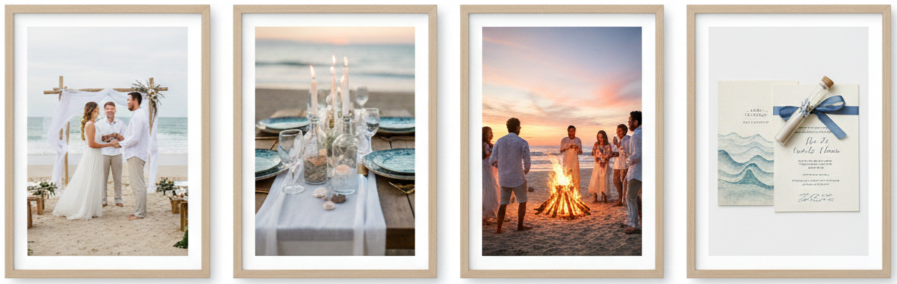
Beach weddings have a special kind of charm that’s hard to beat. The ocean breeze, the sound of the waves, and the open sky instantly set a relaxed, romantic mood. Many couples choose a beach ceremony because it feels natural and personal, without the stiffness that sometimes comes with traditional venues. The scenery does a lot of the work too, which means you don’t need to spend as much on décor to make everything look beautiful.
A beach setting also makes the entire day feel more relaxed for everyone. Guests tend to dress more comfortably, timelines feel less rushed, and the celebration feels more like a meaningful gathering than a formal event. That’s one of the biggest reasons beach weddings stay so popular: they allow couples to focus on the moment and enjoy the atmosphere without feeling boxed in.
Top Destinations for a Beach Wedding
Choosing the right destination plays a big role in how smooth your wedding planning feels. Some beaches are perfect for intimate gatherings, while others are better for larger celebrations with full vendor support. You’ll also want to think about weather patterns, seasonal crowds, and how easy it will be for guests to travel.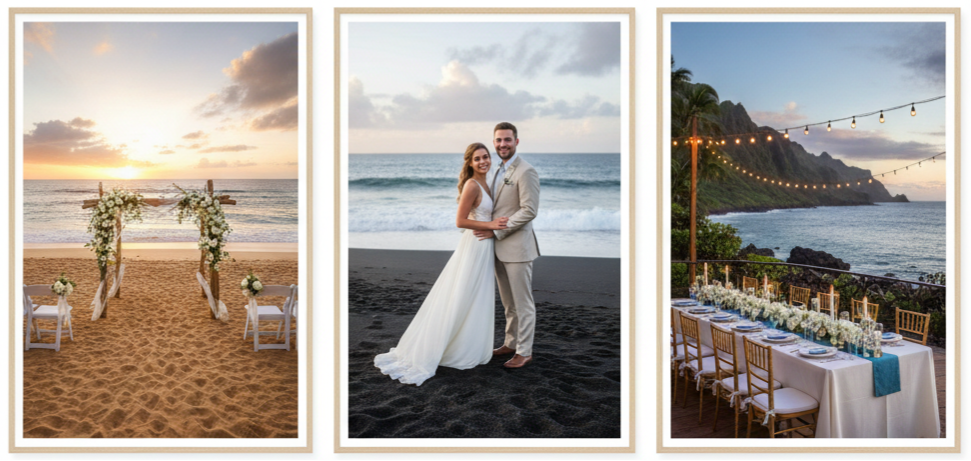
Maui, Hawaii
This location offers dramatic views, warm weather, and beaches that range from golden sand to black sand. Many resorts here also specialize in beach wedding packages.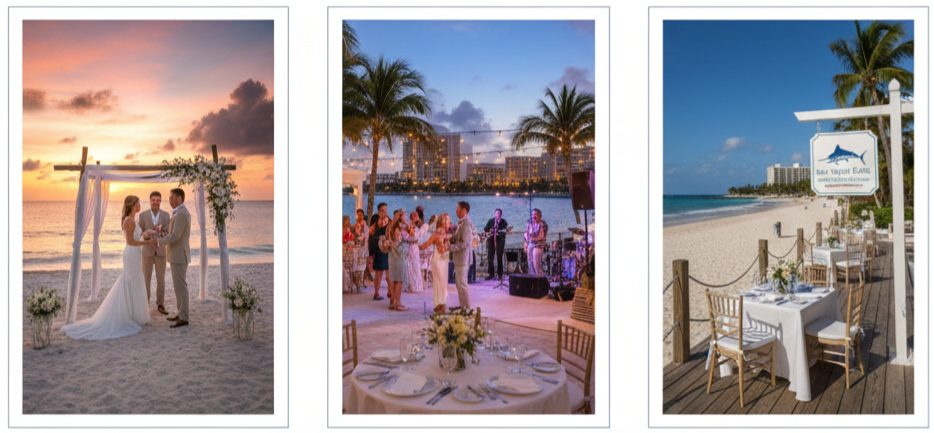
Key West, Florida
This is a great choice for couples who want beach views with access to hotels, restaurants, and vendors nearby. It’s also known for sunsets and a lively atmosphere.
Malibu, California
Malibu brings a polished and upscale feel, with stunning coastal scenery. It works especially well for couples aiming for a modern, stylish beach wedding.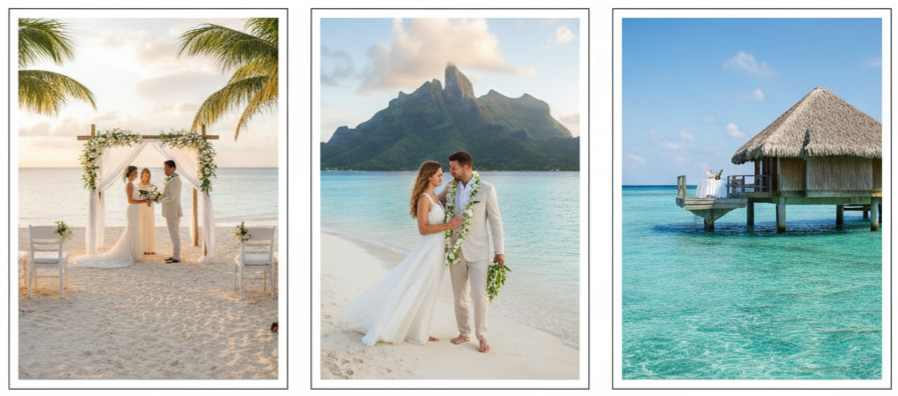
Bora Bora, French Polynesia
This is best for couples wanting a private island vibe. It’s a popular pick for smaller weddings and romantic elopements.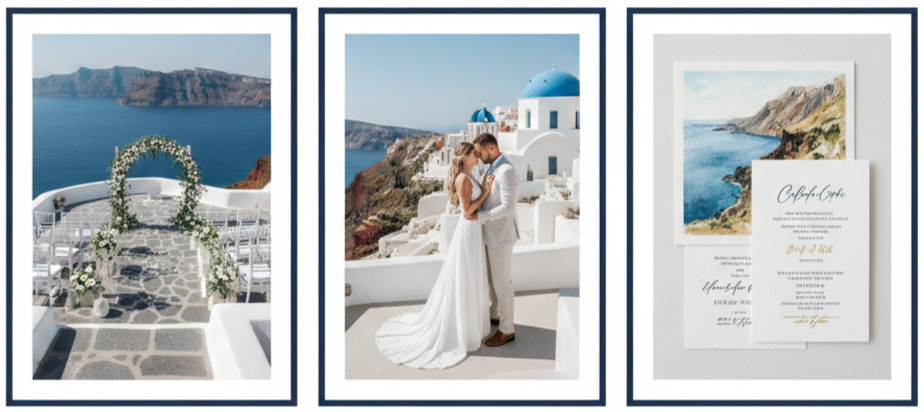
Santorini, Greece
While not always a “sand beach” wedding, Santorini offers ocean views, dramatic cliffs, and unique ceremony spots close to the coast.

Tulum, Mexico
Tulum is known for its relaxed, bohemian style. It also has many resorts that support beach ceremonies while keeping things eco-friendly and stylish.
When choosing a destination, it’s always smart to confirm how easy it is to access the ceremony spot. Some beaches require long walks, boat rides, or special permissions. You’ll also want to confirm what the local laws require for marriage licenses, especially if you’re planning a destination wedding outside your home country.
Planning a Seamless Beach Wedding
A beach wedding can feel effortless on the day, yet it takes planning behind the scenes to make sure everything runs smoothly. Outdoor events come with extra moving parts, especially when the setting involves sand, wind, sun, and sometimes unexpected weather shifts.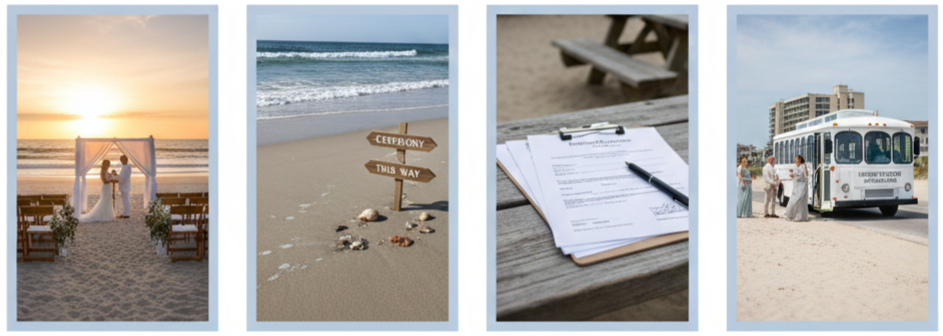
- Best Season And Timing: Most couples choose a dry season to avoid heavy rain or storms. Late afternoon weddings are popular because the heat is lower and the lighting looks great for photos. Sunset ceremonies also feel naturally romantic, which makes them a favorite choice.
- Tides And Beach Conditions: Tide schedules matter more than many people realize. A ceremony too close to the shoreline can turn stressful if the tide rises. The best approach is to plan your ceremony setup above the high-tide line and confirm the schedule ahead of time.
- Permits And Regulations: Many public beaches require a permit. Local rules may also limit sound systems, décor installations, guest count, and event timing. Applying early avoids last-minute issues.
- Guest Travel Logistics: It’s helpful to think through parking, transportation, and accommodations. A beach may look perfect, yet it can be hard to reach. Make it easy for guests by sharing directions, providing shuttles when needed, and picking a spot near lodging.
A well-planned beach wedding feels relaxed because you handle all the details in advance. That includes weather planning, guest comfort, and working with vendors who know how to operate in outdoor settings.
Dress Code And Attire For Beach Weddings
Beach wedding attire should balance style and comfort. Since sand and heat are part of the experience, the best clothing choices are breathable, lightweight, and practical while still looking elegant.
- Bride Attire: Flowy dresses made from chiffon, organza, or tulle work well because they move easily and stay cooler in warm weather. Many beach brides choose simple silhouettes since heavy gowns can feel uncomfortable in sand.
- Groom Attire: Linen suits or light cotton blends work best because they stay breathable. Lighter colors like beige, light gray, or pale blue look great in beach lighting and match the setting naturally.
- Footwear Choices: Many couples go barefoot or wear flat sandals. Wedges work better than heels since they don’t sink into the sand the same way.
- Guest Dress Code: Guests usually feel most comfortable in smart casual beach attire. Light fabrics and lighter colors are best. It also helps to advise guests not to wear stilettos since sand makes walking difficult.
Sharing a simple dress code with guests makes everything smoother. It keeps everyone comfortable and prevents people from showing up underdressed or uncomfortable in the sun.
Decor That Enhances—Not Competes With—Nature
One of the best things about beach weddings is that the setting already looks stunning. The most successful décor styles usually focus on adding soft details that highlight the scenery instead of trying to overpower it.
- Ceremony Arch Ideas: Driftwood arches, bamboo frames, or simple wooden structures look natural and photograph well. Many couples add fabric draping or tropical florals like orchids and hibiscus for color.
- Aisle And Seating Setup: Wooden chairs and bamboo seating hold up well outdoors. For aisle décor, lanterns, petals, seashells, or small floral bundles look great without requiring heavy installation.
- Comfort Stations: These are simple to set up and guests appreciate them. A station might include water bottles, sunscreen, bug spray, hand fans, tissues, and mini towels.
- Signage: Wooden signs work well on the beach and keep the tone relaxed. Signs can guide guests to the ceremony area, reception space, or refreshment stations.
Beach décor works best when it stays lightweight, weather-friendly, and easy to secure. Anything too tall or unstable may struggle in wind, and anything too delicate may not survive sun exposure for long.
Hosting The Reception By The Shore
Beach receptions can feel fun, intimate, and memorable. The setting naturally creates a relaxed mood, yet receptions still require careful planning to handle weather, lighting, and food service.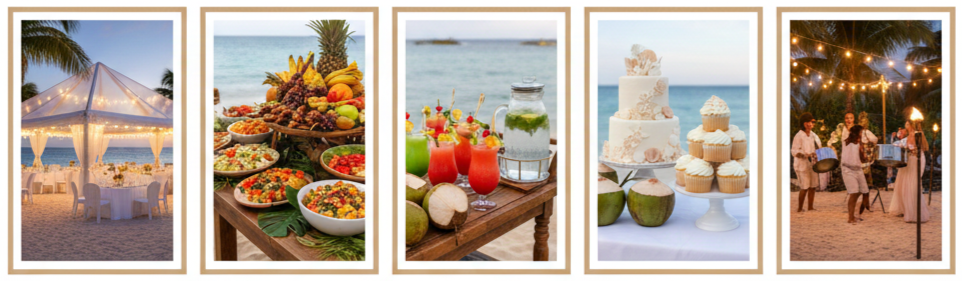
- Reception Layout Options: Many couples choose open-air receptions, while others prefer a tent for shade and weather protection. Clear-top tents work especially well because they keep the beach view visible while adding a clean structure.
- Food And Catering: Fresh menus match the beach vibe well. Grilled seafood, fruit platters, salads, and tropical sides feel natural in this setting. Buffet-style service is popular for casual receptions, while plated service fits more formal beach weddings.
- Drinks And Refreshments: Tropical cocktails, mocktails, and chilled options work best in warm climates. Coconut water and infused drinks also fit the setting well.
- Dessert Choices: Beach cakes with subtle coastal décor are common. Cupcake towers also work well because they’re easier to serve and transport than large multi-tier cakes.
- Entertainment: Acoustic performances, steel drum bands, and light DJ setups are popular. If you plan music, confirm your permit allows amplified sound and plan for outdoor power sources.
A beach reception is also a great place to add warm lighting. String lights, lanterns, and torch-style lighting create a cozy mood as the sun sets and keep the space safe for walking after dark.
Beach Wedding Day Tips For A Flawless Event
The biggest difference between a stressful beach wedding and a smooth one comes down to preparation. The more you plan around the beach environment, the easier your day will feel.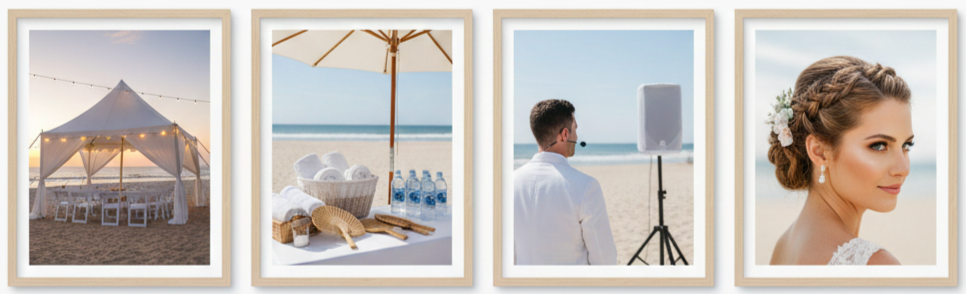
- Weather Backup Plan: Always prepare for sudden changes, even during “perfect” seasons. A tent, nearby indoor option, or schedule flexibility can keep things running smoothly.
- Guest Comfort Planning: Shade is important, especially for daytime weddings. Provide cold water, fans, umbrellas, or shaded seating areas. At night, consider blankets if the location gets breezy.
- Sound And Audio Setup: Wind and waves can drown out voices. Lapel microphones make vows easier to hear, and speaker wind covers prevent sound issues.
- Hair And Makeup Considerations: Humidity and wind can change how hair and makeup hold up. Waterproof makeup, long-lasting products, and hairstyles that stay secure in wind work best.
These details may seem small while planning, yet they create a big difference on the day itself. Comfort planning helps guests stay focused on your ceremony instead of the heat, the wind, or the sun.
Understanding Legal And Logistical Requirements
Beach weddings require more than picking a beautiful location. Legal and logistical details must be handled early to avoid complications.
- Marriage License Rules: Every region has its own rules for marriage licenses. Some destination weddings require a civil ceremony first, while the beach ceremony becomes symbolic. Others allow legal ceremonies on-site, yet require specific documents and waiting periods.
- Permit Requirements: Most public beaches require permits. Permits may include guest count limits, noise restrictions, setup rules, and cleanup requirements. Some beaches also require proof of event insurance.
- Vendor Experience Matters: Vendors who regularly do beach weddings know how to handle sand, wind, salt air, and unpredictable weather. Hiring experienced vendors reduces the chance of issues with setup, lighting, or timelines.
Handling paperwork early keeps things stress-free. Once legal details are in place, you can focus on creating a ceremony that feels meaningful, personal, and unforgettable.
Conclusion
Beach weddings combine natural beauty with a relaxed atmosphere that feels both romantic and unforgettable. The beach setting creates stunning photos, a calming energy, and a unique experience for guests. At the same time, beach weddings require careful planning around weather, tides, permits, sound, and guest comfort. When every detail is thought through ahead of time, the wedding day feels effortless and the celebration becomes exactly what it should be: a meaningful moment shared with the people who matter most.
Key Takeaway: Beach weddings deliver breathtaking scenery and a laid-back feel, yet they require smart planning, legal preparation, and thoughtful design to keep your celebration smooth, comfortable, and memorable.
FAQs
What should guests bring to stay comfortable during a beach wedding?
Guests should bring sunglasses, sunscreen, and a light cover-up for sun protection. It also helps to bring comfortable sandals, especially for walking on sand.
How do we keep décor from blowing away in strong wind?
Use weighted bases, secured stakes, and heavier décor materials. Avoid tall pieces that catch wind easily, and work with vendors who know how to anchor décor properly.
Is it possible to have a beach wedding with a large guest list?
Yes, yet it depends on the beach and permit rules. Some beaches limit guest counts, so larger weddings may require private beachfront venues or resort property.
What is the best way to manage lighting after sunset?
String lights, lanterns, and soft uplighting work best. These options create ambiance and also provide enough visibility for safety during evening events.
How can we reduce interruptions from the public during a ceremony?
Choose quieter beaches, plan a weekday ceremony, and schedule early or late times when the beach is less crowded. Signs and light barriers also help guide people away from the ceremony space.
Leave a Reply