Destination Wedding
| Location | Vibe | Best Time to Go | Highlights |
| Bali | Cultural, Scenic | April–October | Temples, cliffside views |
| Maui | Relaxed, Tropical | May–September | Beaches, volcanoes |
| Santorini | Romantic, Coastal | April–June, Sept | Sunsets, white architecture |
| Tuscany | Rustic, Elegant | May–October | Vineyards, villas |
| Banff | Mountainous, Cozy | June–September | Lakes, alpine lodges |
What Is a Destination Wedding?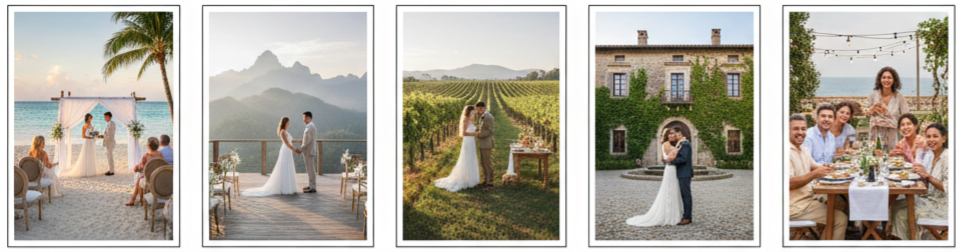
A destination wedding is a celebration held away from a couple’s hometown, often in a location chosen for its beauty, atmosphere, or personal meaning. Instead of gathering at a familiar venue, couples exchange vows somewhere memorable, such as a beach, mountain retreat, vineyard, or historic estate. These weddings feel more like shared travel experiences than single-day events, which adds to their appeal.
Most destination weddings involve a smaller group of guests, usually close family and friends. Because everyone travels together, the celebration often lasts several days rather than just a few hours. This creates more time for connection, shared activities, and meaningful moments beyond the ceremony itself. For many couples, that extended time together is just as valuable as the wedding day.
Why Do Couples Love Destination Weddings?
Destination weddings appeal to couples who want something different from the traditional format. The experience feels intentional and personal, shaped by location and shared memories rather than routine expectations.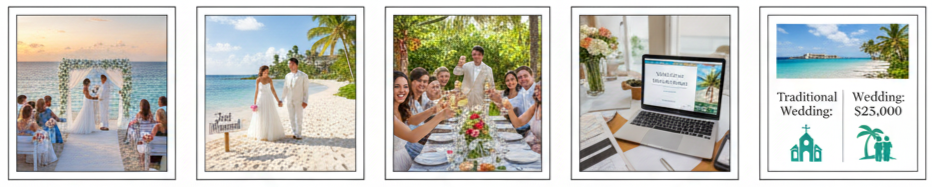
- Unique Experience: Getting married in a beautiful setting instantly makes the day feel special and memorable, without needing excessive décor or elaborate extras.
- Built-In Honeymoon: Many couples stay after the wedding to enjoy a honeymoon in the same location, which simplifies travel plans and reduces costs.
- Smaller Guest List: Travel naturally limits attendance, resulting in a more intimate celebration with the people who matter most.
- Simplified Planning: Resorts and venues often offer wedding packages that bundle services like catering, décor, coordination, and photography.
- Budget Flexibility: When planned carefully, destination weddings can cost the same as or less than large traditional weddings due to fewer guests and packaged pricing.
Best Places to Have a Destination Wedding
Tropical Beaches
Beach destinations remain one of the most popular choices for destination weddings. The natural scenery creates a relaxed and romantic setting that needs little enhancement.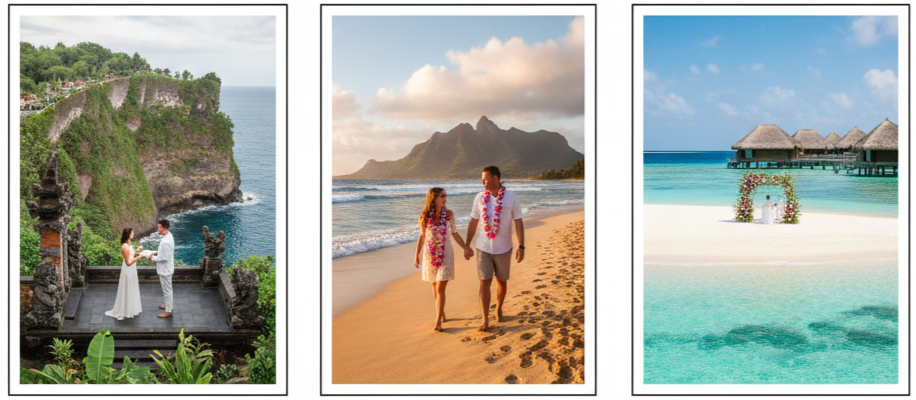
- Bali, Indonesia: Known for lush landscapes, cliffside venues, and cultural richness that blends tradition with luxury.
- Maui, Hawaii: Offers accessibility for U.S.-based guests along with stunning beaches and a laid-back atmosphere.
- Maldives: Ideal for private, intimate ceremonies surrounded by clear water and overwater villas.
European Getaways
Europe offers timeless elegance and a strong sense of romance, making it ideal for couples drawn to history and charm.
- Tuscany, Italy: Rolling hills, vineyards, and rustic villas provide a warm, classic backdrop.
- Santorini, Greece: Famous for dramatic sunsets, white architecture, and panoramic ocean views.
- Loire Valley, France: Castles and manicured gardens create a fairytale-like environment.
Closer to Home
A destination wedding does not always require international travel. Many couples find incredible locations within their own country.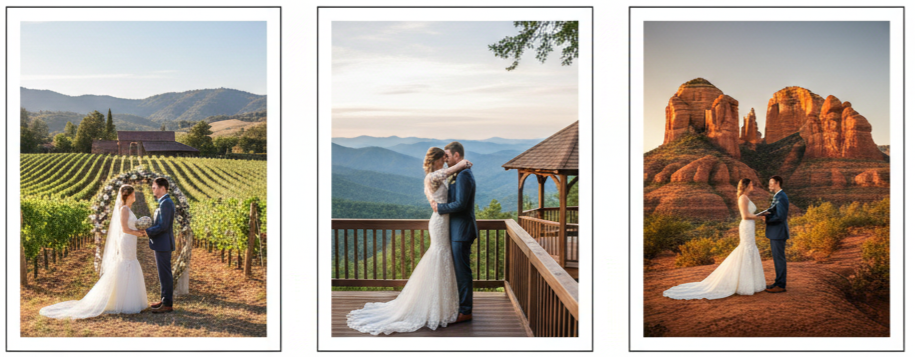
- Napa Valley, California: Perfect for vineyard weddings with refined yet relaxed settings.
- Asheville, North Carolina: Combines mountain scenery with artistic culture.
- Sedona, Arizona: Known for striking red rock landscapes and a peaceful atmosphere.
Adventure Settings
For couples who want their wedding to feel bold and unforgettable, adventure destinations add excitement to the celebration.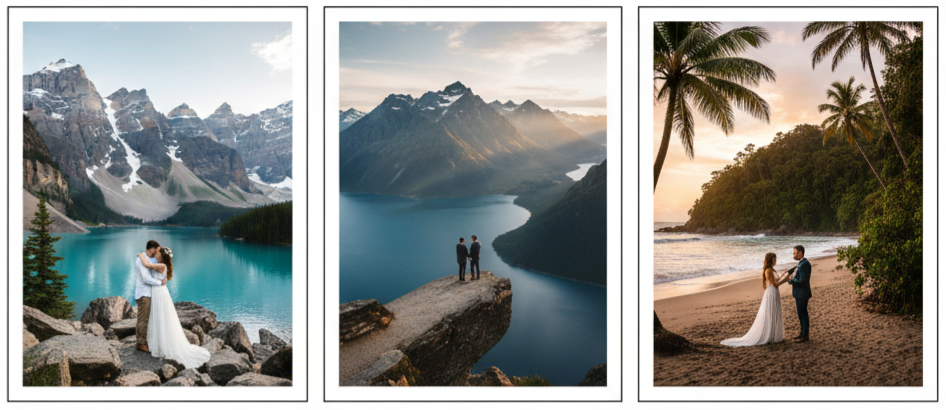
- Banff, Canada: Snow-capped mountains and turquoise lakes create breathtaking visuals.
- Queenstown, New Zealand: Offers dramatic scenery and adventure activities for guests.
- Costa Rica: Rainforests, beaches, and eco-resorts attract couples who value nature-focused experiences.
Planning Tips to Keep Things on Track
Planning a destination wedding requires organization and early preparation. Distance adds complexity, so structure is essential.
- Start Early: Booking venues and accommodations 12 to 18 months ahead increases availability and reduces stress.
- Visit the Location: Seeing the venue in person helps with decision-making and expectations.
- Hire a Local Planner: Local planners understand the area, vendors, and cultural details that may not be obvious from afar.
- Understand Legal Requirements: Marriage laws vary by location and may involve documentation, waiting periods, or residency rules.
- Send Save-The-Dates Early: Guests need ample notice to arrange travel, time off, and budgeting.
Breaking Down the Budget
Budgeting for a destination wedding works best when expectations are clear and priorities are defined early.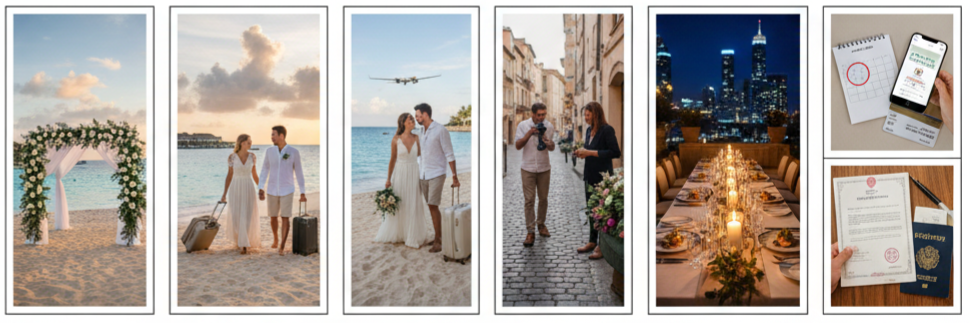
- Venue And Ceremony Fees: Many destinations offer all-inclusive packages covering the ceremony, décor, and coordination.
- Travel And Lodging: Flights and accommodations for the couple and sometimes the wedding party should be planned early.
- Vendors: Some couples bring photographers or stylists, while others rely on trusted local professionals.
- Food And Reception: Catering may be included in venue packages or arranged separately.
- Legal Costs: International weddings may involve additional fees for licenses or document translation.
- Cost-Saving Options: Choosing off-season dates, limiting the guest list, and using digital invitations can significantly reduce expenses. Group booking rates for flights and hotels also help manage costs for both couples and guests.
Key Takeaway: Destination weddings offer strong budget flexibility when guest count, timing, and location are chosen intentionally.
Keeping Guests Informed and Involved
Guest experience plays a major role in a successful destination wedding. Clear communication helps guests feel comfortable and excited about the trip.
- Wedding Website: A centralized place for travel details, schedules, accommodations, and FAQs.
- Welcome Bags: Thoughtful items such as snacks, water, sunscreen, or local guides make guests feel appreciated.
- Group Activities: Casual events like welcome dinners or excursions create shared memories.
- Transportation Support: Shuttles or group transfers simplify logistics for guests unfamiliar with the destination.
What to Pack for a Destination Wedding
Preparation ensures the wedding experience stays smooth from arrival to departure.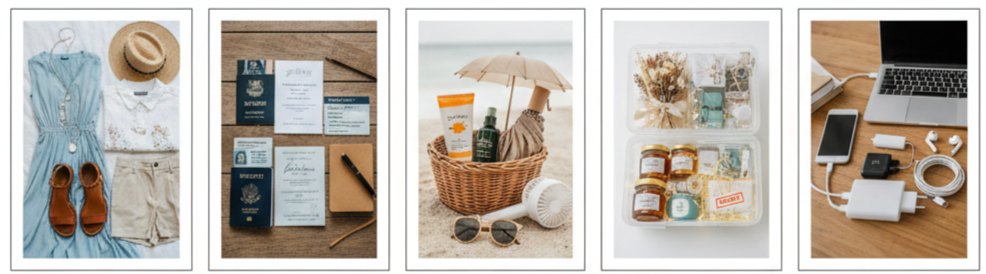
- Appropriate Attire: Lightweight fabrics suit warm climates, while layered clothing works better for cooler locations.
- Important Documents: Backup copies of passports, licenses, and contracts help prevent disruptions.
- Weather Essentials: Items like sunscreen, umbrellas, or insect repellent are easy to overlook but essential.
- Decor And Favors: Transport items carefully and confirm local customs regulations before traveling.
- Technology Needs: Chargers, adapters, and portable devices support communication and planning on-site.
The Ups and Downs of Destination Weddings
Every wedding format comes with advantages and challenges, and destination weddings are no exception.
- Advantages: Scenic settings enhance photos and ambiance, smaller guest lists allow deeper connections, and multi-day celebrations extend the experience beyond one event. Planning often feels simpler due to bundled services.
- Challenges: Travel limits attendance, weather may change unexpectedly, vendor options can be limited, and legal requirements may add complexity.
Conclusion
A destination wedding blends celebration with travel, creating an experience that extends far beyond the ceremony itself. The combination of meaningful surroundings, shared adventures, and focused guest lists allows couples to celebrate in a way that feels intentional and personal. While planning requires additional effort, thoughtful preparation leads to a wedding experience that feels both memorable and rewarding.
Key Takeaway: With careful planning and clear priorities, destination weddings offer a meaningful way to combine commitment, travel, and shared experiences into one lasting celebration.
FAQs
How far in advance should a destination wedding be planned?
Most destination weddings benefit from planning at least 12 to 18 months ahead to secure venues, accommodations, and travel options.
Do destination weddings require a legal ceremony abroad?
Some couples complete the legal marriage at home and hold a symbolic ceremony at the destination to simplify paperwork.
Are destination weddings harder for guests to attend?
Travel can limit attendance, which naturally keeps guest lists smaller and more intimate.
Is travel insurance important for destination weddings?
Travel insurance helps protect against unexpected changes, cancellations, or emergencies for both couples and guests.
Can destination weddings still feel personal?
Smaller guest lists, extended time together, and meaningful locations often make destination weddings feel more personal than traditional events.
Leave a Reply