Purple Wedding Flowers
| Season | Purple Flowers Available |
| Spring | Lilac, Lavender, Iris, Hyacinth |
| Summer | Anemone, Lisianthus, Delphinium |
| Fall | Dahlia, Calla Lily, Scabiosa |
| Winter | Orchid, Stock, Tulip |
Why Purple Flowers Work So Well for Weddings
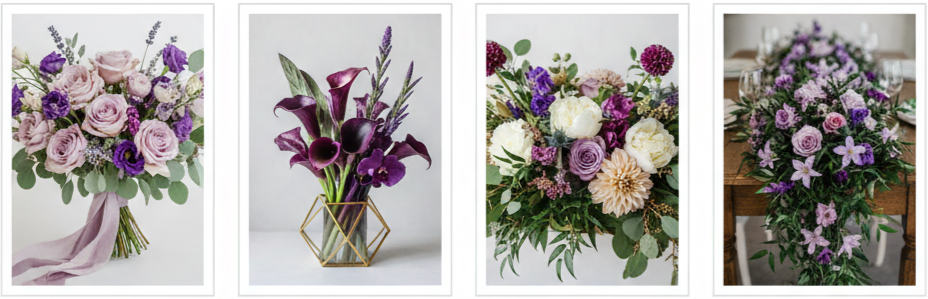
Purple has a long history of representing royalty, imagination, romance, and beauty. It naturally draws attention without being too bold or distracting. This makes it a perfect color for weddings, especially when you want floral arrangements that feel intentional and expressive.
Purple flowers fit beautifully into every theme. For example, soft lavender looks romantic and airy, while deep purple tones create a sleek, modern feel. The color also blends effortlessly with blush tones, white, champagne, greenery, silver, gold, and navy. You can lean into a monochromatic look or use purple as an accent—it works well either way.
Popular Purple Wedding Flowers to Consider
There’s a wide selection of purple flowers available year-round or seasonally, each with its own personality. Here are some fan favorites and why couples love them:

Lavender
Known for its soothing scent and rustic charm, lavender works beautifully in outdoor, boho, or garden weddings. It looks delicate in bouquets, boutonnieres, and table settings.
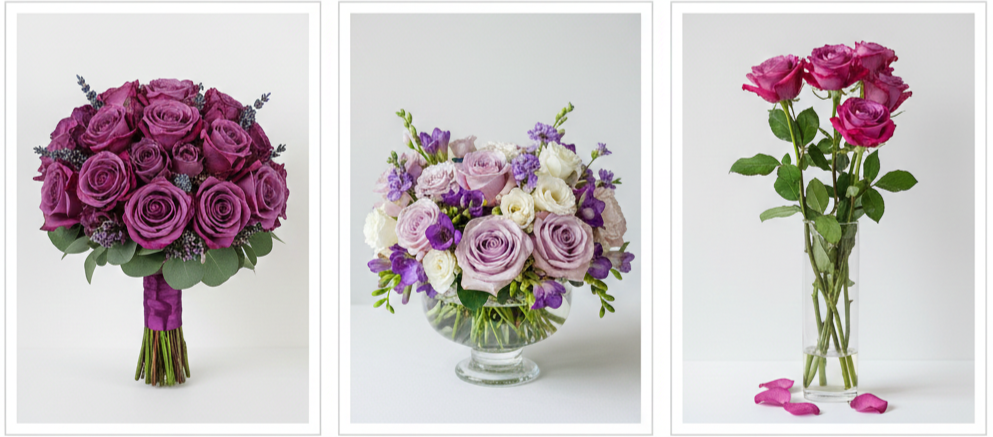
Purple Roses
Roses are timeless and come in shades from lilac to plum. They symbolize enchantment and joy, making them ideal for bridal arrangements and classic wedding themes.
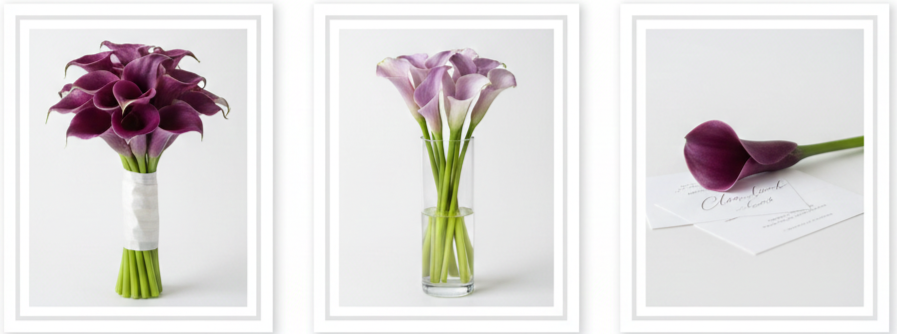
Calla Lilies
With their clean lines and sculptural shape, purple calla lilies add a dramatic and modern touch to any arrangement.
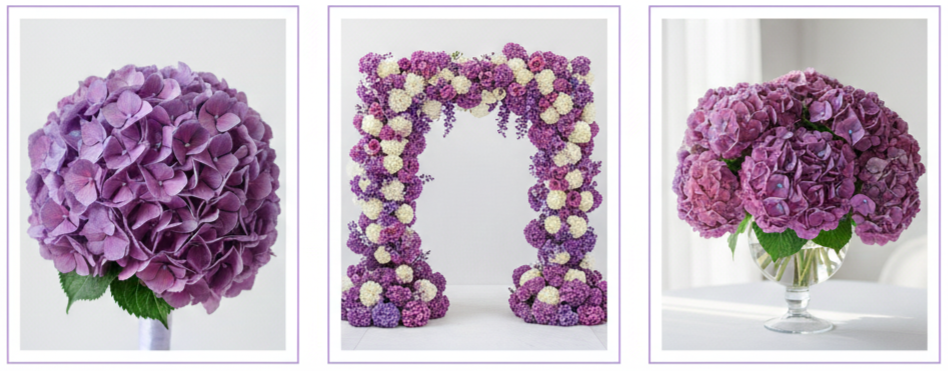
Hydrangeas
If you want fullness and texture, hydrangeas deliver. Their large clusters make them perfect for centerpieces, arches, and statement décor pieces.
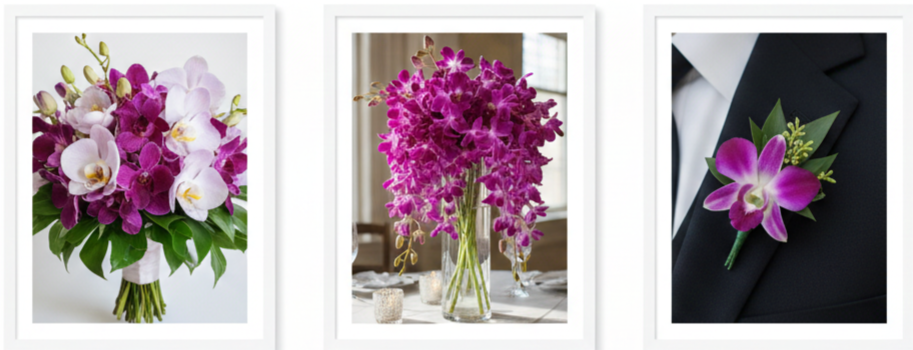
Orchids
Exotic, artistic, and luxurious, orchids work well for upscale or tropical celebrations. Their shades of purple range from soft mauve to deep violet.
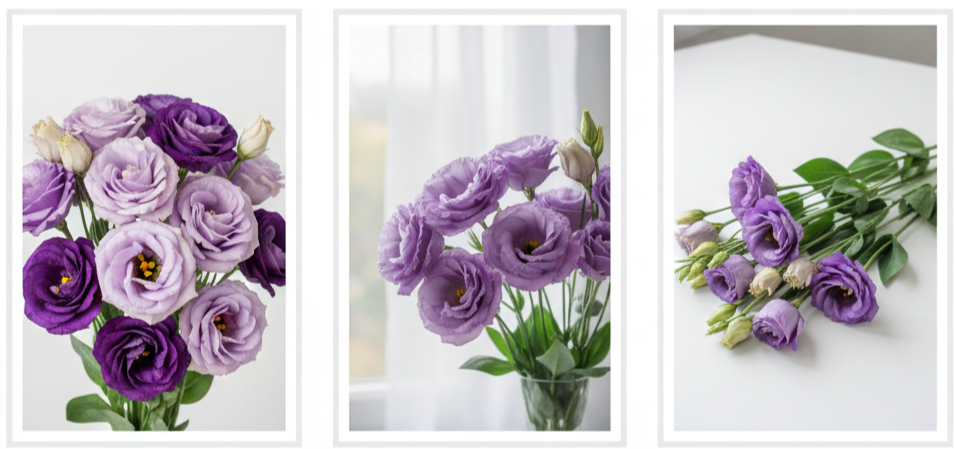
Lisianthus
These soft, ruffled blooms resemble miniature roses and give bouquets a romantic and airy feel.
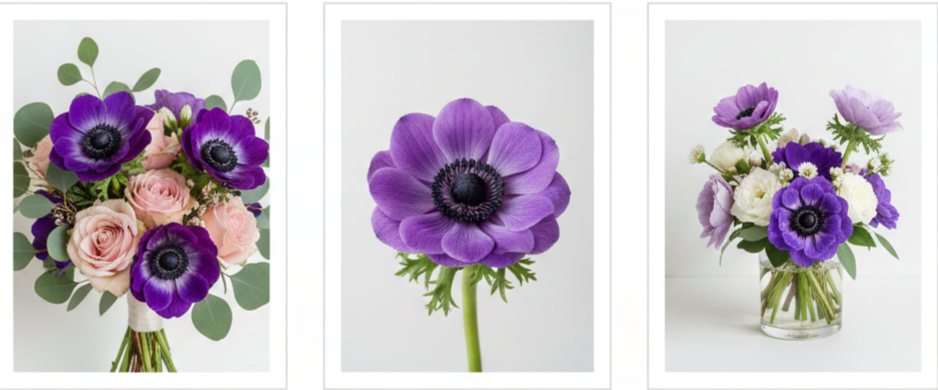
Anemones
With bold centers and striking purple petals, anemones bring contrast and visual interest to mixed arrangements.
Each of these flowers blends well with greenery, neutrals, or metallic elements, giving you endless options for a personalized floral design.
Using Purple Blooms in Bouquets and Arrangements
Purple flowers can serve as subtle accents or take center stage in your floral arrangements. The key is deciding how bold or soft you want the overall look to be.
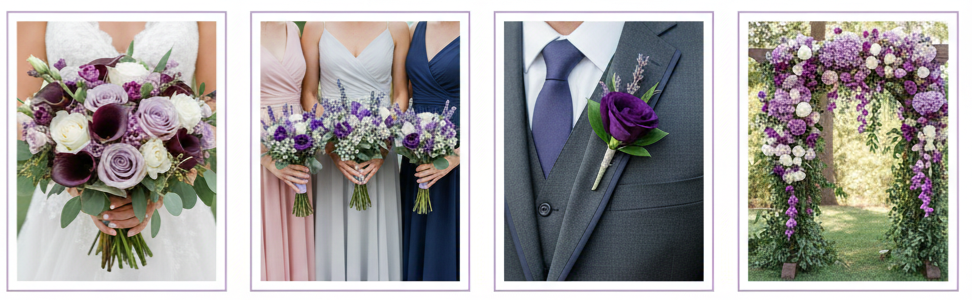
- For bridal bouquets: A mix of lavender, lilac roses, and deep purple calla lilies creates depth and elegance. You can soften the look with ivory roses or add greenery to create a garden-inspired design. Mixing different shades of purple adds dimension and makes each flower stand out.
- For bridesmaid bouquets: Smaller arrangements featuring lavender, lisianthus, eucalyptus, or baby’s breath look great with dresses in blush, gray, or navy. You can use one main purple flower for a cohesive look or blend multiple textures for variety.
- For boutonnieres: Small, simple blooms like lavender sprigs or a single lisianthus add a polished touch without feeling bulky. They also pair nicely with suits in gray, charcoal, or navy.
- For ceremony arches and altar arrangements: Hydrangeas, roses, and orchids create full, dramatic designs. Adding trailing greenery enhances movement and visual appeal, especially during outdoor ceremonies.
All of these options let purple play a role in different ways—from subtle to bold—so your vision feels cohesive from ceremony to reception.
Styling Purple Flowers Throughout the Ceremony and Reception
Purple flowers can play a major role in transforming your space, whether you’re indoors or outdoors.
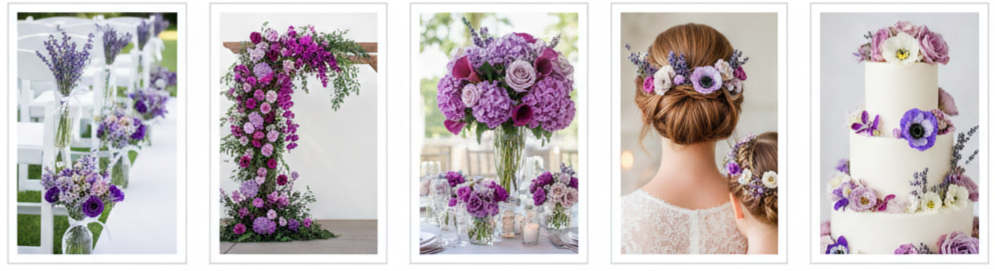
- For aisle décor: Clusters of lavender or small bouquets of mixed purple blooms can hang from chairs, line the aisle, or sit in small vases. This adds charm without overwhelming the space.
- For arches and backdrops: Purple orchids, roses, and hydrangeas look gorgeous when paired with greenery or draped along a wooden or metal frame. These installations make your ceremony photos pop.
- For reception tables: Tall centerpieces using hydrangeas and calla lilies create dramatic height. If you prefer something low and intimate, mix small vases filled with lisianthus, lavender, and roses. Candlelight brings out the richness in purple tones.
- For hair accessories: Purple blooms make beautiful finishing touches in hairstyles. Brides can use small anemones, lavender sprigs, or tiny orchids. Flower girls can wear mini lavender crowns.
- For wedding cakes: Fresh violets, lavender pieces, or small roses look elegant on cake tiers. Purple sugar flowers also make a beautiful keepsake.
By weaving purple into your décor, bouquets, hair accessories, and table settings, you create a unified look that feels polished and cohesive throughout the entire event.
Planning Around Seasons and Budget
The season affects flower availability and cost. Planning your arrangements around your wedding date makes it simpler and more budget-friendly.
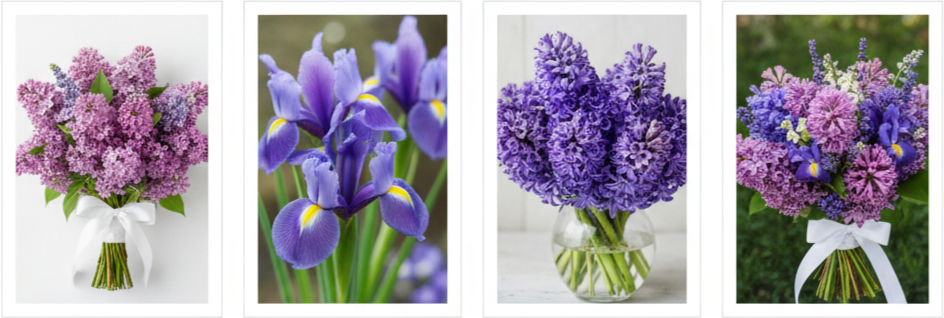
Spring weddings
Pair well with lilac, lavender, iris, and hyacinth. These flowers are fragrant and visually soft—perfect for outdoor or garden themes.
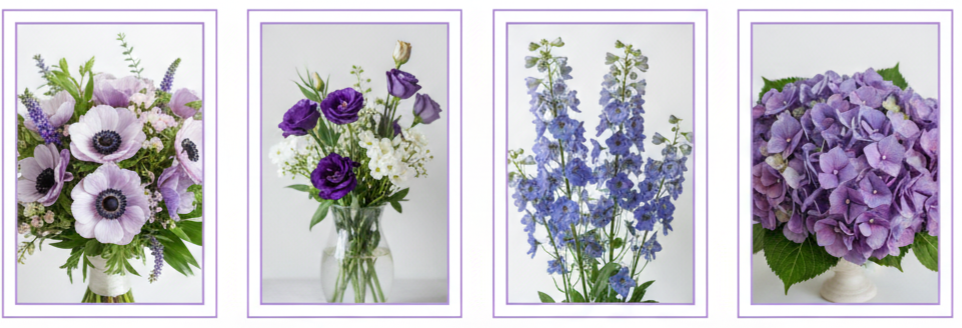
Summer weddings
Offer plenty of options like anemones, lisianthus, delphinium, and hydrangea. These hold up better in warm temperatures and create fullness in bouquets.
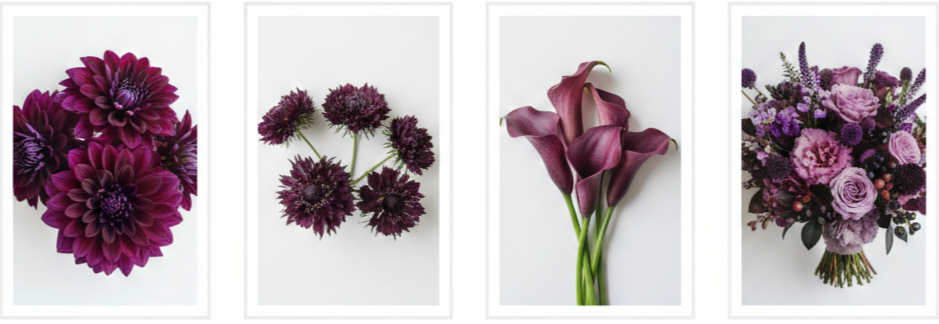
Fall weddings
Benefit from dahlias, scabiosa, calla lilies, and deeper purple tones. These flowers offer rich textures and colors that complement autumn décor.
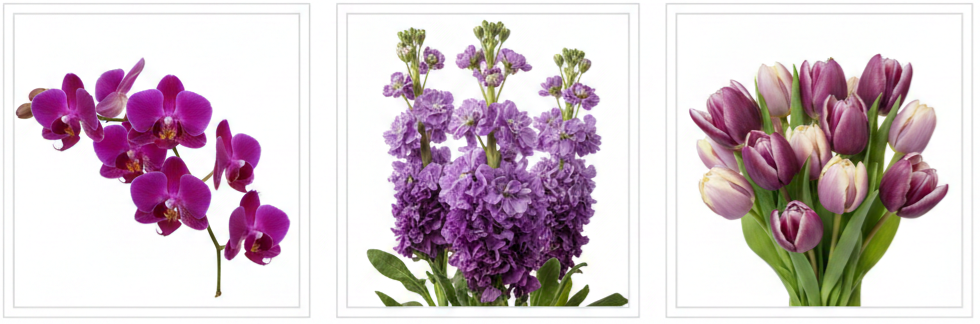
Winter weddings
Often include orchids, stock, and tulips. These flowers bring elegance and a softer purple palette that works well in cozy indoor venues.
To stay budget-friendly, mix high-end blooms like orchids with cost-effective options like stock or statice. Using greenery for volume also helps manage costs. If certain flowers aren’t in season, high-quality artificial options can fill gaps without disrupting the aesthetic.
Real Wedding Inspiration Featuring Purple Flowers
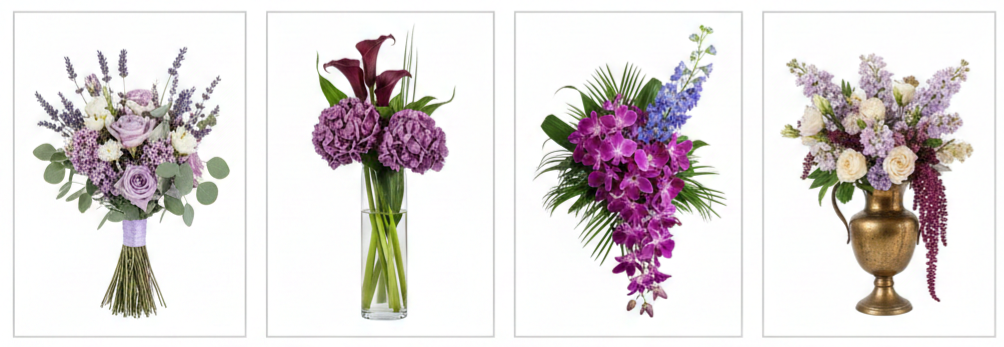
Looking at real weddings helps visualize how purple flowers can elevate different themes and settings.
One garden ceremony in Sonoma featured lavender bundles along the aisle, with bouquets made from lilac roses and eucalyptus. The result was an airy and romantic atmosphere.
In a downtown loft wedding, tall vases with plum calla lilies and hydrangeas created a sleek, modern look. Paired with candles and simple linens, the purple flowers added deep color without overpowering the room.
On a tropical Maui beach, cascading bouquets with orchids and delphinium stood out against the sand and ocean backdrop, adding vibrant contrast and tropical flair.
A vintage Chicago celebration used antique brass vases filled with lilac, lisianthus, and amaranthus. The purple tones blended perfectly with vintage décor and soft candlelight.
These examples show how purple works across settings—from rustic and natural to modern and glamorous.
Conclusion
Purple wedding flowers add elegance, romance, and personality to your celebration. Whether soft lavender or deep violet, they work perfectly in bouquets, centerpieces, arches, hairpieces, and more. Purple is versatile, fitting easily with themes from rustic and relaxed to modern and luxurious.
Key Takeaway: Purple wedding flowers offer endless creative possibilities. With the right combinations, they can elevate your décor, add dimension to your arrangements, and help tell your story through color and style.
FAQs
What are the best purple flowers for a winter wedding?
Winter weddings go well with orchids, tulips, and stock. These flowers handle colder temps and keep their color and shape throughout the day.
How do I match my purple flowers to my wedding color palette
Pair softer purples with pastel palettes, or match deep purples with bold tones like navy or emerald. Add neutrals like ivory or silver to tie it all together.
Can I mix purple flowers with other vibrant colors?
Yes, purple works well with pink, orange, or blue. Just balance bright colors with soft greenery or neutral flowers to keep things from feeling too busy.
Are there eco-friendly ways to source purple flowers?
Use local, seasonal blooms when possible. Ask your florist about sustainable growers, and repurpose arrangements between ceremony and reception to cut waste.
Do purple flowers photograph well?
They do! Deep purples create contrast, while soft lavenders add a romantic feel. Both look beautiful in daylight or candlelit settings.
Leave a Reply