Vintage Wedding Invitation Templates
| Style | Key Features | Best For |
| Rustic Vintage | Kraft paper, lace, floral prints | Outdoor or barn weddings |
| Art Deco Glamour | Gold foil, geometric lines, bold fonts | Formal or black-tie weddings |
| Romantic Victorian | Lace borders, calligraphy, pastel tones | Traditional or cathedral weddings |
| Retro 50s | Pastel colors, polka dots, playful icons | Casual or themed weddings |
What Defines a Vintage Wedding Invitation?
Vintage wedding invitations stand out with their classic, timeless style. They’re designed to give off an old-school vibe, inspired by different historical periods like the Victorian era, the roaring twenties, or even mid-century retro styles.
- Design elements: These include ornate fonts, lace-like borders, botanical illustrations, and faded backgrounds that resemble aged parchment.
- Color choices: Muted tones like cream, sepia, sage green, dusty rose, and navy are common.
- Fonts used: Elegant script fonts, serif typefaces, and even typewriter-style lettering add to the vintage aesthetic.
- Texture and feel: Many vintage templates mimic the look and feel of hand-crafted paper or antique stationery.
All of these features come together to create an invite that doesn’t just deliver information—it delivers a whole mood.
Popular Vintage Styles to Consider
Different vintage invitation styles capture different moods and personalities. Choosing the one that matches your wedding vision will make everything feel more connected.
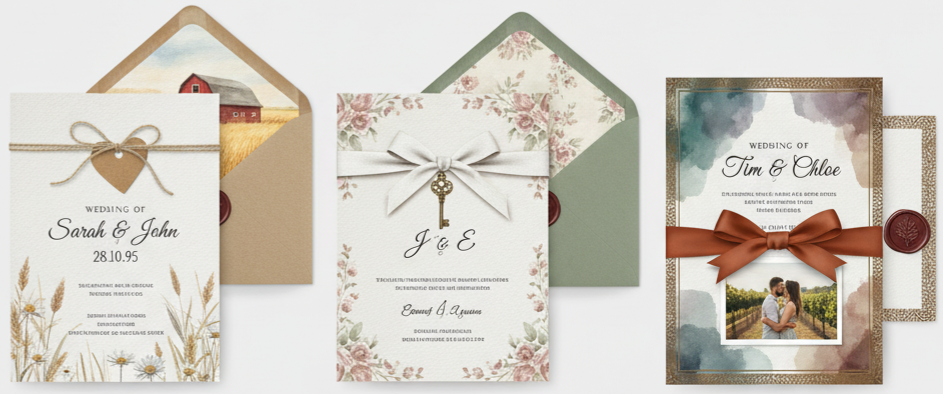
Rustic vintage
This style mixes natural textures with antique charm. You’ll see kraft paper, twine, faded florals, and simple typewriter fonts. Great for barn weddings, backyard receptions, or countryside venues.
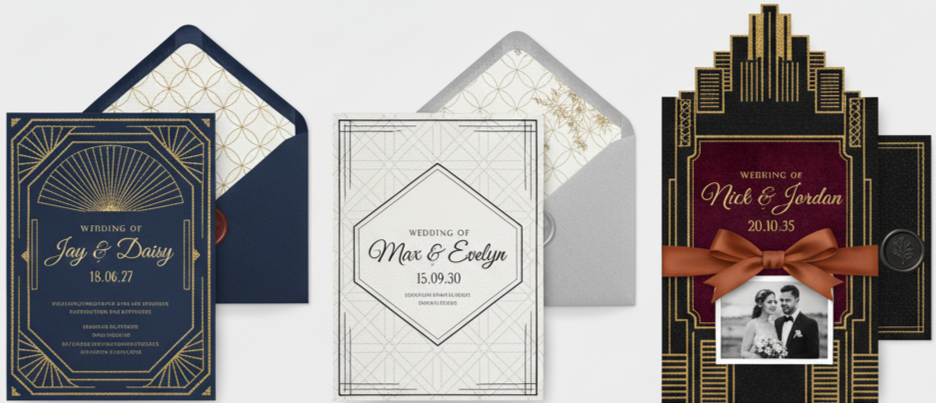
Art Deco glamour
This 1920s–30s-inspired style features bold lines, metallic touches, and clean, geometric patterns—perfect for black-tie or Gatsby-themed weddings.
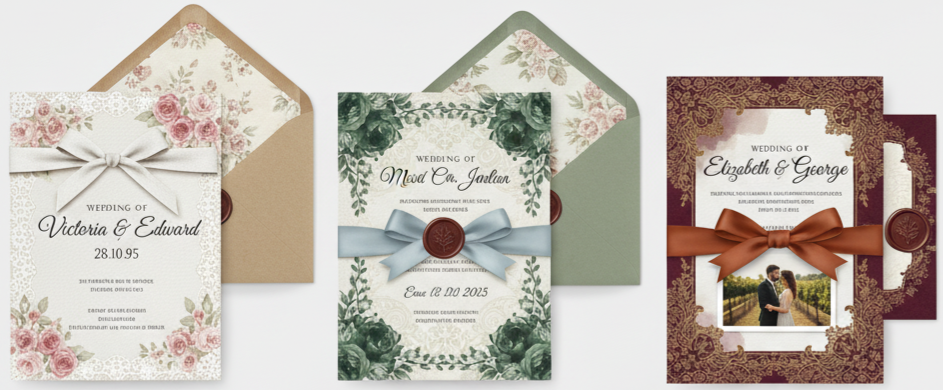
Romantic Victorian
Think lace patterns, floral watercolor prints, and elegant calligraphy. These are ideal for traditional ceremonies in cathedrals, ballrooms, or historic mansions.
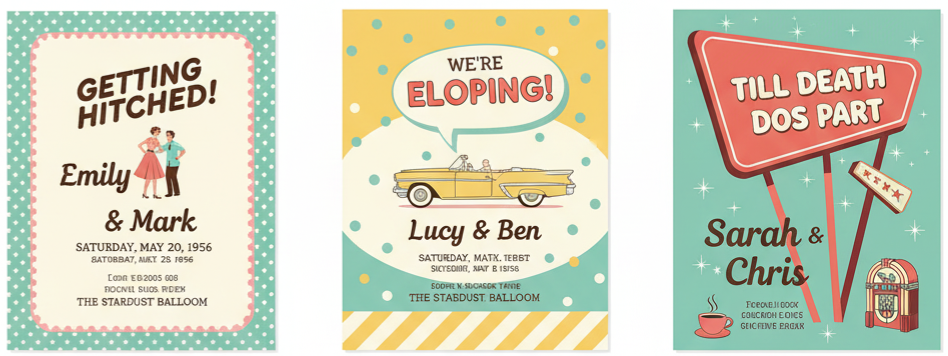
Retro 50s
Playful, fun, and a little quirky, this style features pastel colors, polka dots, and mid-century illustrations. Perfect for casual or creative weddings with a personal twist.
Choosing the Right Template for Your Wedding Theme
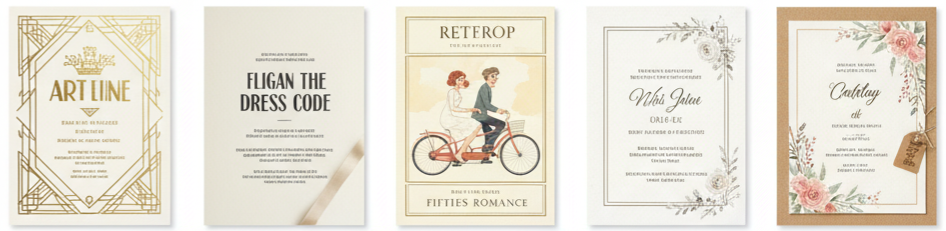
Picking a vintage wedding invitation template is all about matching the style to your wedding’s overall vibe.
- Match the venue: Is your wedding happening in a grand hall or in a rustic barn? Choose a template that complements the location’s energy.
- Align with the dress code: A formal black-tie wedding pairs well with a polished Art Deco invite. A laid-back outdoor celebration works better with a relaxed retro or rustic design.
- Reflect your story: Look for a template that captures your shared history, favorite colors, or even a meaningful era for both of you.
- Prioritize readability: While decorative fonts are pretty, make sure your names, date, and venue details are easy to read.
The right design won’t just look great—it’ll feel personal and meaningful.
Customizing Vintage Templates
Once you’ve picked your favorite vintage template, you’ll want to make it your own. That’s where customization comes in.
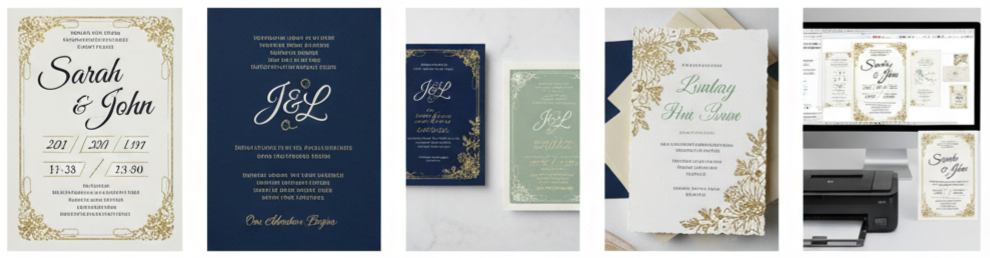
- Personal details: Update the names, date, time, and location. Stick with formal invitation etiquette unless you’re going for something more playful.
- Extra touches: Add a custom monogram, a favorite quote, or meaningful symbols to tie it all together.
- Design tweaks: Some templates let you adjust the layout, font sizes, or color schemes to better match your theme.
- Printing choices: If you’re printing at home or with a local shop, be sure your file is high-resolution and sized correctly. For a fancier finish, consider embellishments like foil, embossing, or letterpress.
These simple edits take your invitation from generic to one-of-a-kind.
Where to Find Beautiful Vintage Wedding Invitation Templates
There are tons of platforms where you can find beautifully crafted vintage templates—both digital and print-ready.
- Etsy: Great for handmade or digital designs you can edit yourself. Many sellers offer Canva or Photoshop-ready files.
- Creative Market: A professional marketplace with tons of downloadable templates in editable formats.
- Canva: User-friendly and ideal for beginners who want to edit designs without using advanced software.
- Zazzle & Minted: These sites offer full print-and-ship services. You pick a design, customize it, and they handle the rest.
- Adobe Stock & Envato Elements: More advanced platforms for designers who want complete creative control.
When deciding between free and paid options:
- Free templates: These are easy on the budget but may lack customization features, editable layers, or high-resolution files.
- Premium templates: Usually include commercial fonts, flexible design files, and print-ready formats like 300 DPI CMYK.
Key takeaway: A high-quality template not only looks better on paper but also saves you time during editing and printing.
DIY vs. Hiring a Designer
When it comes to getting your invitations done, you’ve got two main paths—do it yourself or bring in a professional.

- DIY approach: Perfect for hands-on couples who enjoy being involved in the process. You can buy a downloadable template, edit it, and either print at home or through an online service.
- Pros: It’s cost-effective, flexible, and fast. You can start editing the moment you download the template.
- Cons: It takes time, and there’s a learning curve if you’re using tools like Photoshop or Illustrator. There’s also more room for mistakes.
- Hiring a designer: Ideal for couples who want a fully customized design and expert help. A designer can tweak every element to match your wedding theme and ensure it prints perfectly.
- Pros: You get a polished result with minimal stress. Great for those with specific visions or large guest lists.
- Cons: It’s more expensive and may take longer to finalize.
- Hybrid option: Purchase a premium template and hire a designer just for customization or print setup. It gives you professional results without breaking the bank.
Final Touches and Printing Tips
After editing your invitation, it’s time to think about printing and presentation. These finishing details are what make your vintage template come to life.
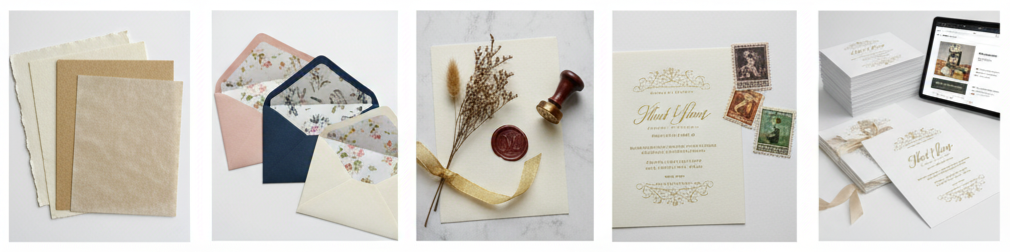
- Paper choices: Use textured paper like cotton, linen, or recycled stock. Parchment gives an old-world feel, while kraft paper suits rustic themes.
- Envelope style: Pick envelopes that match your wedding colors—ivory, blush, or navy work well. For a classy finish, add envelope liners.
- Special accents: Wax seals, ribbon ties, vintage stamps, and handwritten addressing create a beautiful first impression.
- Printing methods:
- For small guest lists, printing at home works fine—just use quality paper and check alignment.
- For larger events or detailed designs, professional printers deliver better results.
- Online services like Zazzle or Vistaprint offer both convenience and consistency. Always request a proof before placing a full order.
These extras turn a great invite into something guests will want to save.
Conclusion
Vintage wedding invitation templates are a perfect way to blend personal style with timeless charm. Whether you’re drawn to romantic florals, elegant calligraphy, or the glitz of the Art Deco era, there’s a design that reflects your story. With so many options out there—from DIY downloads to custom-designed suites—you can find something that fits your wedding vision and budget. Add in the right paper, print finishes, and personal touches, and your invitations will set the perfect tone for your big day.
Key takeaway: Thoughtful design and customization make a big difference. A vintage invitation is more than pretty stationery—it’s the first impression of your wedding, and it deserves attention to detail.
FAQs
Can I use vintage invitation templates for a modern wedding?
Vintage touches can add charm to any wedding style—even modern ones. Just pick details that match your overall theme.
What’s the best way to send vintage invitations digitally?
You can export your design as a high-res PDF or PNG and email it. Many couples also share invites through wedding websites or RSVP platforms.
How do I choose a vintage font that’s still easy to read?
Go with decorative fonts for headings and keep body text clean with simpler serif or sans-serif fonts. This balance keeps the design beautiful and clear.
What kind of paper should I avoid for vintage invitations?
Avoid glossy or neon paper. Stick to matte, textured, or natural paper tones that support the vintage feel.
Can I make matching RSVP and thank-you cards with the same template?
Definitely. Many template sets include coordinated designs for RSVP, details, menus, and thank-you cards, making it easy to keep everything consistent.
Leave a Reply