Garden Weddings
| Season | Weather | Floral Appeal | Pros | Cons |
| Spring | Mild, breezy | Tulips, peonies, lilacs | Fresh blooms, soft colors | Unpredictable rain |
| Summer | Hot, sunny | Roses, hydrangeas | Long days, golden hour light | Heat, sun exposure |
| Fall | Cool, crisp | Dahlias, marigolds | Bold colors, fewer bugs | Shorter daylight |
| Winter | Cold, dry | Evergreens, berries | Cozy vibe, off-season rates | Requires heaters, limited blooms |
Why Garden Weddings Are an Ideal Choice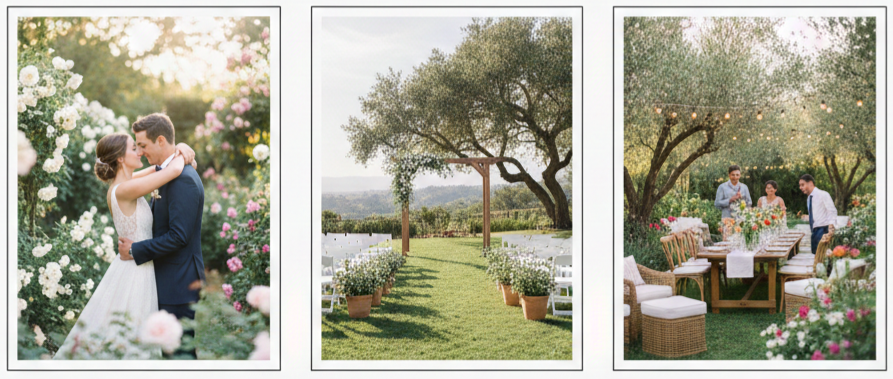
Garden weddings feel personal, beautiful, and naturally inviting. When we choose a garden setting, we get a space that already looks styled because the greenery, flowers, and open sky create a built-in backdrop. That means we can keep décor simple while still getting a polished look that photographs well from every angle.
A garden also makes it easier to shape the day around the experience we want. We can create an intimate ceremony layout, set up a relaxed cocktail space under trees, and design a reception that feels open and social. Garden weddings also suit couples who want a more eco-conscious celebration, since we can lean on seasonal elements and reuse or repurpose décor more easily than in a fully blank indoor venue.
Best Seasons For A Garden Wedding
Choosing the season affects comfort, lighting, flowers, and even how the venue looks in photos. Each season has its own strengths, so we plan around what matters most, then build a weather backup plan that matches the season.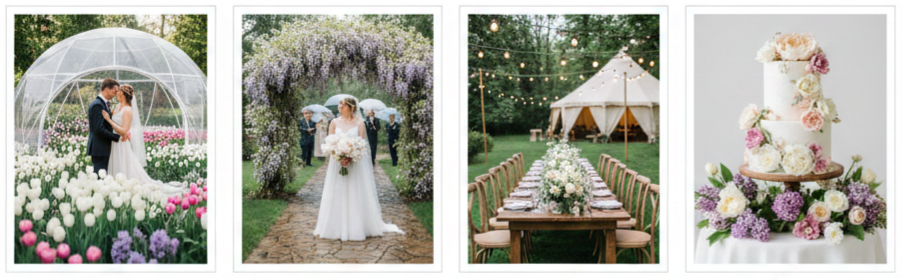
Spring
We get fresh blooms, mild temperatures, and that classic garden look with flowers like tulips, peonies, and lilacs. We also plan for quick rain changes with umbrellas, covered walkways, or a tent option.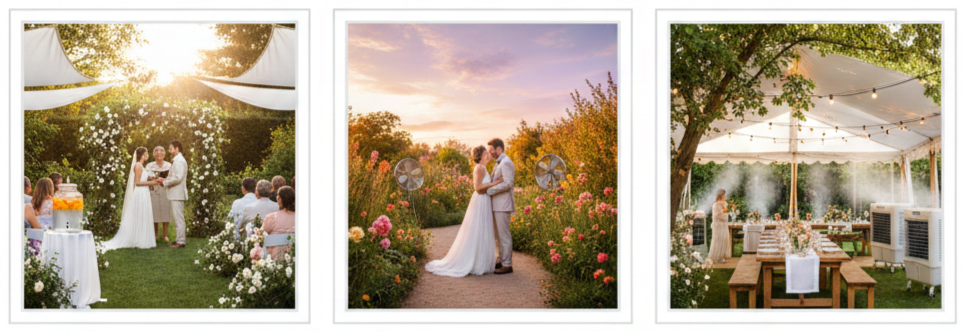
Summer
We get long daylight hours and vibrant greenery, which makes late-day ceremonies and sunset photos look incredible. We also plan for heat with shade, water stations, and airflow around seating.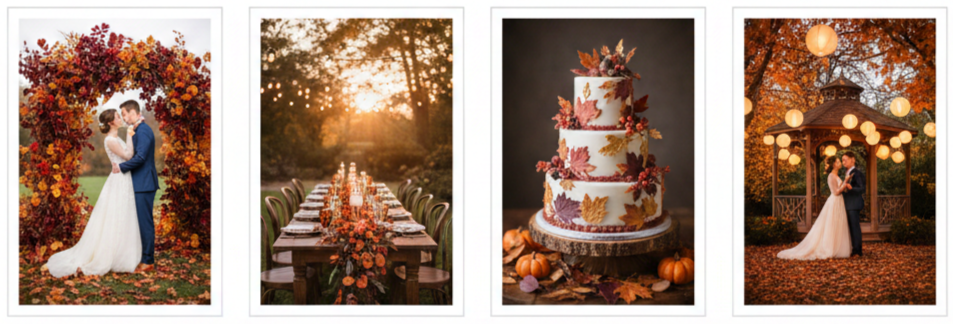
Fall
We get rich color, cooler air, and a naturally romantic feel with foliage tones that elevate the setting without extra décor. We also prepare for earlier sunsets with lighting that comes on sooner.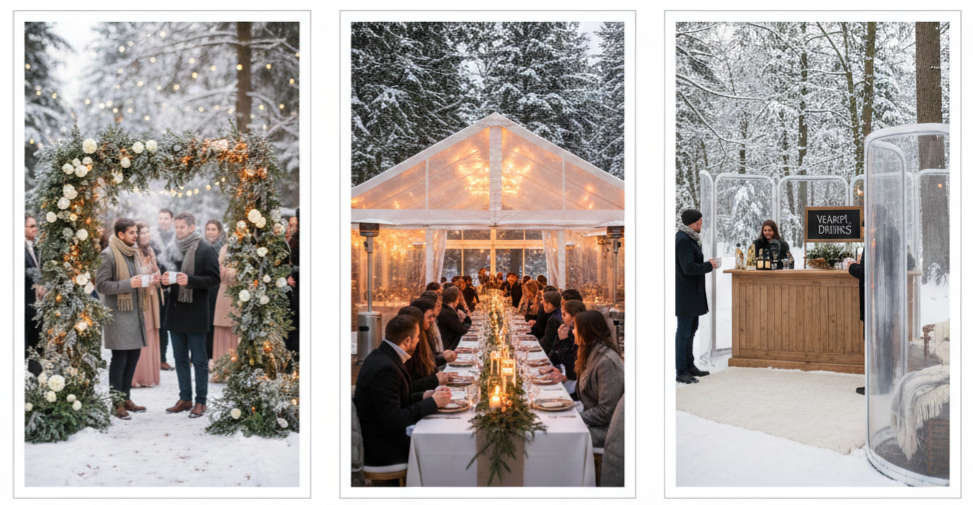
Winter
We get a unique atmosphere with evergreens, warm lighting, and a cozy mood that feels intimate. We also plan for heated tents, warm drink service, and wind protection.
Key Takeaway: We pick a season that supports the look we want, then we build a weather-ready plan that keeps the day comfortable and on schedule.
How To Choose The Perfect Garden Venue
A garden venue should look great and function smoothly. We look past the first impression and confirm the practical details that keep guests comfortable and vendors efficient. We also visit at the same time of day as the ceremony to see how the sun hits the space and how the garden feels when it’s actually in use.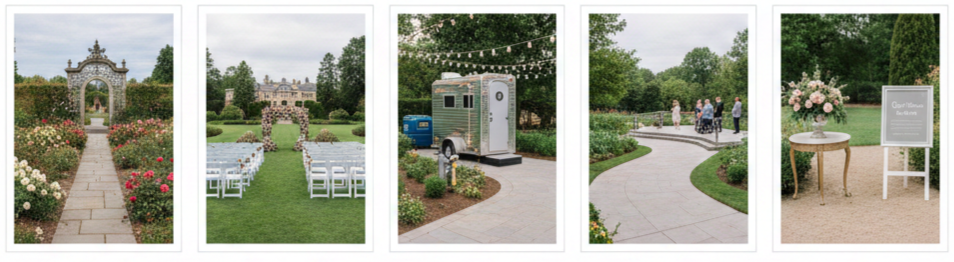
- Venue Type: We decide between public botanical gardens, private estates, or a backyard-style space, since each option comes with different rules, costs, and flexibility.
- Guest Capacity: We confirm how many people the garden comfortably fits when we include the aisle, seating, cocktail space, tables, dance area, and vendor zones.
- Amenities: We check restrooms, electricity, water access, parking, and storage areas, since missing basics can create expensive last-minute rentals.
- Accessibility: We look at pathways, slopes, and terrain for guests who need stable footing, and we plan surfaces for heels, mobility devices, and older guests.
- Restrictions: We confirm noise limits, end times, décor rules, and any requirements for approved vendors or insurance.
Elegant Garden Wedding Décor Ideas
In a garden, décor works best when it supports the setting instead of trying to overpower it. We use the landscape as the base and add details that guide the eye, define spaces, and create a warm mood once the sun goes down. The goal is to make the day feel intentional from the ceremony entrance to the final dance.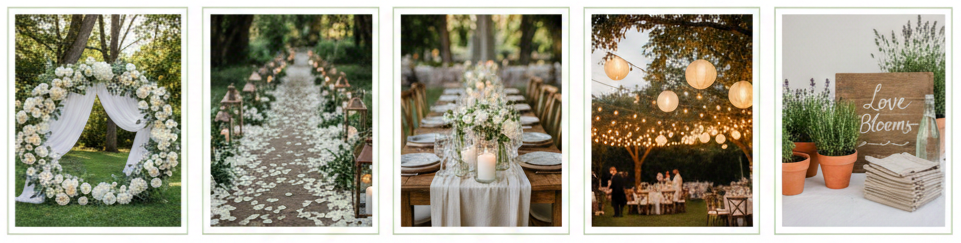
- Ceremony Backdrop: We use floral arches, greenery frames, or soft draping on wood structures to create a focal point that fits the natural surroundings.
- Aisle Styling: We line the aisle with petals, lanterns, small arrangements, or low greenery to frame the walk without blocking views.
- Table Design: We use linen runners, simple centerpieces, candlelight, and natural textures like wood and glass to keep the look cohesive and elegant.
- Lighting: We layer string lights, hanging bulbs, lanterns, and pathway lighting so the space stays inviting after sunset.
- Sustainable Details: We choose local seasonal flowers, rented pieces, reusable signage, and potted plants that can be replanted or gifted after the event.
What To Wear: Garden Wedding Outfit And Footwear Tips
Garden weddings look effortless when outfits match the setting and the weather. We aim for comfort that still looks polished, especially since outdoor celebrations involve more walking, changing temperatures, and uneven ground. Clothing choices also affect photos, since outdoor light highlights fabric texture and movement.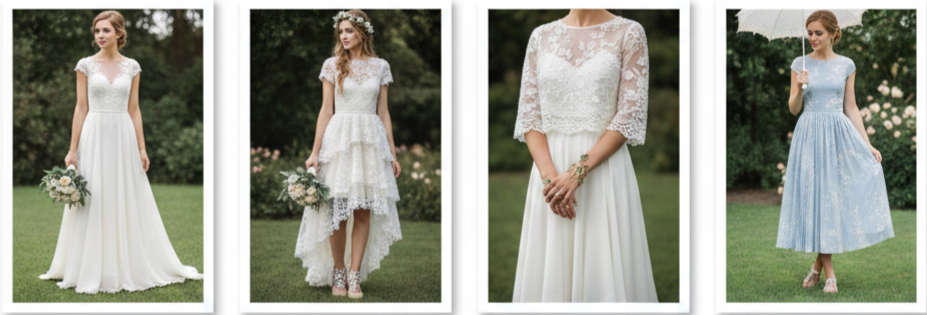
Bridal Style
We choose breathable fabrics like chiffon or lace for comfort, and we avoid overly long trains that drag through grass and pathways.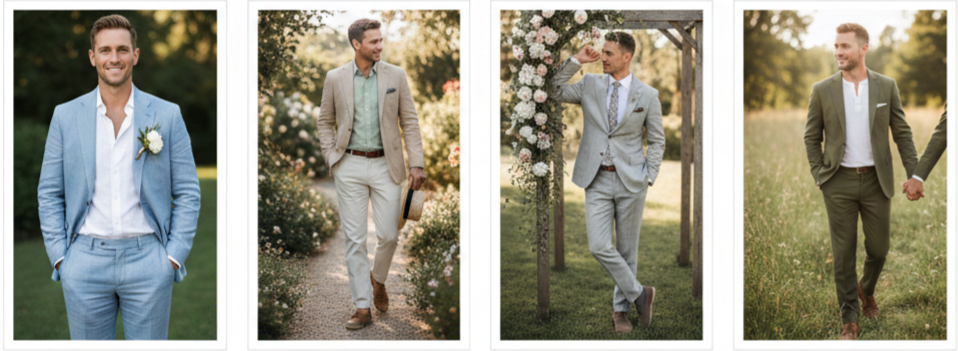
Groom Style
We use lighter fabrics like linen or cotton in warmer months, and we pick colors that work well in natural light without looking too formal for the setting.
Footwear
We choose block heels, wedges, or flats so we can move confidently on grass or gravel without sinking or twisting ankles.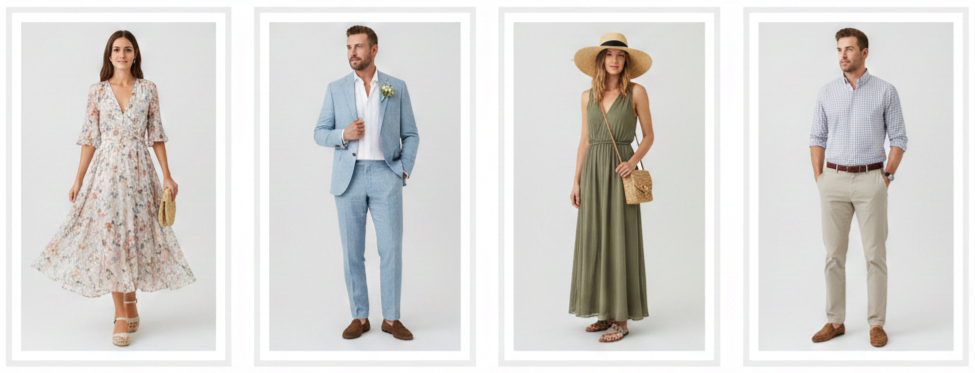
Guest Dress Code
We guide guests toward comfortable outdoor-friendly outfits, especially for warm afternoons, cooler evenings, or venues with soft ground.
How To Prepare For Weather At Outdoor Weddings
Outdoor weddings succeed when we plan for weather in a way that feels seamless and calm. We treat the weather plan as part of the design instead of an emergency fix. That means we prepare for sun, wind, humidity, temperature drops, and rain without making the space feel like a compromise.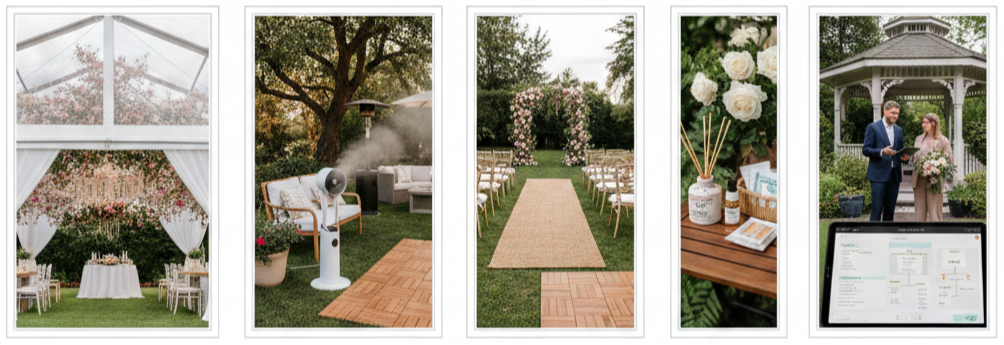
- Shelter Plan: We use tents, canopies, or covered structures that protect guests while preserving the garden atmosphere, including clear-top options for natural light.
- Temperature Control: We set up fans, shaded seating, misting options, or heaters depending on the season, and we keep high-heat or high-wind areas in mind.
- Ground Protection: We add flooring, rugs, or walkway runners to prevent muddy shoes, uneven footing, and trouble spots near bars or entrances.
- Pest Strategy: We schedule professional treatment when allowed, and we add discreet solutions like citronella elements and a small guest-accessible bug spray station.
- Communication Plan: We share backup details with vendors early so transitions stay smooth and the timeline remains realistic even with changes.
Ceremony And Reception Layout Tips
A garden wedding feels better when the flow makes sense. We design the space so guests always know where to go, vendors have clear working paths, and the experience stays comfortable. Layout also affects sound and photography, so we place key moments where everyone can see and hear without crowding.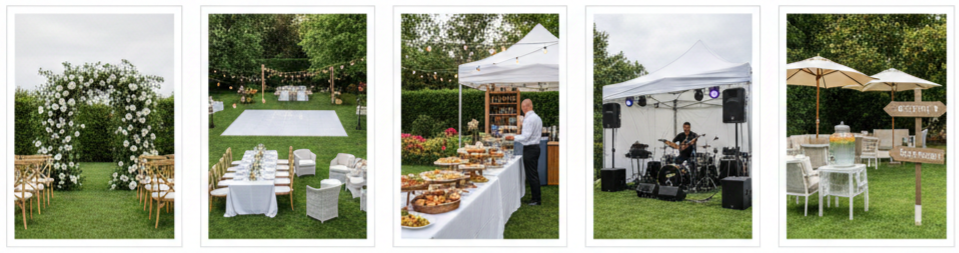
- Ceremony Positioning: We orient seating so guests avoid direct sun in their eyes, and we choose a spot that stays visually balanced in wide photos.
- Reception Zones: We create separate areas for dining, dancing, and lounging so guests can move naturally without congestion.
- Food And Bar Placement: We position stations to reduce lines, keep traffic away from the ceremony space, and support easy service flow.
- Entertainment Setup: We plan speaker placement, power access, and weather protection for music equipment so the sound stays clear and consistent outdoors.
- Comfort Touches: We include shaded seating, water access, and clear signage so guests stay relaxed without needing to ask where to go.
Permits, Insurance, And Legal Considerations
Garden venues can come with rules that influence timelines, décor, and music. We handle permits and requirements early so nothing interrupts the day. Even private venues can have neighborhood rules or local ordinances, so we confirm details before finalizing major vendors.
- Permits: We check whether the venue requires permits for gatherings, amplified music, alcohol service, or large installations like tents.
- Noise Rules: We confirm volume limits and music cutoff times, especially in residential areas or public gardens with strict policies.
- Event Insurance: We secure liability coverage when needed, and we provide documentation when the venue requires proof before setup.
Photography Tips For Garden Weddings
Garden weddings can produce stunning photos, especially when we plan around light and scenery. We coordinate timing so the best natural light aligns with portraits, ceremony moments, and key reception shots. We also identify backup photo spots early, since outdoor light can shift quickly with clouds or wind.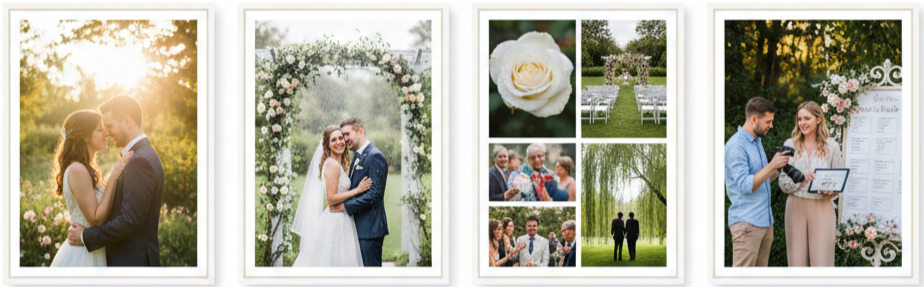
- Golden Hour Planning: We reserve time for portraits in the hour before sunset for soft light that flatters skin tones and highlights greenery.
- Shade And Rain Options: We identify covered areas, pergolas, or tent edges that still look elegant in photos during harsh sun or light rain.
- Must-Capture Moments: We plan wide shots of the ceremony space, close-ups of natural details, candid guest reactions, and couple portraits framed by flowers or trees.
- Vendor Coordination: We share the venue layout and timeline with the photographer so they can move efficiently and stay ready for fast-changing outdoor conditions.
Common Garden Wedding Mistakes To Avoid
Garden weddings can feel effortless, yet small oversights can affect guest comfort and the overall flow. We avoid these common issues by planning around the realities of outdoor events and making decisions that support the experience from start to finish.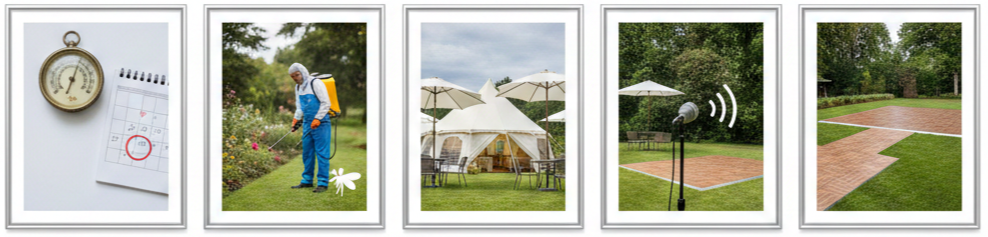
- Weather History Oversight: We check typical conditions for the date and location instead of relying on guesswork, then we plan shelter and timing accordingly.
- Pest Control Skipped: We handle bugs proactively so food service and seating areas stay comfortable.
- Shade Not Considered: We add shade options for ceremonies in direct sun and for cocktail areas during warm hours.
- Sound Underestimated: We use microphones and do a sound check, since outdoor spaces absorb sound and guests still need to hear vows and speeches.
- Terrain Ignored: We plan pathways and stable flooring in high-traffic zones, especially near seating, bars, and dance areas.
Conclusion
Garden weddings offer a naturally stunning setting that feels relaxed, elegant, and memorable without needing heavy décor. When we plan the season, venue logistics, layout, and weather setup with care, the celebration flows smoothly and guests stay comfortable from the ceremony to the reception. The result is a day that feels intentional and beautiful, with nature adding atmosphere in every photo and every moment.
Key Takeaway: A garden wedding feels effortlessly special when we match the season to the setting, plan for weather and terrain, and design a layout that keeps guests comfortable and the celebration moving smoothly.
FAQs
How do we keep guests comfortable during a garden wedding without overcomplicating the setup?
We focus on shade, hydration, seating, and clear pathways. We also add small comfort touches like hand fans for warm days or light blankets for cooler evenings, especially when the reception runs past sunset.
Do garden weddings usually end earlier because of noise rules?
Some venues enforce strict cutoff times, especially in residential areas or public gardens. We confirm music limits and end times early, then we structure the timeline so key moments like speeches and dancing happen before restrictions apply.
Can we serve a full dinner outdoors without risking food quality?
Yes, with the right catering plan. We work with vendors who use covered prep areas, temperature-safe holding methods, and efficient service flow, and we avoid leaving food exposed in direct sun or windy spots.
How do we handle guest footwear expectations without sounding controlling?
We set a clear dress code note that highlights practical details, such as “grassy terrain” or “garden pathways.” Guests appreciate guidance when it’s framed as comfort-focused and specific to the venue.
What’s a smart way to create privacy in a public garden setting?
We use layout and design to create separation, including strategic ceremony placement, tall floral installations, greenery screens, and controlled entry points. We also time the event around less crowded hours when possible.
Leave a Reply