Golden Wedding Ring
| Karat | Color Depth | Scratch Resistance | Daily Wear Fit | Notes |
| 10K | Lighter | High | Strong | More alloy metals |
| 14K | Rich | High | Best Balance | Most common choice |
| 18K | Deeper | Medium | Good | Shows wear sooner |
| 22K | Very Rich | Lower | Limited | Softer, dents easier |
What A Golden Wedding Ring Symbolizes
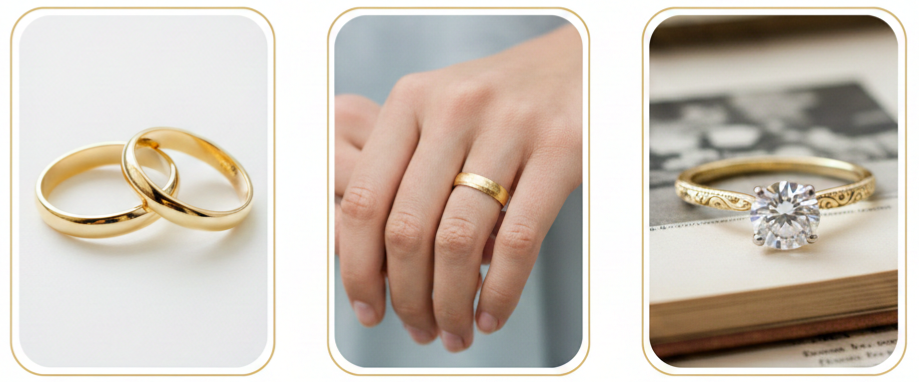
A golden wedding ring keeps its place for practical reasons and personal ones. Gold has a long history as a sign of commitment, and it still works for modern life because it fits into everyday routines without looking out of place. The color reads warm and familiar, and the metal has enough flexibility to suit many styles, from a simple polished band to a ring with texture, engraving, or stones. When we choose a golden wedding ring, we usually want something that stays meaningful, looks refined in photos, and still feels right years later when it becomes part of daily life.
Types Of Gold Used In Wedding Rings
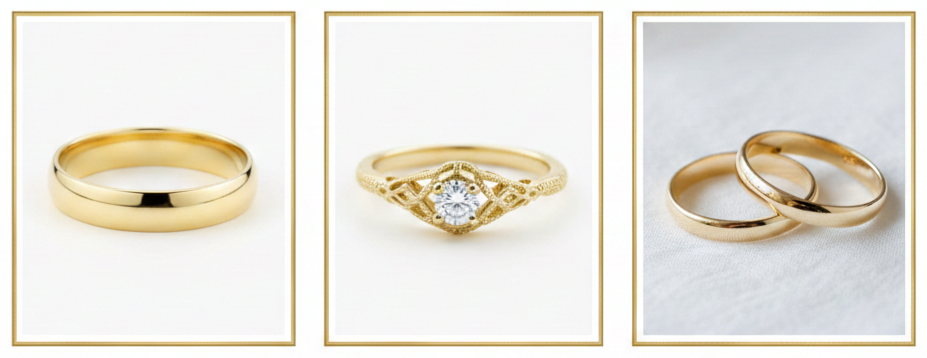
Yellow Gold
Yellow gold is the classic look most people imagine when they picture a wedding band. It carries a rich, warm tone that stays consistent over time because it does not rely on surface plating to maintain its color. Many couples choose yellow gold when they want a traditional appearance that pairs well with vintage-inspired designs or a timeless, minimalist band.
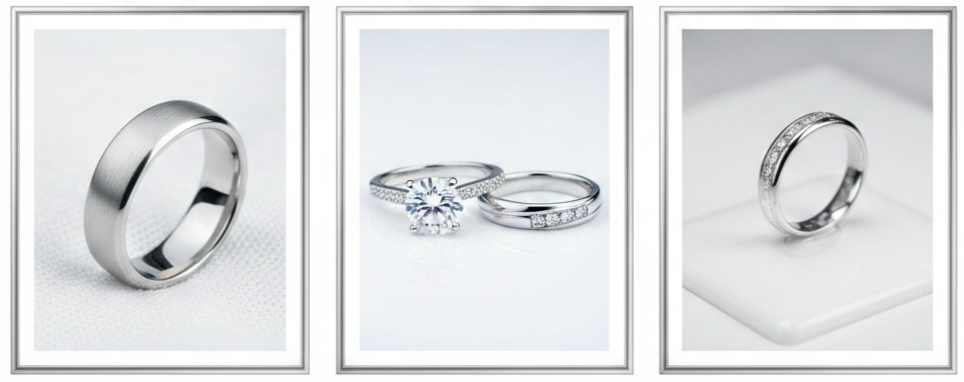
White Gold
White gold has a cooler, brighter appearance that fits modern styling and pairs nicely with diamonds and platinum-toned jewelry. Many white gold rings use rhodium plating to create a crisp white finish. Over time, that plating can wear down through daily contact, which may reveal a slightly warmer tone underneath. Re-plating is common and restores the bright surface when the color shift becomes noticeable.
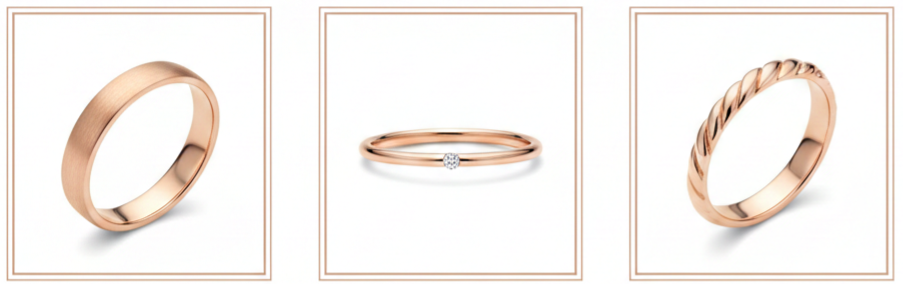
Rose Gold
Rose gold has a soft blush tone created by mixing gold with copper. It can look subtle or more pronounced depending on the karat and finish. Rose gold has a distinctive warmth that stands out without feeling flashy, which makes it popular for couples who want something slightly different while still keeping a classic metal choice.
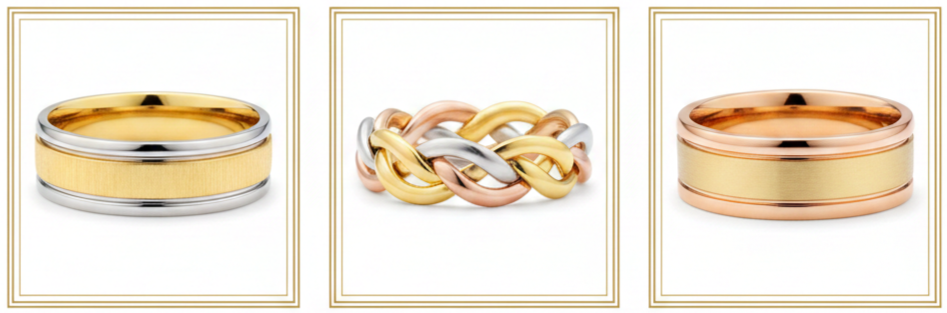
Two-Tone And Tri-Tone Gold
Mixed-tone rings combine two or three gold colors in one band, such as yellow and white, or yellow, white, and rose together. This style adds contrast and detail and also makes it easier to match the ring with different jewelry colors. Two-tone and tri-tone bands work well for people who wear both gold and silver accessories and want a ring that blends with everything.
Gold Purity Explained (10K, 14K, 18K, 22K)
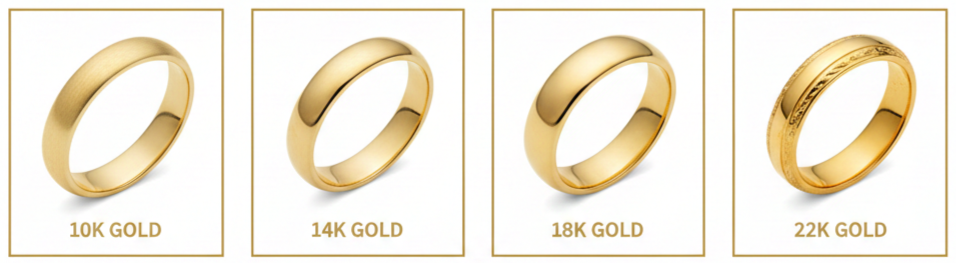
- What Karat Means: Karat measures how much pure gold is in the ring. Pure gold at 24K is usually too soft for a daily wedding band, so most rings use gold mixed with other metals. Those added metals improve durability while also influencing the final color and how the ring wears over time.
- 10K Gold: 10K gold has a lower percentage of pure gold and a higher percentage of alloy metals, which often makes it more resistant to scratches and dents. It is a practical fit for very active routines or jobs that involve frequent hand use. The tradeoff is a lighter gold tone compared with higher karats.
- 14K Gold: 14K gold is one of the most common choices because it balances durability and a rich gold appearance. It handles daily wear well, holds its shape, and keeps a strong gold tone without being overly soft. Many people see 14K as the “everyday sweet spot” for wedding rings.
- 18K Gold: 18K gold has more pure gold, which typically creates a deeper, richer color, especially in yellow gold. It can feel more premium in tone and weight. Since it is softer than 14K, it may show surface wear sooner depending on work, hobbies, and how frequently the ring contacts hard surfaces.
- 22K Gold: 22K gold has a very high gold content and a bold, saturated gold color. It is often chosen for cultural or traditional reasons where that deep tone matters. Because it is softer, the design structure and daily wear habits become more important, especially for long-term everyday wear.
Popular Golden Wedding Ring Styles
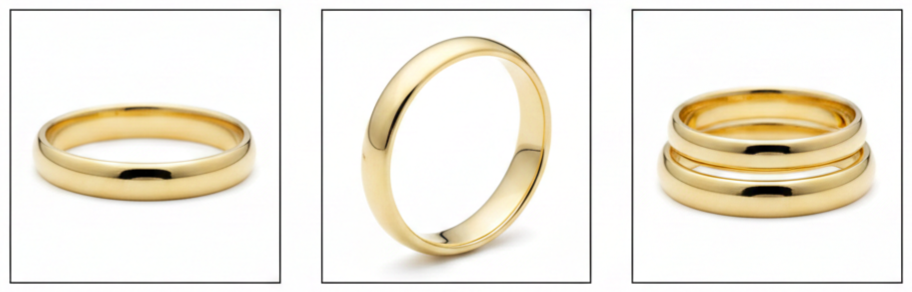
Classic Plain Band
A plain gold band stays popular because it never looks dated. With this style, craftsmanship matters because the ring relies on clean proportions, smooth edges, and consistent finishing. A well-made plain band feels comfortable, looks balanced from every angle, and pairs easily with other jewelry.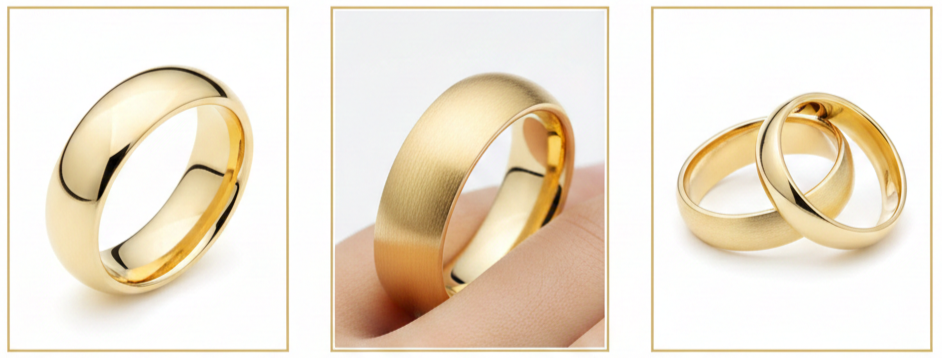
Comfort-Fit Bands
Comfort-fit rings have a rounded interior that feels smoother against the finger. Many people like how comfort-fit styles slide on and off more easily and feel less restrictive during hand movement. This can be especially noticeable on wider bands where a flat interior may feel tighter.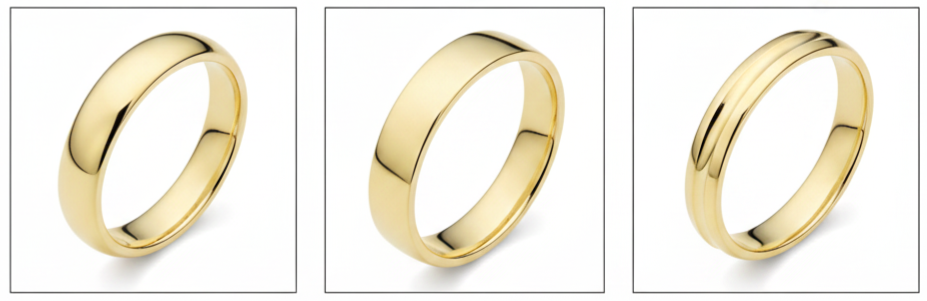
Domed, Flat, And Knife-Edge Profiles
A domed ring has a rounded outer surface that reflects light softly and reads traditional. A flat profile looks modern with clean, straight lines. A knife-edge profile includes a subtle raised ridge down the center that adds structure and definition without needing stones or heavy engraving.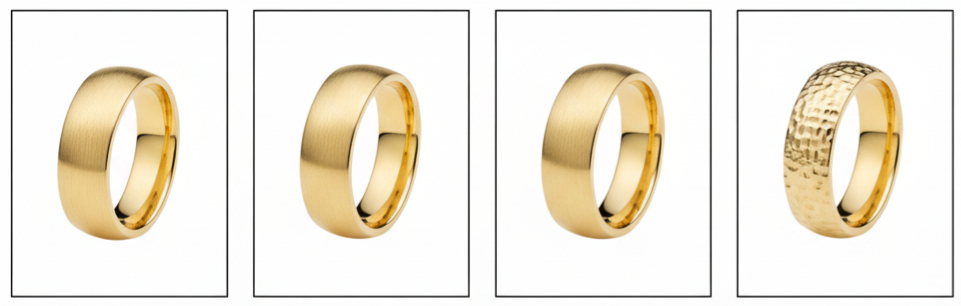
Textured And Matte Finishes
Finishes shape how the ring looks under light and how visible everyday wear becomes. A high-polish finish looks bright and reflective, though light scratches can show sooner. Brushed and satin finishes create a softer sheen and usually disguise small marks better. Matte finishes look low-shine and modern, though they may develop shine in high-contact areas. Hammered finishes add irregular texture and character, and many people like how that texture naturally hides everyday scuffs.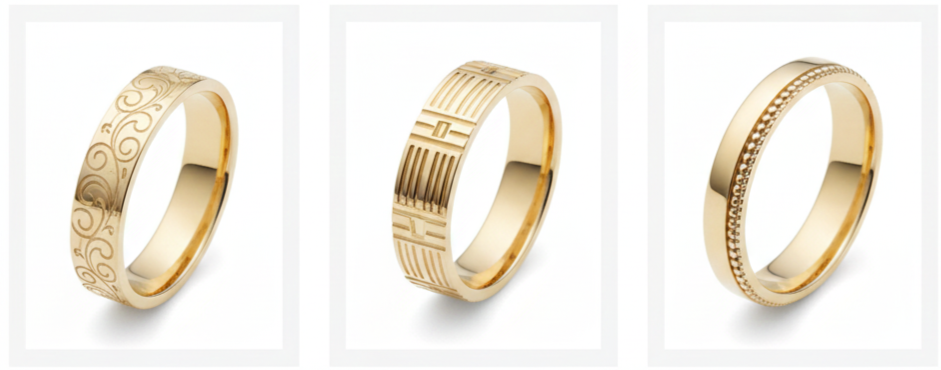
Engraved And Patterned Bands
Engraving adds detail through repeating patterns, geometric lines, or decorative edges like milgrain. These designs can feel vintage-inspired or clean and modern depending on the pattern style. Patterned bands keep the ring visually interesting without relying on stones.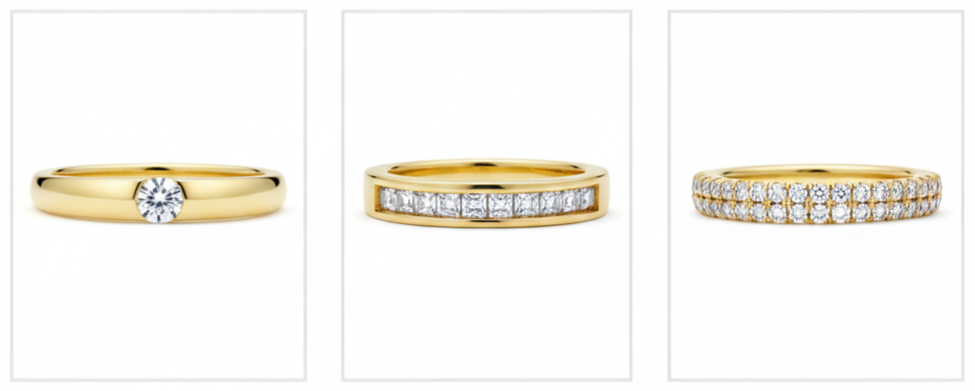
Diamond Or Gem Accents
Stone accents range from subtle to bold. A single accent stone adds a small point of sparkle. Channel-set stones sit flush within a channel for a smoother silhouette. Pavé details add multiple small stones along the surface for more shine. With any stone option, secure setting work matters because daily wear includes contact, friction, and movement that can loosen stones over time.
Choosing The Right Width And Thickness
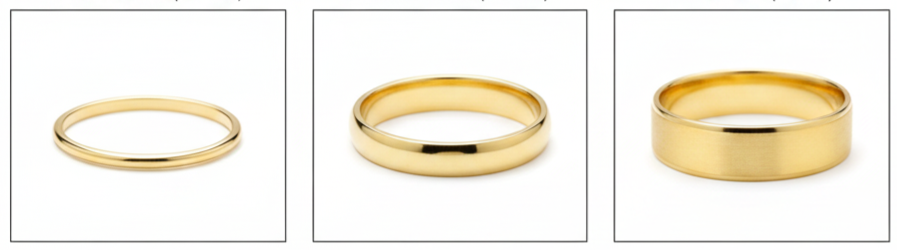
- Ring Width: Narrow bands around 2mm to 4mm feel subtle and lightweight, and they pair easily with an engagement ring. Medium bands around 5mm to 7mm feel balanced and noticeable without looking bulky. Wide bands around 8mm and up create a bold look and allow more space for patterns, textures, and design details.
- Ring Thickness: Thickness affects durability and how “solid” the ring feels. A very thin ring may be more likely to warp over time, while an overly thick ring can feel heavy and less comfortable for all-day wear. Many people choose a thickness that feels sturdy, sits comfortably, and supports the ring’s long-term shape.
Matching Rings As A Couple
Some couples like matching sets, while others prefer rings that share a similar vibe without being identical. Both approaches work well when the choices feel intentional. Matching sets usually focus on the same gold color, the same finish, or the same profile shape. Complementary sets keep a shared element, like the same gold tone with different widths, or similar edge details that look connected while still fitting each person’s style.
Comfort, Fit, And Sizing Tips
- How A Ring Should Feel: A properly fitted ring slides over the knuckle with slight resistance and then sits securely at the base of the finger. It should not pinch, leave deep impressions, or rotate constantly throughout the day.
- Sizing Considerations: Finger size can change with temperature, hydration, and daily activity. Hands may swell in heat or after exercise and may shrink in cold weather. Many jewelers recommend measuring when hands feel normal, not immediately after heavy activity or cold exposure.
- Comfort-Fit Vs Standard-Fit: Comfort-fit rings can feel slightly roomier because of the rounded interior. Even when the size number matches, the sensation can differ from a standard-fit ring. Trying both styles helps confirm which interior feels better during movement and long wear.
- Resizing Practicalities: Many gold rings can be resized, especially plain bands. Resizing can be more limited with patterns, eternity-style stone layouts, or multi-tone designs. It helps to confirm resizing eligibility before purchase, especially when choosing a detailed style.
Customization Ideas That Keep The Ring Personal
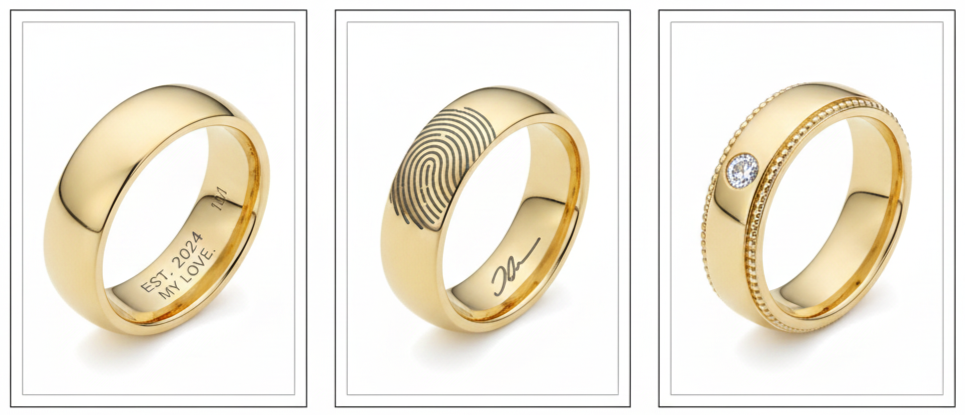
- Inside Engraving: Inside engravings add meaning without changing the ring’s exterior. Many people choose initials, dates, short phrases, or coordinates. This option keeps the ring’s style clean while making it personal.
- Handwriting Or Fingerprint Details: Handwriting engraving can turn a signature or note into a wearable detail. Fingerprint designs add a private, subtle feature that feels unique without looking overly decorative.
- Hidden Stones And Design Touches: A hidden stone inside the band adds meaning without changing the visible style. Edge details like milgrain, beveling, or rounded corners can also shift the ring’s look and comfort while still keeping a simple overall appearance.
How To Budget For A Golden Wedding Ring
Budgeting becomes easier when we focus on the choices that change the final price most. Karat impacts cost, and higher karat gold usually costs more. Ring weight also matters because wider and thicker bands contain more gold. Design complexity adds labor cost, especially with engraved patterns, custom textures, or mixed-metal construction. Stones add cost based on type, size, and setting style. Brand and craftsmanship can also influence pricing, especially when warranties and service plans are included. A practical budget usually prioritizes comfort and solid construction first, then adds design details like finish, engraving, or stones based on preference.
Where To Buy A Golden Wedding Ring
A local jeweler usually offers in-person sizing, finish comparisons, and direct input on comfort details like width, edge shape, and interior fit. Many also provide long-term services like resizing, refinishing, inspections, and repairs. Online stores often provide larger selections and convenient browsing, though the best experiences include clear specifications, close-up images, and straightforward sizing guidance. In either case, it is smart to confirm the ring’s karat, gold color, width, thickness, interior style, resizing eligibility, return policy, and warranty coverage before purchase.
What To Look For In Quality And Craftsmanship
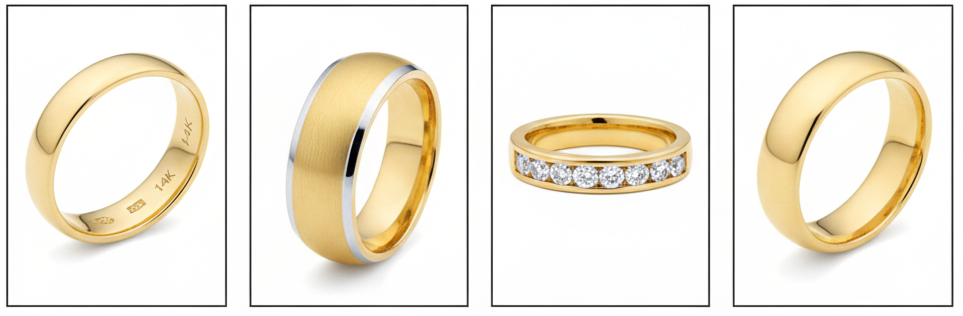
- Hallmarks And Stamps: Gold rings usually include stamps like 10K, 14K, 18K, or 22K, and some include a maker’s mark. These markings support transparency about the metal content and help confirm what the ring is made of.
- Finish Consistency: A well-made ring looks even in finish and feels smooth along the edges. Transitions between surfaces, such as polished-to-brushed sections, should look intentional and clean rather than uneven. A ring should also feel comfortable against the skin and not catch on clothing.
- Stone-Setting Security: Rings with stones should show secure, symmetrical setting work. Prongs should feel smooth and properly finished, and stones should sit straight without looseness. Channel settings should keep stones aligned and protected without gaps where shifting could begin.
- Structural Integrity: The ring should feel solid for its size. Hollow or overly light construction may feel less durable over time. A well-built band holds its shape and stays comfortable during everyday wear.
Caring For A Golden Wedding Ring
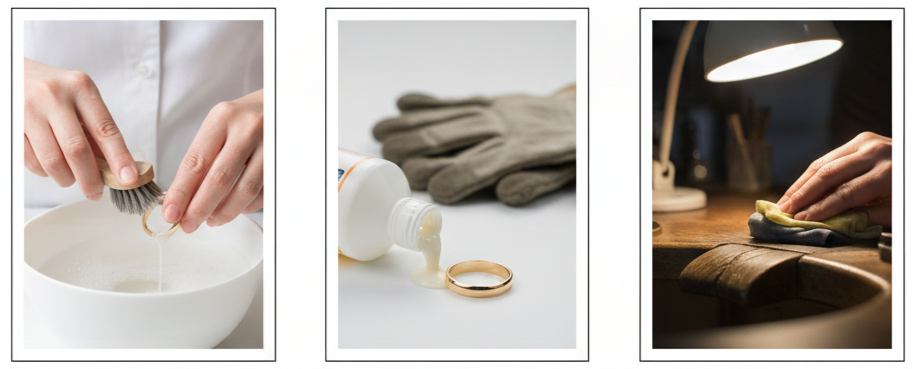
- At-Home Cleaning: Mild soap and lukewarm water work well for most gold rings. A brief soak followed by a soft brush helps remove residue, then a thorough rinse and gentle drying keeps the finish clear. This method suits plain bands and many stone-set rings, though delicate settings benefit from gentle pressure and careful handling.
- Avoiding Common Damage Sources: Harsh chemicals can dull finishes and may affect settings over time. Abrasive surfaces increase scratching, especially on polished finishes. Heavy impact can dent softer gold alloys, which is more noticeable as karat increases.
- Professional Maintenance: Periodic inspections confirm settings remain secure and the band stays structurally sound. Polishing refreshes shine, and refinishing restores brushed or matte textures when they naturally smooth out from wear.
Common Mistakes To Avoid
A few common missteps can turn a ring that looks great into one that feels frustrating. Choosing a ring based on looks alone can lead to comfort issues, especially with wide bands or sharper profiles. Picking a karat level that does not match daily routines can cause faster wear than expected. Skipping sizing checks and ignoring policies on resizing, returns, and warranty coverage can limit options later. Neglecting routine maintenance can also lead to avoidable problems, especially with white gold plating or stone settings that benefit from periodic inspections.
Conclusion
A golden wedding ring stays a favorite because it blends tradition with real-world wearability. When we pick a gold color that matches personal style, choose a karat that fits daily routines, and select a width and profile that stay comfortable for long wear, the ring becomes an easy part of everyday life. Strong craftsmanship checks and clear purchase policies protect that choice, and routine cleaning and occasional professional service keep the ring looking and feeling right over time.
Key Takeaway: A golden wedding ring feels right long-term when the gold color, karat, width, and profile match real daily wear, and when the ring is supported by solid craftsmanship checks and consistent care.
FAQs
How do we choose a Wedding Ring Finish That Keeps Its Look Longer?
Brushed, satin, and hammered finishes usually disguise light scratches better than high polish. A polished finish still works well for daily wear, especially since professional polishing can restore shine when the surface starts showing contact marks.
What Details Should We Confirm When Ordering A Golden Wedding Ring Online?
We usually confirm the karat, width, thickness, interior style, resizing eligibility, return terms, and warranty coverage. Clear specifications and strong policies matter more online because we rely on measurements rather than in-person comparisons.
How Do We Know Whether A Wider Band Will Feel Comfortable All Day?
Wider bands place more metal against the finger, so interior shape matters. Comfort-fit interiors usually feel better for wider widths, and trying a similar width in person makes daily comfort easier to predict.
What Is The Most Reliable Way To Protect Stone Accents In A Gold Wedding Ring?
Secure settings matter most, and routine inspections help keep stones tight. Removing the ring during heavy work or rough activities also reduces impact and abrasion that can loosen settings over time.
What Signs Tell Us It Is Time To Have A Golden Wedding Ring Serviced?
We usually look for visible dents, a finish change that looks uneven, snagging on fabric, fit changes that cause frequent spinning, or any looseness in stone settings. Any shift in comfort or security is a good reason to schedule a professional check.
Leave a Reply