Monthly Archives: October 2025
Floral Wedding Invitations
| Floral Style | Best For | Overall Feel |
| Watercolor Florals | Spring Or Summer Weddings | Soft And Romantic |
| Line Art Botanicals | Modern Or Minimal Weddings | Clean And Elegant |
| Tropical Florals | Beach Or Destination Weddings | Bold And Vibrant |
| Wildflower Designs | Rustic Or Boho Weddings | Relaxed And Natural |
| Neutral Florals | Formal Or Timeless Weddings | Subtle And Refined |
Why Choose Floral Wedding Invitations
Floral wedding invitations continue to be a favorite for couples because they feel romantic, welcoming, and timeless without trying too hard. Flowers naturally belong in weddings, so using them in your invitations feels intuitive and meaningful. They create an emotional connection right away and give guests a preview of the mood you’re setting for your day. Whether your style leans classic, relaxed, modern, or whimsical, floral designs adapt easily and never feel out of place.
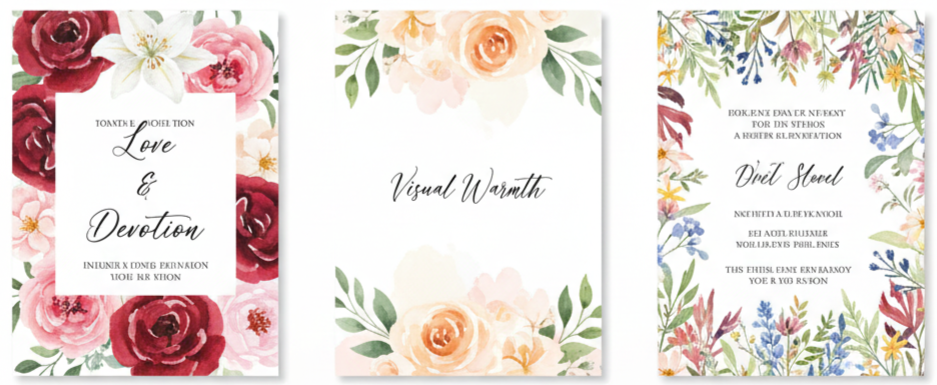
- Symbolic Meaning: Flowers symbolize love, commitment, and new beginnings. Roses stand for romance, peonies for happiness and prosperity, and lilies for purity and devotion. Adding meaningful blooms gives your invitations extra depth and intention.
- Visual Warmth: Floral artwork softens the look of wedding stationery and makes it feel inviting rather than formal or stiff. Even minimal floral accents can add warmth and personality.
- Style Flexibility: Floral wedding invitations work beautifully across themes, venues, and cultures. They fit equally well in elegant ballroom weddings, relaxed outdoor celebrations, and destination events.
Popular Floral Styles and Design Trends
Floral invitation styles have expanded far beyond traditional rose borders. Today’s designs reflect personal taste, artistic influences, and modern wedding aesthetics, giving couples plenty of creative freedom.
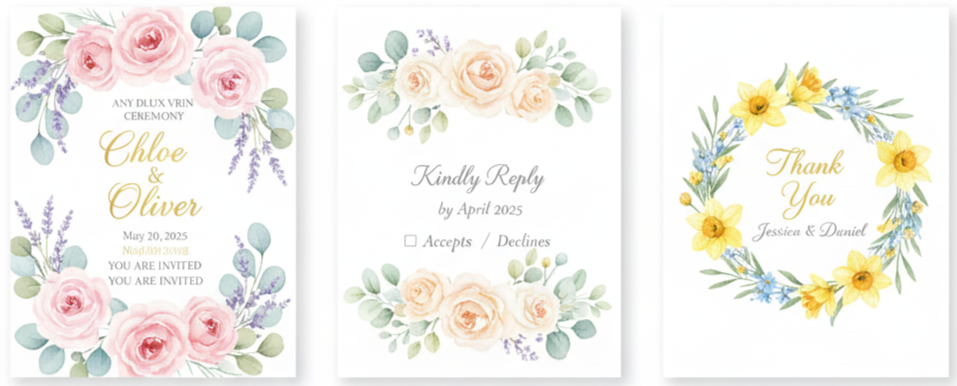
Watercolor Florals
These designs feel light, airy, and romantic. Soft brush strokes and blended colors create a dreamy effect that works especially well for spring and summer weddings. Watercolor florals pair nicely with pastel palettes and flowing calligraphy fonts.
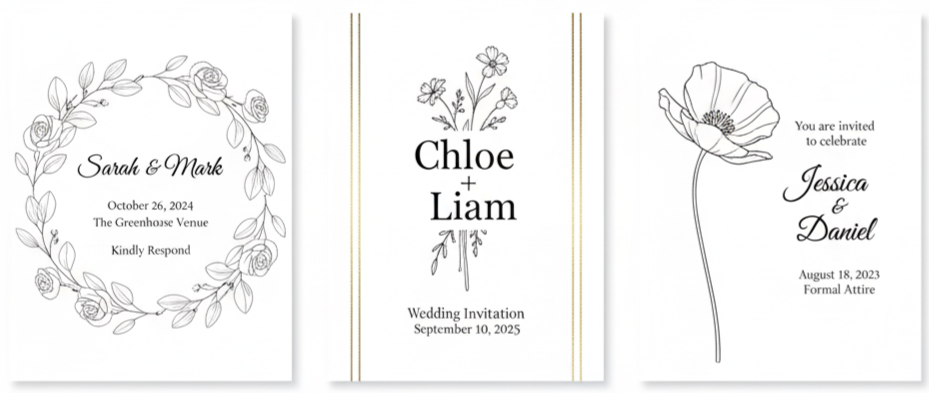
Minimalist Botanical Line Art
Clean floral outlines drawn in thin lines offer a modern, understated look. These designs often use black, white, or metallic tones and leave plenty of white space, making them perfect for couples who prefer a simple, contemporary feel.
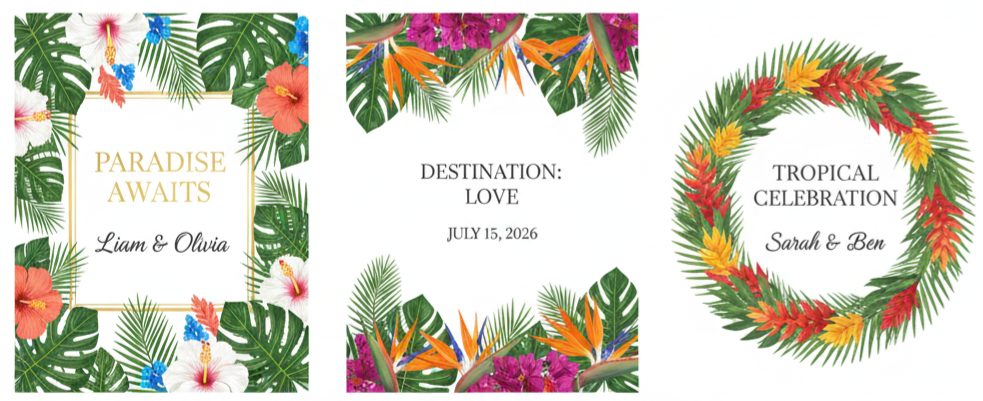
Tropical Florals
Bold leaves, hibiscus flowers, and vibrant colors instantly suggest warmth and celebration. Tropical designs are popular for beach weddings, destination ceremonies, or couples who want their invitations to feel energetic and joyful.
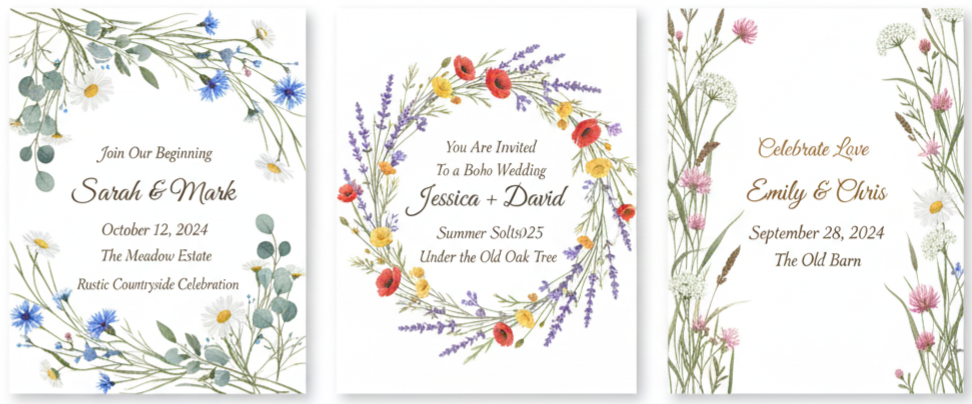
Wildflower Illustrations
Loose, unstructured florals give off a relaxed, natural vibe. These styles are ideal for rustic, countryside, or boho-inspired weddings where charm and personality matter more than formality.
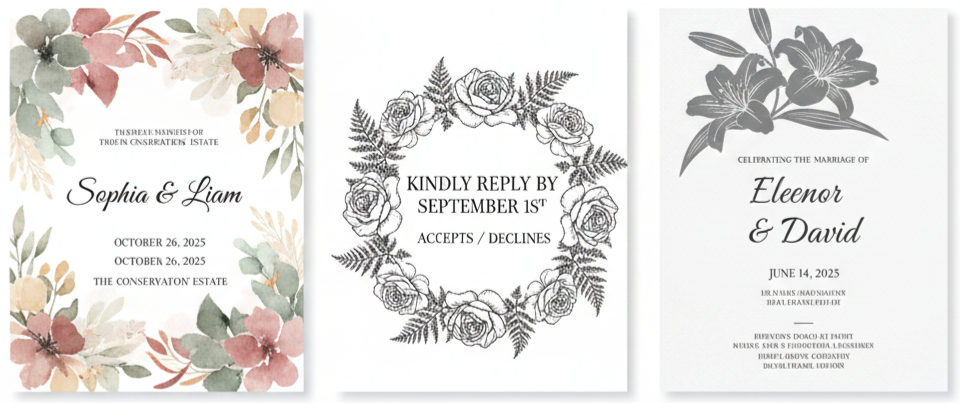
Neutral and Monochrome Florals
Florals don’t always need bright colors. Designs using soft neutrals, muted greens, or even black-and-white illustrations feel timeless and sophisticated, especially when paired with elegant typography.
Matching Florals to Your Wedding Theme
Choosing floral invitations becomes much easier when you think about your overall wedding setting and atmosphere. When your invitations align with your theme, everything feels intentional and cohesive.
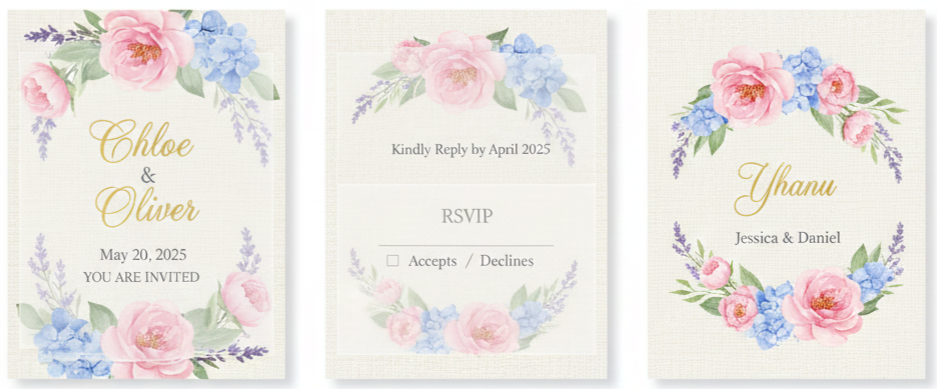
Garden and Outdoor Weddings
Soft florals like peonies, hydrangeas, and lavender work beautifully for outdoor settings. Pairing these designs with textured paper or vellum overlays enhances the natural, romantic feel.
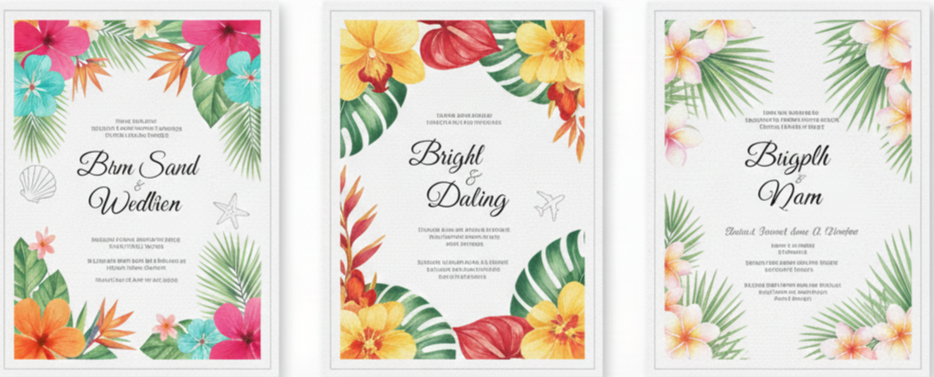
Beach and Destination Weddings
Bright florals, palm leaves, and tropical blooms immediately set the tone. These designs let guests know they’re headed somewhere fun, relaxed, and memorable.
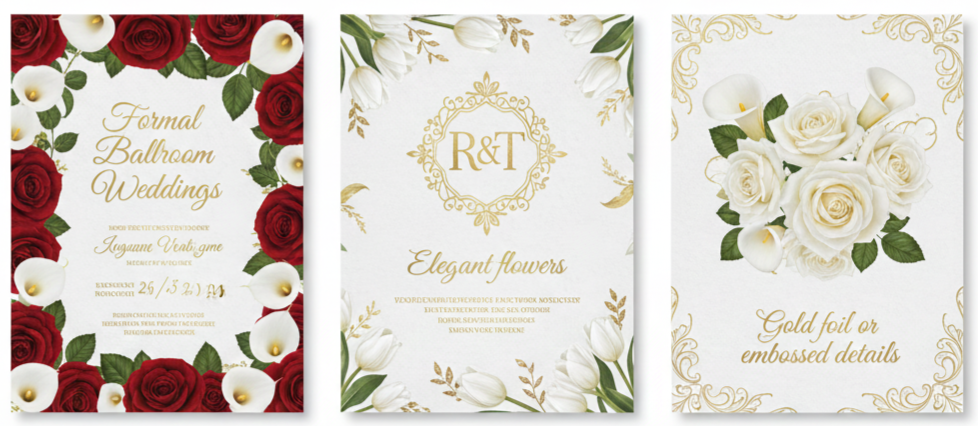
Formal Ballroom Weddings
Elegant flowers such as roses, tulips, or calla lilies combined with gold foil or embossed details create a refined look that matches upscale venues.
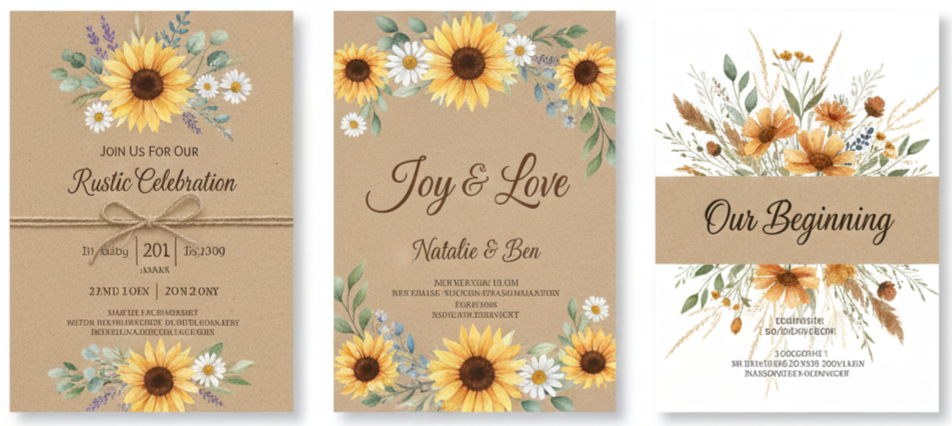
Rustic and Barn Weddings
Wildflowers, sunflowers, and earthy tones feel right at home in rustic settings. Kraft paper, soft neutrals, and simple fonts help complete the look.
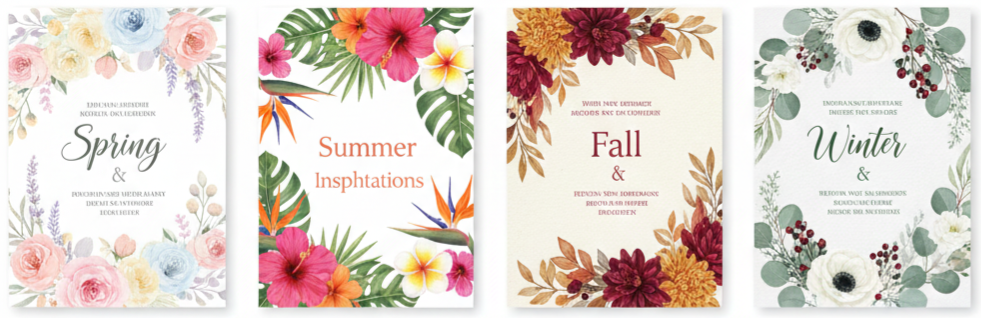
Seasonal Inspiration
Spring favors blossoms and pastels, summer embraces bold and bright florals, fall leans into warm and rich colors, and winter designs often include greenery, white florals, or deep reds.
Customization Ideas for Personal Touches
Custom details turn a pretty invitation into something memorable and personal. Even small choices can make your floral invitations feel unique and meaningful.
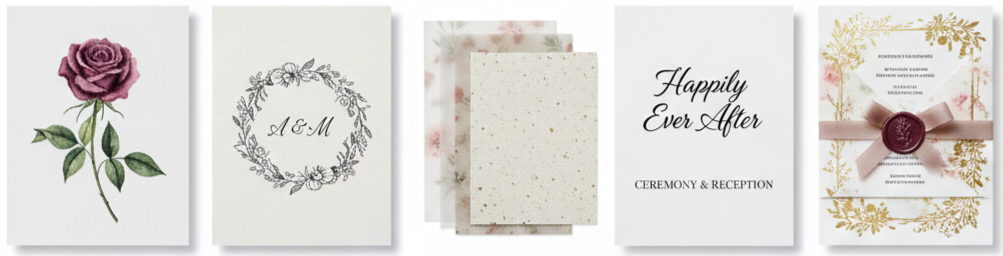
- Personal Flower Choices: Incorporating flowers that have personal meaning, such as your favorite bloom or the flower used in your bouquet, adds emotional value to the design.
- Custom Illustrations: Hand-drawn floral crests, monograms, or borders give invitations a one-of-a-kind feel and reflect your personality as a couple.
- Paper Selection: Paper type plays a bigger role than many couples realize. Cotton cardstock feels soft and luxurious, vellum adds elegance, and recycled paper works well for eco-conscious weddings.
- Typography Pairings: Combining fonts creates visual interest. Many couples pair flowing scripts with clean serif fonts to balance romance and readability.
- Decorative Finishes: Foil stamping, wax seals, silk ribbons, deckled edges, and envelope liners add texture and visual interest without overwhelming the design.
Where to Find Floral Wedding Invitations
Finding the right place to order your invitations depends on your budget, timeline, and how custom you want the design to be. Fortunately, there are great options for every preference.
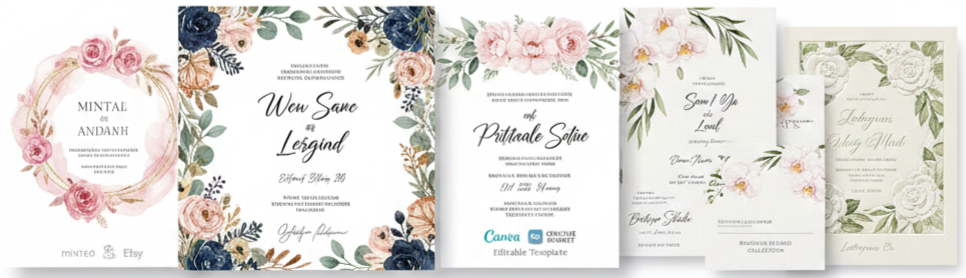
- Online Invitation Platforms: Websites like Minted, Zola, and Etsy offer a wide range of floral designs with customization options. These are convenient and often budget-friendly.
- Independent Designers: Working with a stationery designer allows for deeper customization and creative collaboration. This option is ideal for couples who want something truly unique.
- Printable Templates: Downloadable templates from platforms like Canva or Creative Market allow couples to personalize and print invitations themselves, offering flexibility and cost savings.
- Boutique Studios: Semi-custom studios provide professionally designed floral suites that can be personalized without starting from scratch.
- Letterpress Printers: For couples seeking a premium, tactile experience, letterpress printing adds depth and elegance to floral designs.
Tips for Ordering Floral Invitations
Ordering invitations involves timing, planning, and attention to detail. Staying organized helps prevent stress and last-minute changes.
- Timeline Planning: Start designing and ordering invitations four to six months ahead, and mail them six to eight weeks before the wedding.
- Proofreading Carefully: Always double-check names, dates, and addresses. Having someone else review the proof helps catch mistakes.
- Ordering Extras: Ordering additional invitations ensures you’re prepared for last-minute guest list changes or mailing errors.
- Coordinating the Suite: Save-the-dates, RSVP cards, envelopes, and thank-you notes should match the floral theme for a cohesive look.
- Choosing Print Methods: Digital printing is cost-effective, while foil stamping and letterpress printing add texture and elegance for more formal weddings.
Floral Elements Beyond the Invitation
Extending your floral design across your wedding details creates a polished and thoughtfully planned experience for guests.
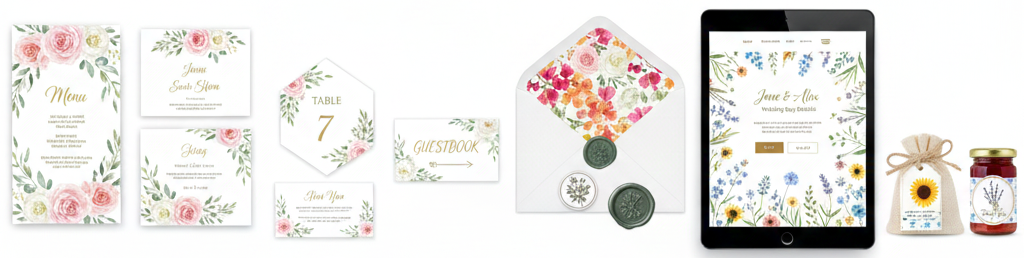
- Stationery Coordination: Menus, ceremony programs, and seating charts look more cohesive when they include matching floral elements.
- Reception Details: Place cards, table numbers, and signage can feature subtle floral accents to tie everything together.
- Envelope Enhancements: Floral liners, custom stamps, and wax seals add charm before guests even open the invitation.
- Digital Consistency: Wedding websites that reflect the same floral theme help create a seamless transition from paper to digital.
- Wedding Favors: Tags, labels, or packaging with floral details continue the theme and make keepsakes feel intentional.
Conclusion
Floral wedding invitations are more than just a way to share wedding details. They introduce your celebration, reflect your personality, and set expectations for the day ahead. With endless styles, color palettes, and customization options available, floral designs offer something for every couple. Whether your wedding feels romantic, relaxed, elegant, or modern, floral invitations help bring that vision to life in a way that feels natural and memorable.
Key Takeaway: Thoughtfully chosen floral wedding invitations create a cohesive first impression that connects your wedding style, story, and guest experience from the very beginning.
FAQs
Do floral wedding invitations work for modern weddings?
Yes, floral invitations adapt easily to modern styles through minimalist illustrations, neutral palettes, and clean typography.
Are floral invitations suitable for formal weddings?
Floral designs work beautifully for formal weddings when paired with elegant flowers, high-quality paper, and refined finishes like foil or embossing.
Can floral invitations be eco-friendly?
Using recycled paper, plant-based inks, and digital options helps reduce environmental impact while keeping floral designs intact.
Should floral invitations match the wedding flowers exactly?
Exact matching isn’t required. Using similar tones or floral styles creates harmony without limiting design choices.
How far in advance should floral invitations be ordered?
Most couples order invitations four to six months before the wedding to allow time for customization, printing, and mailing.
Five Hottest Wedding Invitations For Rustic Theme Weddings
| Rustic Invitation Style | Best For Wedding Setting | Overall Look |
| Woodgrain-Inspired | Barns, Lodges, Vineyards | Warm, Natural, Timeless |
| Botanical & Wildflower | Gardens, Farms, Outdoor Ceremonies | Soft, Romantic, Airy |
| Vintage Lace & Burlap | Farmhouses, Country Estates | Classic, Handmade, Nostalgic |
| Minimalist Kraft Paper | Small Weddings, Elopements | Clean, Earthy, Modern Rustic |
| Illustrated Scenery | Destination or Outdoor Venues | Artistic, Personal, Story-Driven |
Woodgrain-Inspired Invitations Bring Nature Front and Center
Rustic weddings and wood textures naturally go hand in hand. Woodgrain-inspired invitations continue to be one of the most popular choices because they immediately communicate warmth, simplicity, and a connection to nature. These invitations work especially well for couples planning barn weddings, countryside ceremonies, vineyard celebrations, or mountain lodge events.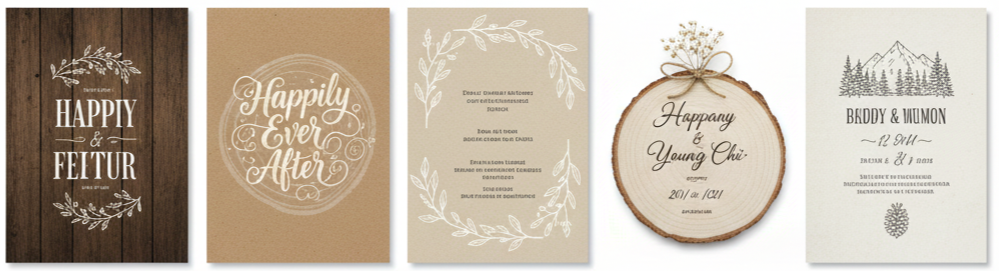
- Design Style: Woodgrain invitations often feature realistic printed wood textures or layered designs that mimic tree rings, bark, or reclaimed wood planks. Some styles even incorporate thin wood veneer for added texture and visual depth.
- Color Palette: Shades usually stay within earthy tones such as warm brown, weathered gray, honey oak, or muted beige. These colors feel grounded and timeless while pairing well with neutral envelopes.
- Material Choices: Kraft cardstock, recycled paper, and matte finishes enhance the organic look. Glossy paper is usually avoided since it can take away from the natural feel.
- Typography: Serif fonts, engraved-style lettering, or hand-lettered scripts are commonly used to complement the rugged yet refined appearance.
These invitations are ideal for couples who want their stationery to feel authentic and rooted in nature without appearing overly decorative. Woodgrain designs set a strong first impression while staying versatile enough to suit different seasons and venues.
Botanical and Wildflower Prints Add Soft, Romantic Charm
Botanical and wildflower invitations bring a lighter, more romantic interpretation of rustic style. These designs focus on natural beauty through delicate illustrations and gentle color palettes, making them perfect for outdoor weddings and garden-inspired settings.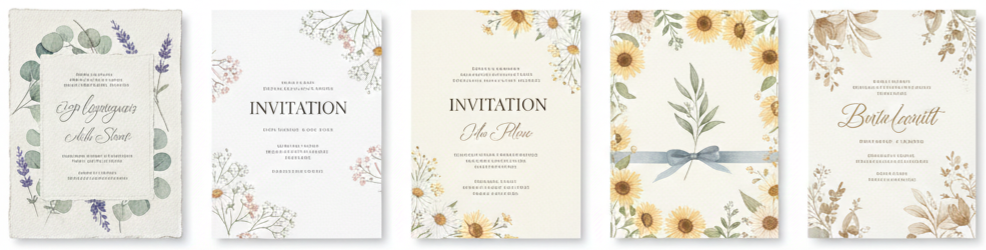
- Artwork Style: Watercolor florals, hand-drawn greenery, and simple botanical sketches create a relaxed yet polished look. The designs often leave plenty of white space to keep the layout clean.
- Popular Florals: Lavender, eucalyptus, baby’s breath, daisies, and sunflowers are frequently featured because they feel natural and seasonally flexible.
- Color Tones: Soft greens, dusty rose, pale yellow, muted blue, and warm ivory dominate these designs. The colors feel calm and inviting without overpowering the text.
- Paper Selection: Cotton paper, lightly textured cardstock, or deckle-edge paper adds a tactile element that reinforces the organic theme.
Botanical invitations suit couples seeking a rustic yet airy, refined look. They’re perfect for spring and summer weddings, and dried floral designs also fit fall celebrations.
Vintage Lace and Burlap Invitations Blend Old-World Charm with Rustic Style
For couples drawn to nostalgia and handcrafted details, vintage lace and burlap invitations offer a charming balance between elegance and rustic appeal. These designs are especially popular for farmhous weddings and intimate gatherings.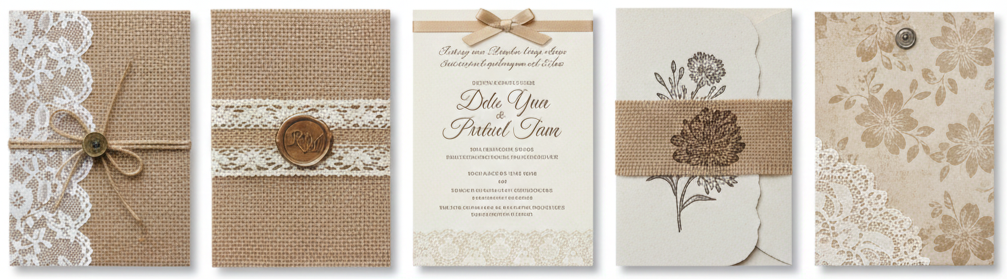
- Burlap Elements: Burlap is often used as a wrap, belly band, or printed background, adding texture and a tactile, down-to-earth feel.
- Lace Accents: Lace details may appear as overlays, printed patterns, or decorative borders that soften the overall look.
- Color Choices: Neutral shades such as ivory, taupe, beige, and soft gray keep the design cohesive and timeless.
- Decorative Finishes: Ribbon ties, buttons, wax seals, and stamped details are often used to enhance the handmade aesthetic.
Typography in these invitations usually leans toward traditional serif fonts or flowing scripts that reflect vintage stationery styles. This invitation type works well for couples who appreciate classic design with a rustic twist and want their invitations to feel personal and meaningful.
Minimalist Kraft Paper Invitations Keep It Clean and Authentic
Minimalist kraft paper invitations offer a modern take on rustic wedding stationery. They focus on clarity, simplicity, and natural materials, making them ideal for couples who prefer understated design.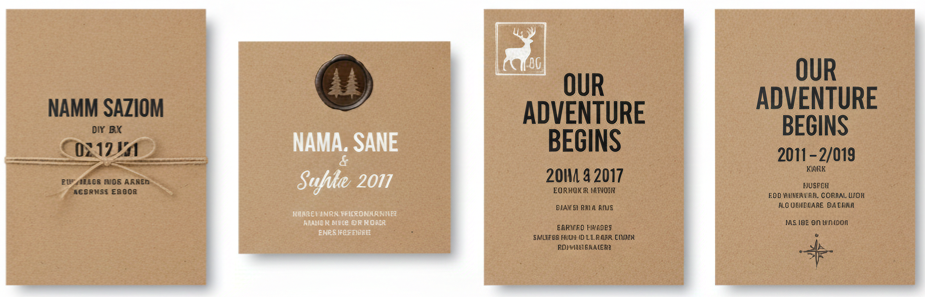
- Base Material: Natural brown kraft cardstock serves as the foundation, providing an earthy tone that feels genuine and approachable.
- Layout Approach: These designs emphasize spacing, balance, and straightforward presentation. The focus stays on the essential information rather than decorative graphics.
- Typography Style: Bold sans-serif fonts or clean serif fonts are commonly used to create contrast against the kraft background.
- Subtle Enhancements: Twine closures, wax seals, custom stamps, or embossed text add just enough detail without overwhelming the design.
Minimalist kraft paper invitations are especially popular for eco-conscious weddings, elopements, and smaller celebrations. They prove that rustic style does not need embellishment to feel intentional and stylish.
Illustrated Barns, Trees, and Mountain Scenery Create a Story
Illustrated rustic invitations stand out for their ability to tell a story. These designs feature hand-drawn or watercolor artwork that reflects meaningful locations or natural scenery tied to the wedding.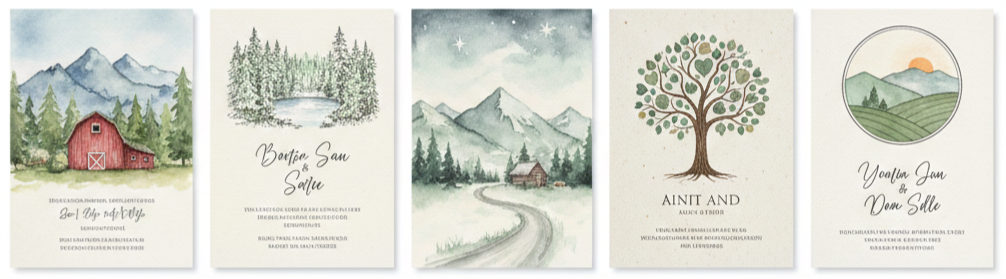
- Illustration Themes: Barns, forests, trees, mountains, lakes, and rolling hills are commonly depicted to mirror the wedding setting.
- Artistic Style: Watercolor techniques and fine line drawings are often used to create softness and depth while keeping the focus on the illustration.
- Color Coordination: Earth tones, muted greens, soft blues, and neutral backgrounds help maintain cohesion with rustic themes.
- Typography Balance: Fonts are typically kept simple so the artwork remains the focal point of the invitation.
These invitations are especially fitting for destination weddings, outdoor ceremonies, or couples who want their stationery to reflect a sense of place. Illustrated designs feel personal and memorable while still aligning with rustic aesthetics.
Tips to Personalize Your Rustic Invitations
Personalization transforms rustic wedding invitations from attractive designs into meaningful keepsakes. Thoughtful details ensure the stationery reflects the couple’s personality and the overall wedding vision.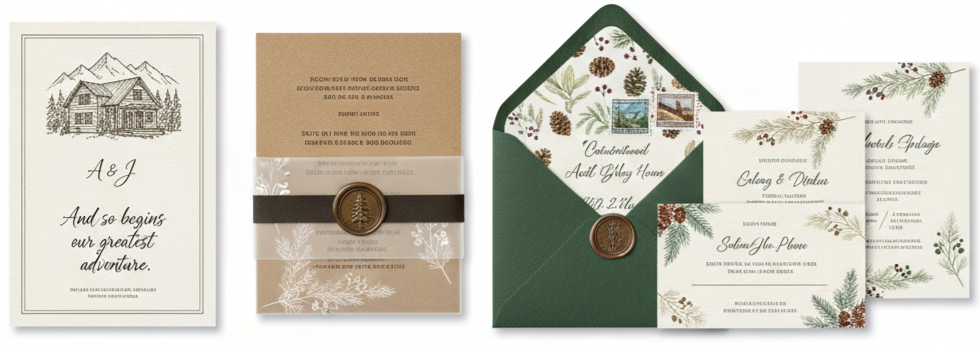
- Custom Details: Monograms, meaningful quotes, or venue sketches help make invitations feel unique and intentional.
- Layering Options: Vellum overlays, belly bands, or layered inserts add visual interest while maintaining cohesion.
- Envelope Enhancements: Envelope liners, vintage postage, or hand-addressed envelopes reinforce the rustic feel before guests even open the invitation.
- Design Consistency: Matching fonts, colors, and textures across all stationery pieces creates a polished and unified look.
These small choices collectively elevate the invitation suite and strengthen the overall presentation.
Where to Shop for Rustic Wedding Invitations
Finding rustic wedding invitations has never been easier, thanks to a wide range of online and handmade options.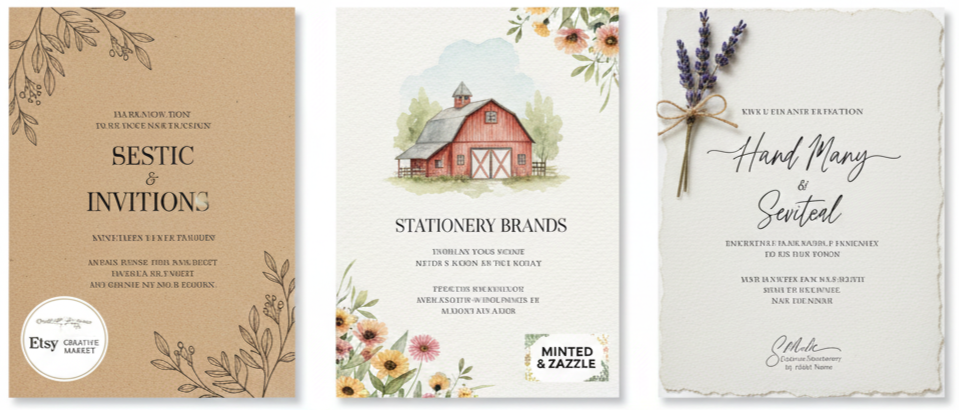
- Online Marketplaces: Platforms like Etsy offer access to independent designers who specialize in rustic styles and custom work.
- Stationery Brands: Websites such as Minted and Zazzle provide professionally printed templates that can be customized quickly.
- Handmade Designers: Working directly with a stationery artist allows for deeper customization and material selection.
Choosing a trusted source ensures quality printing, accurate colors, and durable materials that match the design vision.
Conclusion
Rustic wedding invitations play a key role in shaping how guests experience your celebration from the very beginning. Whether your style leans toward rugged wood textures, delicate botanicals, vintage lace, minimalist kraft designs, or scenic illustrations, each option offers a unique way to express your theme. Invitations are not just informational pieces; they are the first glimpse into the atmosphere you are creating. By choosing a design that aligns with your venue, season, and personal style, you ensure that your wedding story begins the moment your invitation is opened.
Key Takeaway: Rustic wedding invitations succeed when they balance natural elements, thoughtful design, and personal touches. The best choice is one that feels authentic to your setting and reflects the experience you want your guests to anticipate.
FAQs
What type of font works best with rustic wedding invitations?
Rustic invitations typically pair well with serif fonts, handwritten styles, or calligraphy-inspired lettering. These fonts add warmth and character while staying easy to read.
Can rustic wedding invitations work for formal events?
Yes, rustic designs can still feel polished. Using premium paper, refined typography, and restrained embellishments helps elevate the look for more formal weddings.
Should the invitation design match the venue exactly?
Matching the overall tone of the venue is helpful. A barn setting may suit woodgrain or burlap styles, while a garden venue pairs well with botanical designs.
Are rustic invitations limited to certain seasons?
Rustic invitations work year-round. Spring and summer designs often feature florals, while fall and winter styles lean toward wood textures and deeper tones.
Is it necessary to coordinate invitations with other wedding stationery?
Coordinating invitations with programs, menus, and signage creates a cohesive visual experience and reinforces the wedding theme throughout the event.
Feed
| Feed Type | Primary Purpose | What It Delivers | Common Examples |
| Social Media Feed | Surface engaging content | Posts, videos, ads | Facebook, Instagram, TikTok |
| RSS/News Feed | Deliver subscribed updates | Headlines, new articles | RSS, Feedly, publisher feeds |
| Algorithmic Feed | Personalize recommendations | Videos, shows, music | YouTube, Netflix, Spotify |
| Real-Time Data Feed | Stream live operational data | Prices, inventory, weather | Stock tickers, product feeds, weather APIs |
| Livestock Feed | Support animal nutrition | Rations, supplements | Forage, grains, silage, premix |
What Is a Feed, Really?
A feed shows up in more places than most people realize. We see it every time we open a social app, check the news, shop online, or look at a weather update. In the simplest sense, a feed means a steady stream of something delivered to us, either content, data, or nutrition. The meaning changes depending on the industry, yet the core idea stays the same: a feed keeps information or resources flowing in an organized, repeatable way.
Feeds started as a plain word tied to feeding animals. Over time, technology borrowed the term to describe how updates move from a source to a user. Early internet tools like RSS helped people “subscribe” to website updates without checking each site manually. That same logic now powers modern content experiences, where platforms continuously refresh what we see. Whether we talk about a social media feed, a news feed, a product feed, or livestock feed, we’re talking about a system that delivers a stream based on rules, timing, and purpose.
Types of Feeds and How They Work
Feeds come in several forms, and each one runs on a different structure. Some feeds rely on algorithms that learn behavior. Others follow a clean subscription model. Some feeds deliver data for business systems. Others deliver nutrition for animals. The important part is that each feed type exists to solve a delivery problem: getting the right stream to the right place at the right time.
Social Media Feeds
Social feeds are the endless scrolls on platforms like Facebook, Instagram, and TikTok. Instead of showing everything in perfect time order, these feeds usually rank posts based on your actions. Likes, comments, shares, saves, profile visits, and watch time all shape what appears next. Facebook tends to mix updates from friends, groups, followed pages, and ads. Instagram combines posts, short videos, and recommendations based on engagement patterns. TikTok’s “For You” experience pushes highly personalized videos by measuring how long we watch, whether we rewatch, and how quickly we scroll away.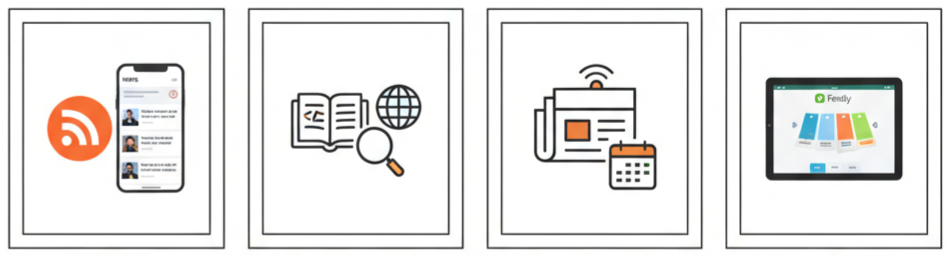
RSS And News Feeds
RSS feeds provide a cleaner approach. We subscribe to a website’s updates, then a feed reader collects new posts in one place. This format works well for people who want control and fewer distractions. News sites, blogs, and organizations use RSS to distribute updates in a standardized structure, which makes it easy for tools like Feedly to display new items the moment they publish.
Algorithm-Based Feeds
Many entertainment platforms run on recommendation feeds. YouTube suggests videos based on viewing history, topic interest, and session behavior. Netflix and similar streaming services recommend shows based on what we watch, what we finish, what we abandon, and what similar viewers prefer. Spotify builds listening feeds through playlists and discovery features that react to skips, repeats, and favorite genres. These feeds aim to reduce decision fatigue by placing “next best” options directly in front of us.
Real-Time Data Feeds
Data feeds drive industries where timing and accuracy matter. Stock and trading systems stream prices, volumes, and market changes in seconds. E-commerce product systems use data feeds to sync inventory, pricing, and availability across platforms. Weather services rely on data feeds that refresh readings, forecasts, and alerts. These feeds require strong reliability because small delays or errors can lead to missed opportunities, wrong decisions, or poor customer experiences.
How Feeds Show Up in Everyday Life
Feeds influence what we notice, what we learn, and what we buy. Even when we don’t think about it, feeds guide daily decisions by shaping what appears in front of us first. A social media feed can set our mood for the day, a news feed can shape what we believe is important, and a shopping feed can change what we consider “in stock” or “on sale.” On the physical side, animal feed affects the quality and stability of food production, which impacts availability and pricing across markets.
We also rely on feeds for convenience. A streaming feed reduces the time we spend searching for something to watch. A product feed ensures we don’t buy something that is actually out of stock. A weather feed helps us plan commutes and trips. Feeds are not just a tech feature. They are a delivery system that shapes routines.
The Tech That Makes Feeds Happen
A feed may look simple on the surface, yet most modern feeds run on complex systems. Some feeds depend on artificial intelligence. Some rely on syndication formats like RSS. Some depend on high-performance data pipelines that push updates instantly. The type of technology depends on the feed’s purpose.
- AI And Machine Learning: Many digital feeds use machine learning to predict what content we’ll engage with. These systems measure behavior signals such as clicks, scroll speed, time spent viewing, repeat views, and interactions. They also analyze what content contains by scanning titles, captions, topics, and even patterns in comments. Collaborative filtering plays a big role as well, where the system compares one user’s behavior with another’s to suggest content that “similar users” consumed.
- Syndication And Automation: RSS and related formats use structured data so tools can pull updates without manual browsing. That structure allows blogs, news sites, and organizations to distribute new content automatically. In business settings, syndication also supports content workflows, where websites, newsletters, and internal dashboards pull from the same feed source to stay consistent.
- Real-Time Infrastructure: Live data feeds rely on technology designed for speed and scale. APIs allow systems to request and exchange data. Webhooks push updates instantly when something changes, rather than waiting for repeated checks. Caching reduces load during spikes by storing frequently requested data for quick access. Queuing systems help manage traffic surges by lining up updates in a controlled flow. These pieces work together so the feed stays fast, accurate, and stable.
Ethical Issues and Real-World Challenges
Feeds solve delivery problems, yet they also create challenges. Personalization can narrow what we see. Data collection can raise privacy concerns. Agricultural feed production can strain natural resources. Every feed system carries tradeoffs, which is why responsible design and careful use matter.
- Filter Bubbles And Digital Blind Spots: Personalized content feeds can trap users in a narrow loop. When a platform keeps showing similar viewpoints, users may stop encountering new ideas. That effect can reinforce bias and create echo chambers. On social platforms, engagement-driven ranking can also reward sensational content, which may spread misinformation faster than factual updates, especially when the content triggers strong reactions and earns rapid shares.
- Data And Privacy Concerns: Personalization depends on tracking. Platforms can collect browsing habits, engagement behavior, device information, and sometimes location signals. Over time, those data points build a detailed profile. Some people accept this exchange for convenience, while others want clearer boundaries and stronger transparency. Regulations like GDPR and CCPA reflect the growing demand for user rights, though enforcement and platform practices still vary widely.
- Sustainability In Animal Feeds: Feed production for livestock connects to environmental concerns. Large-scale cultivation of feed crops can contribute to land use changes and ecosystem damage. Some practices also raise concerns around antibiotic use and long-term resistance. Livestock farming contributes to greenhouse gas emissions, which pushes the industry to explore feed options that support productivity with lower environmental impact.
What’s Coming Next for Feeds
Feed systems will keep evolving because demand keeps growing. We want faster information, better personalization, fewer distractions, and more control. In agriculture, the pressure to produce responsibly continues to rise. In cities and workplaces, real-time data feeds keep expanding as connected devices become more common.
- Better, Smarter Algorithms: Platforms are moving toward feeds that offer more control and clarity. More tools now allow users to hide topics, reduce certain recommendations, or reset their personalization signals. We also see broader work on reducing harmful amplification and improving transparency around why a piece of content appears in a feed.
- Eco-Friendly Livestock Feed: Alternative feed sources are becoming more practical. Insect-based protein offers high nutrient density with reduced land use. Algae-based supplements are being studied for nutritional benefits and potential environmental advantages. Fermented and lab-developed options also continue to develop as the industry looks for stable, scalable alternatives.
- Connected Devices And Smart Data: IoT is turning feeds into real-time decision systems. Smart farms can use sensors to monitor animal health and adjust feeding schedules based on activity and growth signals. Smart cities use data feeds to update traffic patterns, pollution levels, and safety alerts. Wearable devices generate health-related feeds that track movement, recovery, and daily metrics. Feeds are becoming less about scrolling and more about continuous monitoring and response.
Conclusion
Feeds may look like a simple stream, yet they shape how we live online and offline. Digital feeds guide what we watch, read, and buy by ranking content and updating it constantly. Data feeds keep business systems accurate and timely, from product availability to market pricing and weather alerts. Agricultural feeds support livestock health and influence food quality across the supply chain. When we understand how feeds work, we become better at managing attention, evaluating information, and reFeeds shape everyday life by constantly delivering content, data, or nutrition. Knowing how each feed works helps us make smarter choices about what we consume, stay informed, and respond to the systems that decide what appears in front of us.cognizing the systems that influence daily decisions.
Key Takeaway: Feeds shape daily life by delivering content, data, or nutrition. Understanding them helps us consume wisely, stay informed, and navigate what we see.
FAQs
What’s the difference between an RSS feed and a social media feed?
RSS delivers updates from sources we choose in a structured, subscription-based format. Social media feeds rely on ranking systems that decide what to show based on engagement signals, recommendations, and platform goals.
Do feeds always update in real time?
Some feeds update instantly, especially financial and operational data feeds. Others update based on publishing schedules or refresh intervals, such as RSS feeds or curated content feeds.
Why do recommendation feeds sometimes feel repetitive?
Recommendation engines tend to repeat themes that earned engagement in the past. When the system learns that a topic drives watch time or clicks, it keeps serving similar content to maintain engagement.
How do product feeds support online shopping?
Product feeds sync details like price, availability, descriptions, and images across platforms. When a store updates inventory or pricing, the feed helps ensure listings stay accurate on marketplaces and ad networks.
What makes livestock feed “balanced” for animals?
Balanced feed typically includes the right mix of energy sources, protein, fiber, vitamins, and minerals for the animal’s species and stage of development. Farmers and nutrition specialists adjust formulations to support health and production goals.
Father Daughter Wedding Song Is Probably The Most Touching And Sentimental
| Vibe | Tempo | Lyric Theme | Best For |
| Classic | Slow | Pride/Admiration | Timeless Feel |
| Modern | Slow | Growing Up | Emotional Moment |
| Upbeat | Medium | Joy/Celebration | Smiles + Energy |
| Soft Acoustic | Slow | Gratitude | Intimate Mood |
| Instrumental | Slow | Memory/Nostalgia | Focus On The Dance |
Why the Father-Daughter Dance Hits So Hard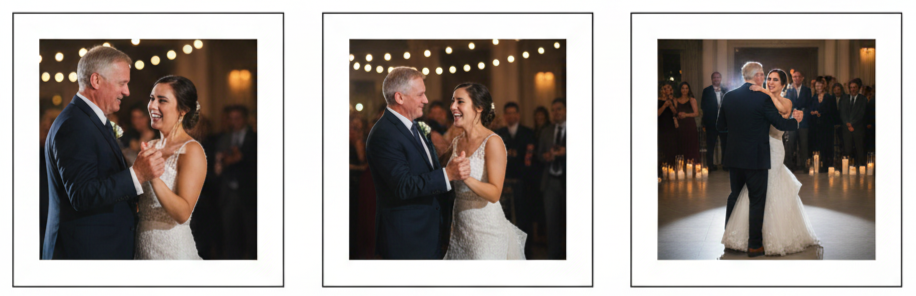
The father-daughter dance holds a lot more meaning than people realize. It’s not just another event on the wedding schedule. It’s the emotional heart of the day for many families. This dance gives a father the chance to hold his daughter one last time before she officially starts a new chapter in her life. And for the bride, it’s a quiet, intimate moment to say thank you, reflect, and celebrate everything her dad has done for her.
From childhood memories to life lessons, the dance pulls all those experiences together into one unforgettable few minutes. It’s not about perfection or technique. It’s about emotion, connection, and love.
What Makes a Song Sentimental and Special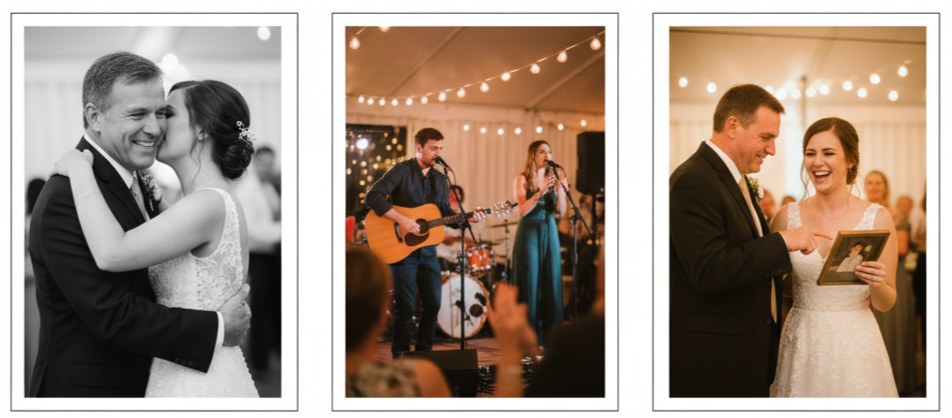
A song becomes sentimental when it checks a few emotional boxes. It should feel deeply personal, even if it’s played at thousands of weddings. The music, lyrics, and delivery need to stir something inside—not just for the father and daughter, but for everyone watching. Here’s what to look for:
- Emotive lyrics: The words should mirror your relationship or evoke the right kind of emotions. You want lyrics that make sense for a dad and daughter—not a romantic partner.
- Soft melody: A gentle or acoustic tune helps create a more intimate atmosphere and keeps the focus on the moment.
- Balanced tone: It should be sweet and nostalgic without turning into a tearjerker. You want it emotional, but not too heavy.
- Meaningful story: A song that tells a story or triggers specific memories usually has a stronger impact.
What to Look for in a Father-Daughter Song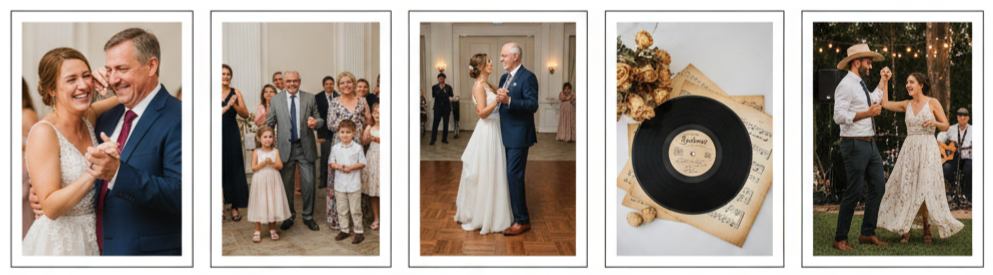
Not every good song makes a good wedding dance song. The right one should feel like it belongs to you both. Here are a few things to consider while choosing:
- Personal meaning: Look for a song that reminds you both of something—whether it’s an old favorite, a song from your childhood, or something you’ve always loved together.
- Clean lyrics: Since grandparents and younger cousins will probably be watching, the lyrics should stay appropriate for all ages.
- Comfortable tempo: Choose something that’s easy to dance to. You don’t need a complicated routine. A steady, slow rhythm is perfect.
- Timeless quality: Pick a song that you’ll still love listening to years from now. Classic doesn’t have to mean old-fashioned—it just means it doesn’t get stale.
- Fits your style: Whether it’s country, pop, or something indie, make sure the genre feels like a natural choice for your personality and your event.
Classic Songs That Still Work Every Time
There are a few songs that never go out of style when it comes to father-daughter dances. These tracks are popular for a reason—they hit the right emotional tone and have lyrics that feel perfect for the occasion:
- “My Girl” by The Temptations: Sweet, catchy, and upbeat—it brings a joyful vibe without losing sentiment.
- “I Loved Her First” by Heartland: A more emotional option, especially for dads who’ve had a close bond with their daughters all their lives.
- “Butterfly Kisses” by Bob Carlisle: This one is packed with heartfelt lyrics and has been a father-daughter staple for decades.
- “Isn’t She Lovely” by Stevie Wonder: Bright and full of love, it’s a song that celebrates daughters in a joyful way.
- “Forever Young” by Rod Stewart: A song that speaks to a father’s hopes and wishes for his daughter’s future.
These songs continue to show up at weddings because they strike the perfect balance of nostalgia and heartfelt expression.
Modern Picks for a Fresh Vibe
If you’re not into traditional or classic choices, there are plenty of newer songs that bring a fresh emotional tone while still capturing that close father-daughter connection:
- “Never Grow Up” by Taylor Swift: Soft, gentle, and written from a parent’s perspective, it touches on those growing-up moments.
- “First Man” by Camila Cabello: A touching song where the daughter reassures her dad that her heart will always hold a space for him.
- “Count on Me” by Bruno Mars: A cheerful, upbeat option that focuses on support, friendship, and trust.
- “You’ll Be in My Heart” by Phil Collins: Originally from Tarzan, but its lyrics are powerful and heartfelt, perfect for the occasion.
- Acoustic or instrumental versions: Sometimes a stripped-down version of a meaningful song brings even more emotion into the moment.
Choosing something modern doesn’t mean giving up on sentiment—it just means making the moment more personal and current.
How to Pick the Right Song Together
You don’t need to pick a song alone. This is something you can—and should—do together. The best picks usually come from shared memories. So, think back to those small moments: car rides, backyard hangouts, childhood bedtime routines. What was playing in the background? What songs made you both laugh or tear up?
Here’s how to go about it:
- Brainstorm a list: Start by writing down songs that you both like or that have emotional meaning.
- Test a few options: Play them while spending time together. Try dancing to them to see how they feel in motion.
- Edit or trim the track: Don’t feel stuck with the full-length version. Use a short cut or fade it out early if needed.
- Take your time: Don’t rush the decision. Let the perfect song find you.
- Make it unique: Add live vocals, use a family recording, or pick a version of the song that isn’t widely used.
In the end, what matters most is that the song feels like yours—not what’s trending.
Unforgettable Moments That Prove the Power of the Song
You’ve probably seen those viral videos—the dad surprising his daughter at her wedding after returning from deployment, or the father who fought through illness just to share that dance. These moments hit so hard not just because of the stories, but because the music makes them stick.
The right song brings out emotion in people, even if they aren’t close to you. It brings your guests into the moment and makes them feel what you feel. When chosen thoughtfully, it becomes more than background music. It becomes the emotional soundtrack to one of the most cherished memories of your life.
Conclusion
The father-daughter wedding dance isn’t just another box to check—it’s a rare, meaningful moment that brings everyone to the heart of what weddings are about: family, love, and connection. Choosing the right song doesn’t have to be stressful. You just need something that feels like a true reflection of your relationship. Whether it’s a timeless classic or a brand-new track, the right tune brings out real emotion and turns a few minutes on the dance floor into a memory you’ll carry forever.
Key takeaway: The most touching father-daughter wedding song isn’t about what’s popular. It’s about what feels right for you—a melody that wraps your memories in music and lets your love show through every beat.
FAQs
Can I split the father-daughter dance between two dads?
Yes. You can absolutely divide the dance between your biological dad and stepdad or any two father figures in your life. Use two songs or fade from one into another to give each moment equal importance.
What’s a good length for a father-daughter wedding dance?
Two to three minutes is a great range. Long enough to be meaningful, but short enough to keep guests engaged. If the full song is too long, use a shortened version that includes your favorite parts.
Can the song be in a different language?
Absolutely. A song in your native language or one with cultural significance can make the moment even more personal and powerful.
Is it okay to have a funny or upbeat song instead of a slow one?
Yes. Some people prefer a more lighthearted moment that shows off their fun side. As long as the song still feels like “you,” it’s the right choice.
What if I’m too emotional to dance?
You’re not alone. Emotions run high during this dance. It’s okay to cry, laugh, or even stand and sway. The beauty of the moment is in its honesty, not how perfect the dance is.
Fall Weddings
| Palette | Key Colors | Best Fit |
| Burgundy + Blush | Deep Red, Soft Pink | Classic, Romantic |
| Burnt Orange + Sage | Orange, Green | Rustic, Outdoor |
| Plum + Gold | Purple, Gold | Formal, Evening |
| Navy + Copper | Navy, Copper | Modern, Industrial |
Why Fall Is the Ideal Season for a Wedding
Fall is a sweet spot between summer heat and winter chill. The weather is cool enough to be comfortable but still warm enough to enjoy time outdoors without heavy layers. Nature also steps in as your decorator with colorful leaves, crisp air, and golden-hour lighting that’s hard to beat.
Since fall doesn’t fall right in the middle of peak wedding season, couples can often find more flexible pricing and better availability for venues and vendors. Guests are also more likely to attend with fewer travel conflicts this time of year.
- Comfortable weather: Cool temperatures make for relaxed outdoor ceremonies and receptions.
- Natural scenery: Autumn leaves create a rich, romantic backdrop.
- Better availability: Many venues and vendors have more open schedules.
- Lower travel conflicts: Guests may find it easier to attend fall weddings than those in busy summer or winter seasons.
Top Fall Wedding Themes That Capture the Season
Fall weddings let couples pick a theme that matches their style and the season. 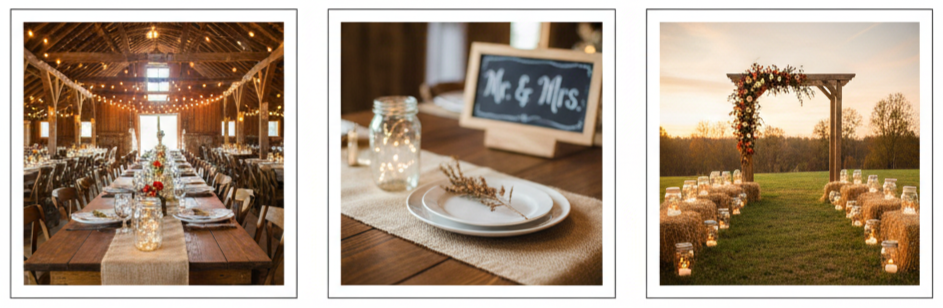
Rustic charm
Think barns, wood tables, burlap accents, and mason jar decor. Perfect for couples who want a laid-back, countryside feel.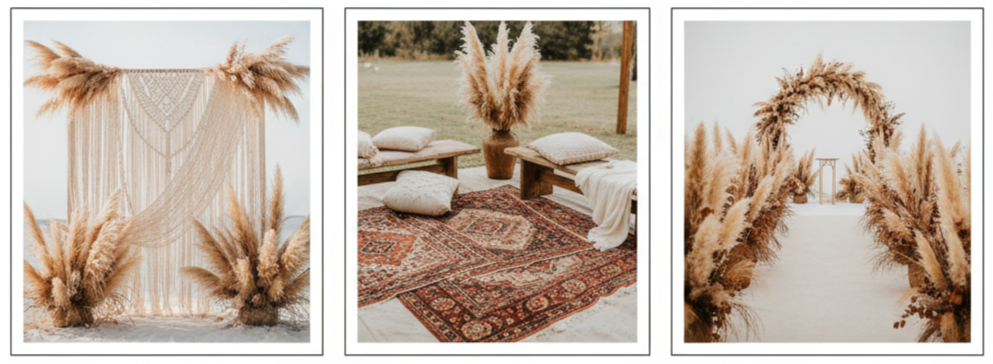
Boho vibes
Use pampas grass, layered rugs, macramé hangings, and relaxed lounge seating to create a whimsical, carefree mood.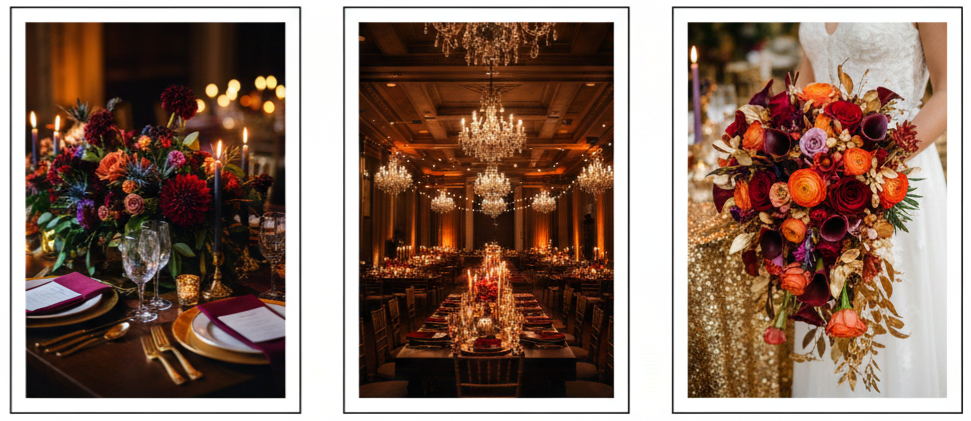
Glam autumn
Jewel-toned florals, gold chargers, and dramatic lighting can turn your wedding into an upscale seasonal affairs.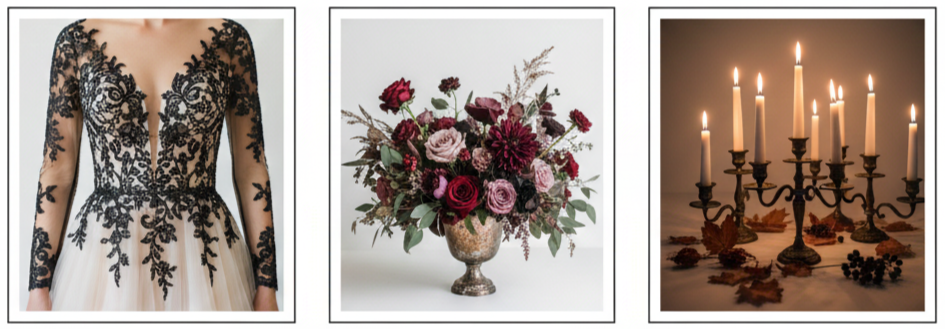
Halloween chic
Dark lace, moody florals, and elegant candlelight keep it festive without going full costume party.
Seasonal Color Palettes That Define Fall Weddings
Choosing the right colors sets the tone for everything, from outfits to flowers and table settings. Fall’s warm, rich shades make wedding decor feel welcoming.
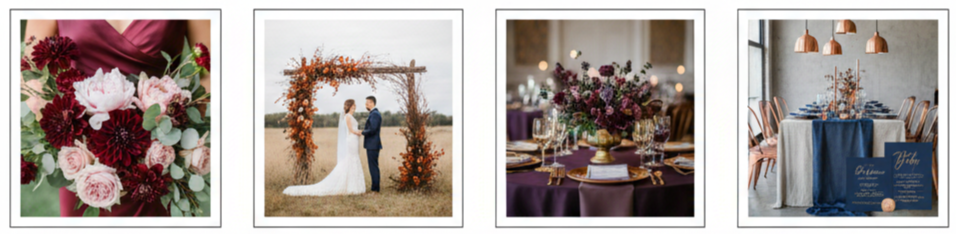
- Burgundy and blush: A romantic pairing that looks great in floral arrangements and bridesmaid dresses.
- Burnt orange and sage green: Earthy and balanced, ideal for outdoor or rustic ceremonies.
- Plum and gold: Rich and elegant, perfect for a formal indoor reception.
- Navy and copper: A sleek, modern mix for industrial or minimalist weddings.
When these tones are woven through the wedding attire, linens, flowers, and accessories, they tie everything together and enhance the seasonal feel.
Autumn Decor and Floral Elements That Transform Venues
Decor during the fall season focuses on warmth, texture, and natural beauty. With so many seasonal elements available, it’s easy to create an inviting setting without going over the top.
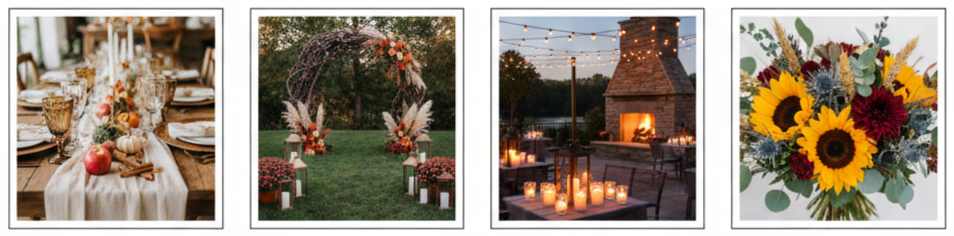
- Table styling: Layer wooden chargers, linen runners, and glassware. Add apples, gourds, or cinnamon sticks for texture and scent.
- Ceremony spaces: Frame the altar with an arch made of branches or dried florals. Line the aisle with lanterns or seasonal blooms.
- Lighting: Make up for earlier sunsets with string lights, votive candles, and fireplaces or bonfires if outdoors.
- Florals: Include sunflowers, mums, dahlias, eucalyptus, and dried accents like wheat or pampas grass.
Fashion Trends Perfect for Fall Wedding Attire
Fall weather opens up new options in wedding fashion that are both stylish and practical. Couples can stay cozy while still looking formal and photo-ready.
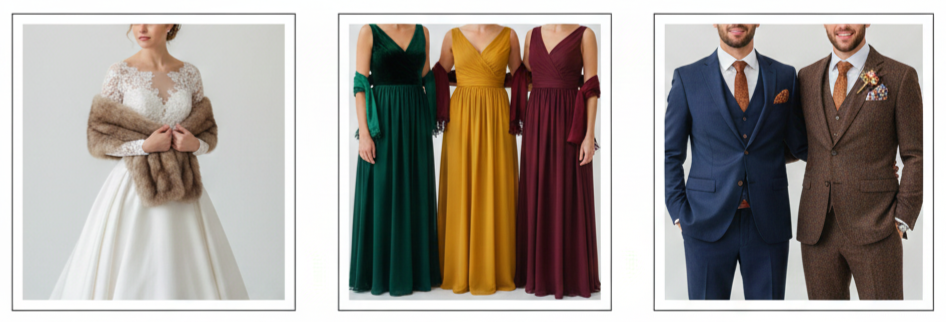
- Bridal gowns: Long sleeves, heavier fabrics like satin, and layered skirts work well in cooler temperatures. Accessories like faux fur wraps or capes keep things seasonal and chic.
- Bridesmaids: Velvet or chiffon dresses in jewel tones such as emerald, mustard, or maroon create a beautiful fall look. Matching shawls or scarves offer warmth for outdoor ceremonies.
- Grooms and groomsmen: Tweed or wool suits in navy, gray, or chocolate brown are perfect for the season. Add personality with ties or pocket squares in autumnal prints.
Seasonal Cuisine and Beverage Ideas for Fall Receptions
The menu is a great place to reflect the flavors of fall. Guests will appreciate warm dishes, spiced desserts, and creative cocktails that match the vibe of the day.
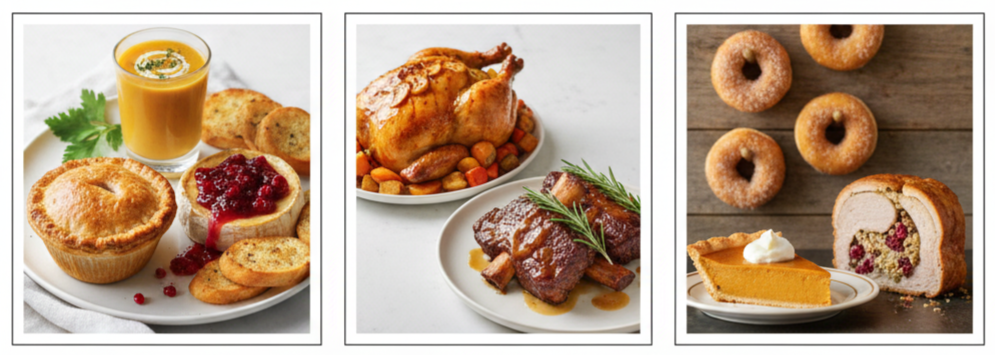
- Appetizers: Serve up mini pot pies, squash soup shooters, or baked brie with cranberry.
- Main courses: Think roasted chicken with apple glaze, braised short ribs, or stuffed pork loin.
- Desserts: Offer pumpkin or apple pie, spice cake, or a bread pudding station. A cider donut wall adds a fun twist.
- Drinks: Create signature cocktails like apple cider mimosas or bourbon with maple syrup and cinnamon. Warm cider and chai lattes are great non-alcoholic options.
Planning Tips Specific to Fall Weddings
A fall wedding comes with its own set of planning details, especially when working around daylight, weather, and local events.
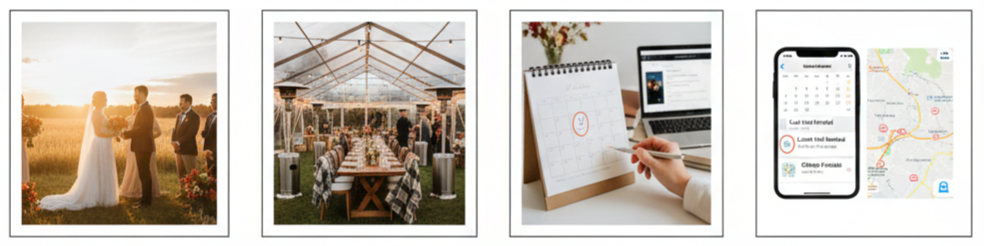
- Sunset timing: Schedule your ceremony for earlier in the day to take advantage of natural light.
- Backup plans: Always have a tent or indoor option available in case of unpredictable weather. Add heaters and blankets for evening comfort.
- Early booking: Fall dates are now highly sought-after, so vendors and venues book up fast.
- Travel awareness: Check for local events like festivals or sports games that may affect hotel pricing and traffic.
Real Wedding Inspiration: Autumn Elegance in Action
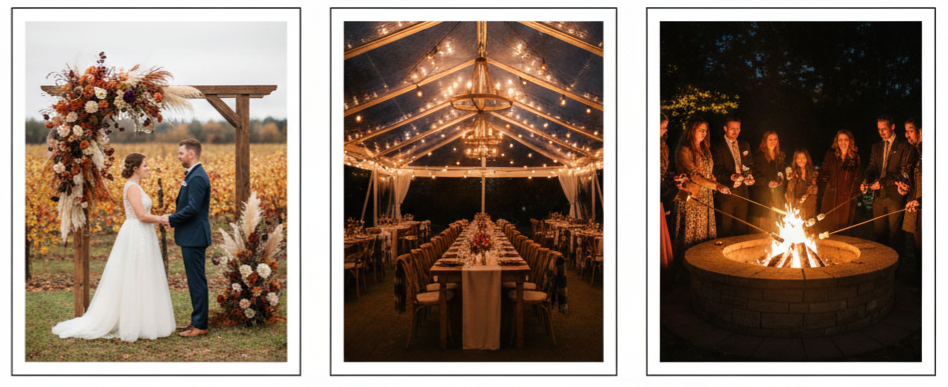
One couple turned a vineyard into a fall dream wedding spot. As the leaves began to change, they held a ceremony under a wooden arch draped in dried florals and golden grasses. Their color scheme—rust, cream, and plum—blended perfectly with the landscape.
Guests were greeted with mugs of hot cider and cozy blankets draped over the backs of each seat. Dinner was served under a clear-top tent glowing with Edison bulbs and chandeliers, and the night ended with guests roasting s’mores around a fire pit. It was seasonal, stylish, and incredibly personal.
Conclusion
Fall weddings shine with colorful leaves, warm meals, and soft lighting, creating a cozy, memorable feel. Whether you like rustic or elegant styles, the season provides a perfect setting for your celebration.
Key takeaway: Fall weddings offer the perfect mix of stunning scenery, creative flexibility, and down-to-earth charm that helps every moment feel intentional and memorable.
FAQs
How far in advance should I book vendors for a fall wedding?
Fall dates are in high demand, so it’s smart to book venues and major vendors at least 12 months ahead to secure your top choices.
What are some affordable decor ideas for a fall wedding?
Use natural and seasonal items like pumpkins, leaves, and apples. Candles and DIY dried flower arrangements are also budget-friendly and fit the fall theme perfectly.
Is it risky to plan an outdoor wedding in the fall?
Weather can be unpredictable, so it’s essential to have a backup plan like a tent or indoor option. Portable heaters and warm accessories like shawls can help keep everyone comfortable.
What’s the best time of day to schedule a fall wedding ceremony?
Aim for mid-to-late afternoon to capture the best lighting before sunset, especially for outdoor photos and golden-hour moments.
Should I change my wedding cake flavors for a fall wedding?
Absolutely. Flavors like pumpkin spice, apple cinnamon, caramel, or even maple work great and give your cake a seasonal twist your guests will love.
Fall Wedding Invitations
| Paper Type | Best For | Look/Feel | Drawback |
| Cotton | Formal weddings | Smooth, thick | Higher cost |
| Kraft | Rustic themes | Textured, warm | Less formal |
| Handmade | Boho/organic styles | Soft, raw edge | Bulky, costly |
| Vellum | Layered designs | Light, sheer | Prone to smudge |
| Recycled | Eco-friendly invites | Clean, simple | Limited finishes |
| Seed Paper | Nature inserts | Plantable | Low print detail |
Why Fall Feels Just Right for a Wedding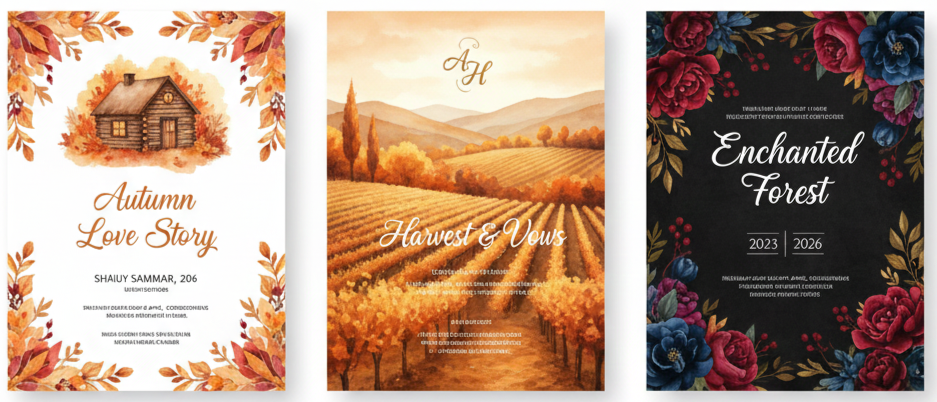
- Crisp-Air Romance: Fall weddings feel naturally intimate. The cooler weather, earlier sunsets, and cozy atmosphere make gatherings feel warm and intentional, even with a larger guest list.
- Seasonal Scenery: Autumn color does a lot of the decorating for you. When your venue already has golden leaves, rustic textures, or vineyard views, your invitations can echo that look from the start.
- Built-In Theme Options: Fall works with so many styles, like rustic barn, moody modern, woodland, boho, vineyard chic, and vintage. Your invitation becomes the first hint of which direction you’re going.
Current Design Trends for Fall Wedding Invitations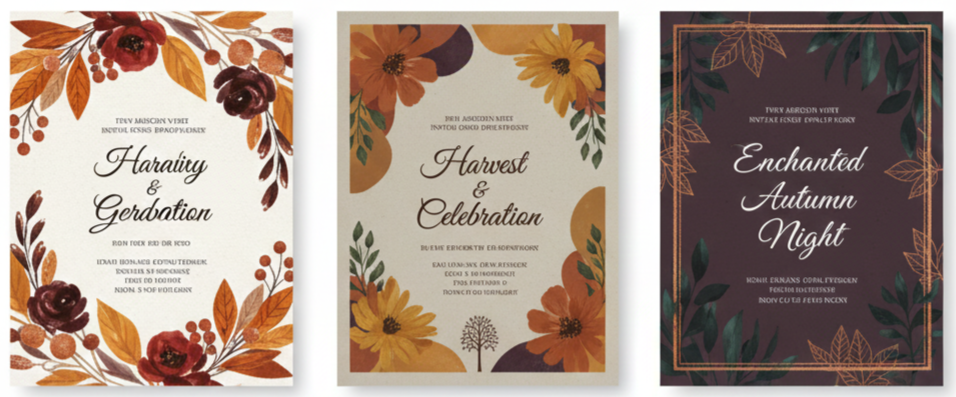
Warm Color Palettes
Couples keep leaning into burnt orange, burgundy, mustard, terracotta, deep plum, copper, and forest green. These shades feel seasonal without looking too themed, especially when paired with neutral bases like ivory, cream, or soft taupe.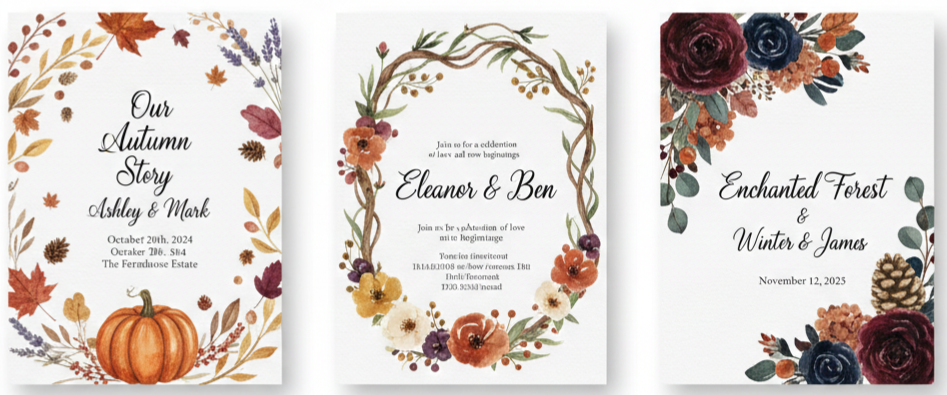
Nature-Inspired Art
We see a lot of leaves, twigs, dried florals, pinecones, pumpkins, branches, and vines. Watercolor and hand-drawn styles stay popular because they look soft, romantic, and easy to match to real fall florals.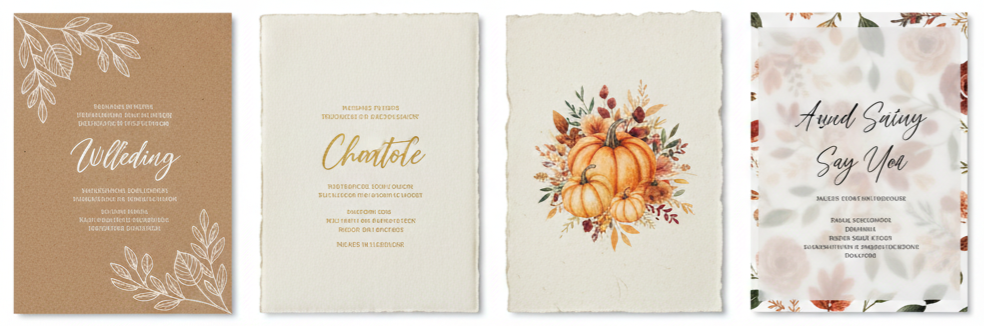
Textured Materials
Fall invitations look especially good on paper with personality. Kraft paper brings rustic charm, cotton cardstock feels luxe and thick, handmade paper adds an organic edge, and vellum overlays create a layered look that still feels light.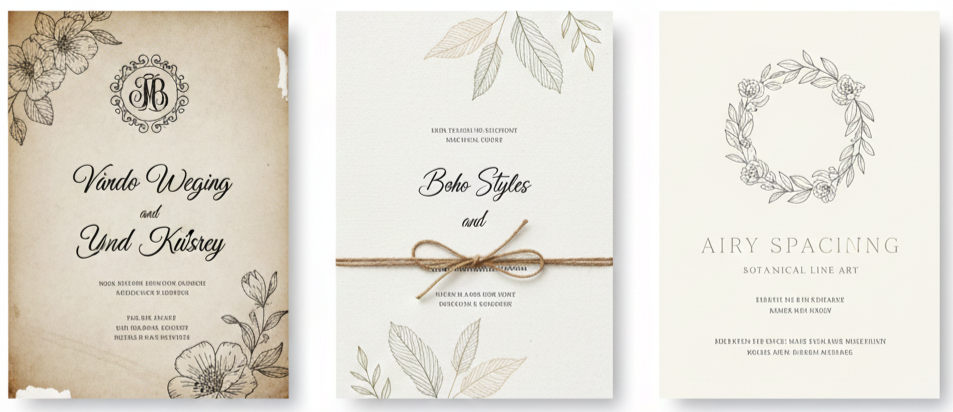
Vintage And Boho Vibes
Vintage designs show up through muted tones, classic fonts, lightly distressed edges, and antique-inspired layouts. Boho styles lean more minimal with airy spacing, botanical line art, earthy colors, and natural wraps like twine.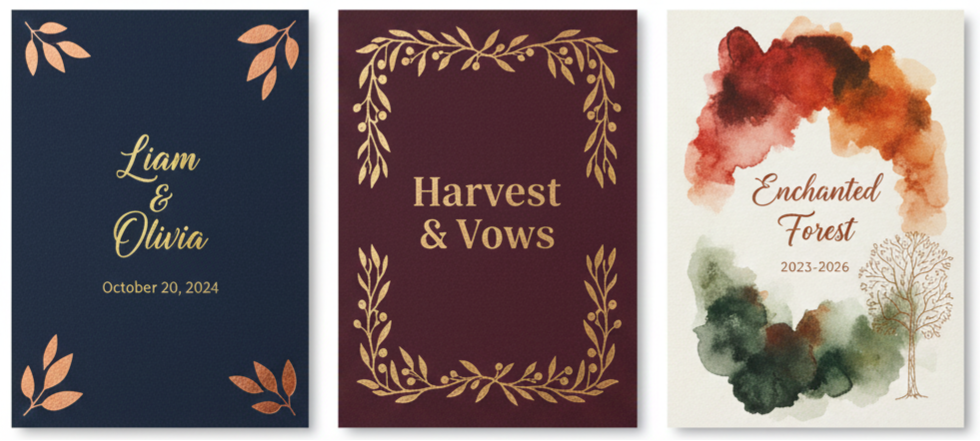
Metallic Details
Gold foil, copper foil, bronze embossing, and subtle metallic ink make fall invitations feel elevated. These accents work best when they highlight key details like names or the wedding date rather than covering the entire design.
Ways to Make Your Invitations Feel Like You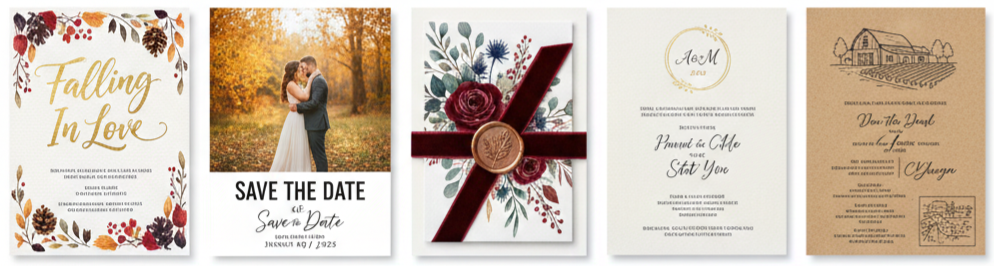
- Seasonal Quotes: A short line can instantly add personality and set the mood. Phrases like “Falling in love” or “Autumn romance” fit naturally, especially when they match your overall tone. Keep it simple and avoid anything so long that it competes with the important details.
- Engagement Photos With Fall Color: A photo taken in autumn light looks amazing on save-the-dates or as a small insert card. We suggest choosing one strong image rather than a collage so it still feels clean and readable.
- Wax Seals And Ribbon Wraps: Wax seals feel timeless and look great with fall colors like burgundy, copper, deep green, and brown. Ribbons in velvet or chiffon can soften the look, while twine creates a more rustic finish.
- Custom Monograms: A monogram using your initials, a leaf motif, or your wedding date adds a personal stamp across your suite. It also ties everything together across RSVP cards, details cards, envelopes, and day-of stationery.
- Venue-Inspired Touches: If you’re getting married at a vineyard, lodge, mountain venue, barn, or historic estate, a small nod to the location makes the invitation feel more meaningful. Some couples include a simple line drawing of the venue, a map-style detail card, or a design element that matches the venue’s textures like wood, stone, or greenery.
Wording That Brings Fall to Life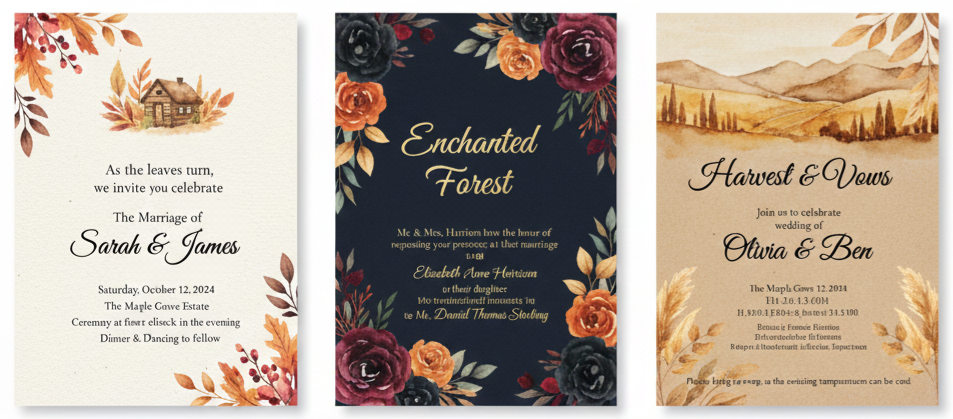
- Seasonal Openers: A fall wedding invitation can sound warm without becoming too casual. Lines that feel natural include “Please join us for an autumn celebration” or “As the leaves turn, we invite you to celebrate.” These small touches set the mood without distracting from the essentials.
- Tone Matching: Keep your wording aligned with your event style. A black-tie wedding usually reads best with traditional structure and formal wording. A rustic celebration can still look polished while using friendly, straightforward language.
- Practical Notes: Fall weather changes fast, so it helps to guide guests. You can add a short line about outdoor ceremony details, cool evening temperatures, or footwear suggestions for grass, gravel, or vineyard paths. One simple sentence is enough to prepare people without sounding overly cautious.
- Clarity Over Cleverness: Seasonal wording should never make the core details harder to find. Names, date, location, and start time must stay clean and easy to scan, even with a creative design.
What to Know About Sending Fall Wedding Invites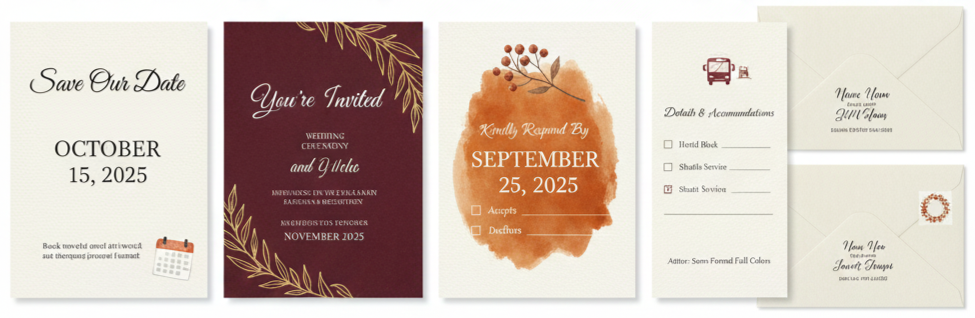
- Save-The-Date Timing: Send save-the-dates around 6 to 8 months in advance. This matters even more when you’re planning a destination wedding, getting married on a holiday weekend, or hosting near a popular fall travel season location.
- Invitation Timing: Mail invitations 8 to 10 weeks before the wedding date. This gives guests time to plan outfits for cooler weather, book travel, and respond without stress.
- RSVP Deadlines: Set your RSVP deadline around 3 to 4 weeks before the wedding. That timeline supports final headcounts, seating charts, rentals, and catering. You can shorten or extend slightly depending on vendor requirements, yet a clear deadline keeps everything smoother.
- Helpful Inserts: Fall weddings often include extra details, especially when events stretch across a weekend. A details card works well for travel notes, hotel blocks, shuttle plans, welcome events, and attire guidance. Keep it organized so guests do not feel overwhelmed.
- Envelope Addressing: Hand-addressing feels personal, and printed addressing feels clean and modern. Either option works as long as names are accurate and readable. Double-check spellings, confirm plus-one formatting, and keep address lines consistent across all envelopes.
Earth-Friendly Ideas for Fall Invitations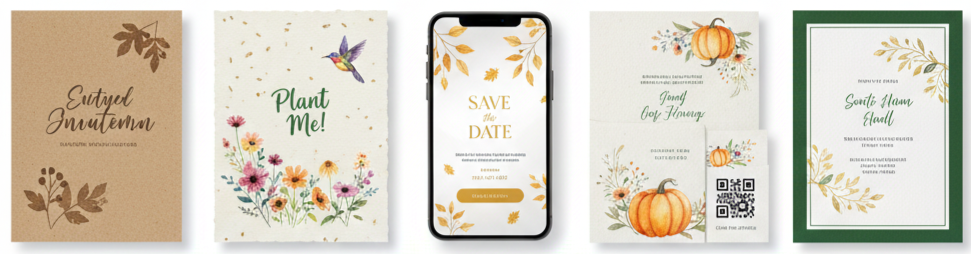
- Recycled Paper Options: Recycled cardstock and kraft paper are easy sustainability wins that also match fall style naturally. They look intentional rather than “eco” in a way that feels forced.
- Plantable Invitations: Seed paper invitations offer a memorable twist. Guests can plant the paper and grow wildflowers later, which fits perfectly with nature-inspired fall themes. We recommend using seed paper for small inserts rather than the entire suite because readability matters.
- Digital Save-The-Dates: Digital save-the-dates reduce paper use while giving guests quick access to your wedding website. They also make it easy to update details if your venue address, hotel block, or schedule changes.
- Hybrid Suites With QR Codes: You can print the main invitation and RSVP card, then direct guests to a website for extra details. A QR code on a details card keeps things tidy, modern, and easy to use, especially for travel-heavy weddings.
- Less Waste, Better Design: Fewer inserts often look more refined anyway. When you only include what guests truly need, your suite stays elegant, uncluttered, and more affordable.
Where to Shop for the Perfect Fall Wedding Invitations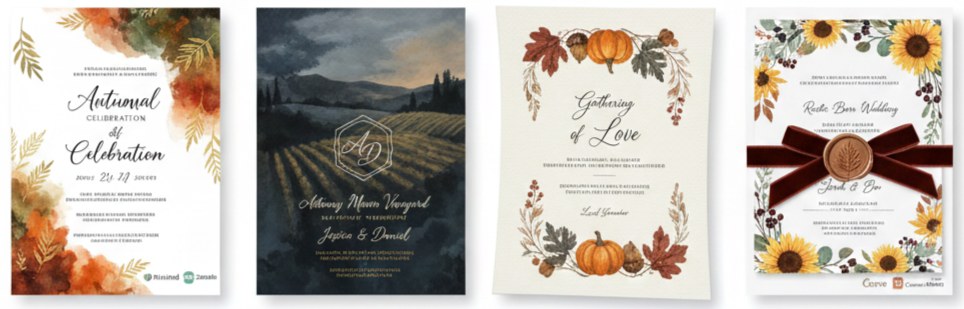
- Online Retailers: Online shops offer quick customization, consistent quality, and lots of fall-ready styles. They work well for couples who want a polished look without managing a fully custom design process. Look for options that let you adjust fonts, spacing, and color palettes so your suite feels more personal.
- Independent Designers: A stationery designer can build a suite around your exact vision, especially if you want venue illustrations, custom motifs, or a unique layout. This option also helps when your wedding style is specific, like “moody modern vineyard” or “vintage library wedding with autumn tones.”
- Local Stationery Shops: Local shops give you hands-on support and sometimes offer printing samples you can touch and compare. This route is helpful when you care a lot about texture, thickness, and color accuracy.
- DIY Invitation Kits: DIY works when you enjoy crafting and have time to assemble everything carefully. It also helps if you want to include handmade touches like wax seals or ribbon wraps. The key is planning your timeline realistically so you are not rushing close to your mail date.
Numbered Steps for Building a Fall Invitation Suite
- Choose your overall style, like rustic, formal, boho, vintage, or modern moody, and match your color palette to it.
- Pick your core pieces, such as the main invitation and RSVP, then decide whether you truly need a details card.
- Select a paper type that matches your look, like cotton cardstock for a luxe feel or kraft paper for rustic warmth.
- Decide on design accents, such as foil, embossing, vellum overlays, wax seals, ribbon, or twine.
- Finalize wording with clear, readable formatting so guests can scan names, date, time, and location quickly.
- Order a printed sample, check color accuracy and spacing, then place your full order.
- Assemble your suite early, address envelopes, add postage, and mail within the recommended timeline.
Conclusion
Fall wedding invitations do more than share the date. They create the first real moment of anticipation, giving guests a feel for your wedding before they ever arrive. When you use warm seasonal colors, thoughtful motifs, clear wording, and a few personal details, your invitation suite feels intentional and memorable. Whether you choose custom stationery, a curated online template, or a DIY approach, the best results come from keeping the design cohesive, the details easy to read, and the experience enjoyable for your guests from the first envelope opened to the final RSVP submitted.
Key Takeaway: The strongest fall wedding invitations blend autumn-inspired style, personal touches, and clear guest-ready details so your celebration feels cohesive from the very first impression.
FAQs
How do we choose a fall invitation style that won’t feel dated later?
Pick one main design direction, then keep the layout clean and timeless. Seasonal colors and subtle botanical details usually age better than overly literal themes like heavy pumpkin graphics or novelty fonts.
What postage should we plan for when using wax seals or thick paper?
Using thicker cardstock, layered designs, ribbons, or wax seals adds weight. Bring a finished invitation to the post office to check postage and prevent it from being returned.
Should we use colored envelopes for fall wedding invitations?
Yes, colored envelopes can look stunning in fall. Deep green, burgundy, chocolate, and charcoal feel season-appropriate. Just make sure your ink color stays readable and does not smear.
How do we handle separate ceremony and reception locations on the invitation?
Use a clean layout that lists the ceremony details on the main invitation, then include reception information on a details card or in a clear line beneath the ceremony information. Keep addresses complete and easy to scan.
What’s the best way to include registry info without putting it on the invitation?
Keep registry information on your wedding website, then include the website on a details card or a small insert. That approach stays polite, keeps the invitation focused, and makes updates easy.
Fall Wedding Ideas Pumpkins
| Decor Element | Where to Use | Style Vibe |
| Pumpkin Centerpieces | Guest tables | Rustic or elegant |
| Aisle Pumpkins | Ceremony path | Cozy and inviting |
| Pumpkin Table Numbers | Reception tables | Personalized touch |
| Pumpkin Vases | Entryways, tables | Seasonal and fresh |
| Welcome Pumpkins | Venue entrance | Warm and festive |
| Carved Pumpkins | Photo booth, altar | Custom and fun |
Pumpkins Make Wedding Décor Pop
Pumpkins aren’t just for Halloween—they’re perfect for wedding décor, too. You can get super creative and use them in all kinds of ways. Think centerpieces with stacked pumpkins in different sizes and colors. White pumpkins add a soft, romantic vibe, while traditional orange gives off a cozy fall feel. For the aisle, try lining it with small pumpkins, lanterns, and maybe even a few candles to set the mood. Want to show off your table numbers? Stencil or paint them onto pumpkins, then dress them up with some metallics or florals. And don’t forget welcome signs—add a few stacked pumpkins beside a wood sign to greet guests with style. You can even carve or paint your names or wedding date on them for a personal touch.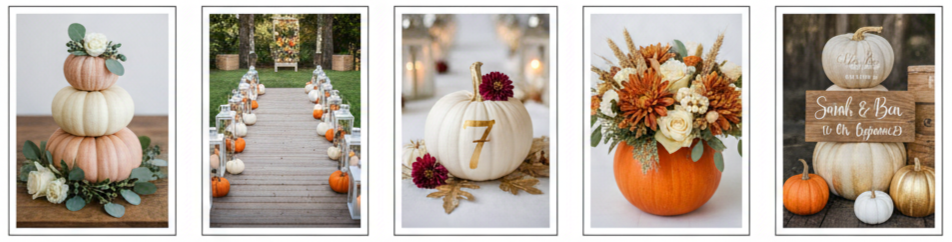
- Pumpkin centerpieces: Use stacks of pumpkins in various colors as your table’s main attraction.
- Aisle decorations: Line the aisle with small pumpkins and lanterns to create a warm path.
- Table numbers: Paint or stencil numbers onto pumpkins and place one on each table.
- Pumpkin vases: Hollow out pumpkins and fill them with seasonal flowers.
- Welcome displays: Set out carved or painted pumpkins with your names or wedding date.
Wedding Color Palettes That Pair with Pumpkins
Pumpkins naturally lend themselves to a variety of color schemes. Classic autumn tones like orange, mustard, and brown give your wedding a true fall harvest vibe. If you’re into softer, more romantic shades, go with white pumpkins and pair them with blush, cream, and sage green. For something a little more glam, muted pumpkin shades like dusty peach or terracotta look amazing with gold or bronze accents. Feeling bold? Jewel tones like emerald, plum, and burgundy look incredible next to darker pumpkin hues. You can even throw in some black candles or moody florals to make it extra dramatic.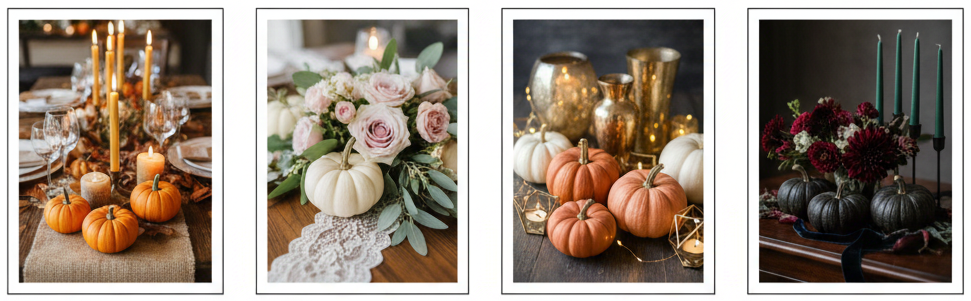
- Classic tones: Orange, mustard, and deep brown give a rustic feel.
- Soft neutrals: Pair white pumpkins with cream, blush, and green.
- Rustic glam: Use terracotta and dusty peach with metallics.
- Dramatic flair: Mix emerald, burgundy, or navy with dark-toned pumpkins.
Pumpkin Vibes for the Ceremony Setup
Your ceremony is the perfect place to sneak in some pumpkin details. A pumpkin-decorated arch makes a dreamy backdrop for exchanging vows. Use greenery, soft-colored pumpkins, and trailing vines to create a cozy focal point. To lead the way, line your ceremony path with pumpkins, leaves, and maybe even a few hay bales. Instead of a standard seating chart, get creative with mini pumpkins. Add guest names and table numbers by hand or with cute tags. Want a stunning altar setup? Surround it with stacked crates, barrels, lanterns, and a variety of pumpkins, then tie it all together with seasonal florals.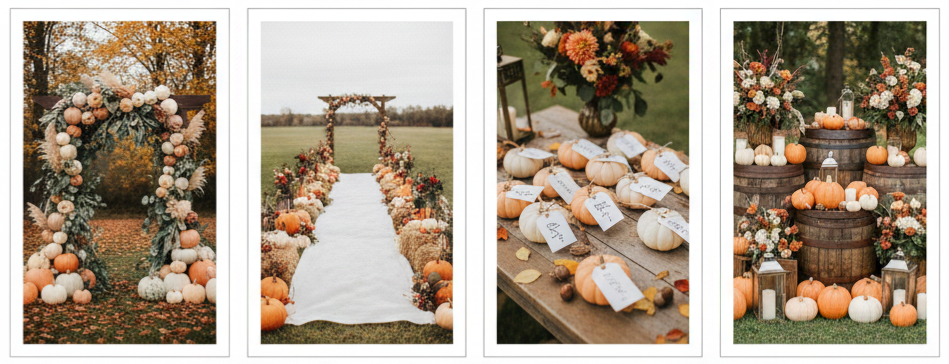
- Pumpkin arch: Decorate your arch with vines, greenery, and pumpkins.
- Aisle runners: Set pumpkins on both sides of the aisle with added florals.
- Seating charts: Use mini pumpkins with guest names written or tagged.
- Altar display: Surround the altar with crates, barrels, and fall accents.
Outfits and Accessories with a Fall Twist
Fashion is another fun way to bring in some pumpkin flair. Bridesmaid dresses in burnt orange, rust, or cinnamon look amazing and totally match the fall aesthetic. Groomsmen can rock boutonnieres made from tiny pumpkins or pumpkin-inspired elements. For the bride, pumpkin-themed hairpins or subtle fall-toned accessories can add a seasonal touch without going over the top. Flower girls can wear floral crowns that include mini gourds or leaves. Even your wedding shoes can join in on the fun—try colors like pumpkin spice, burgundy, or taupe with velvet or lace details.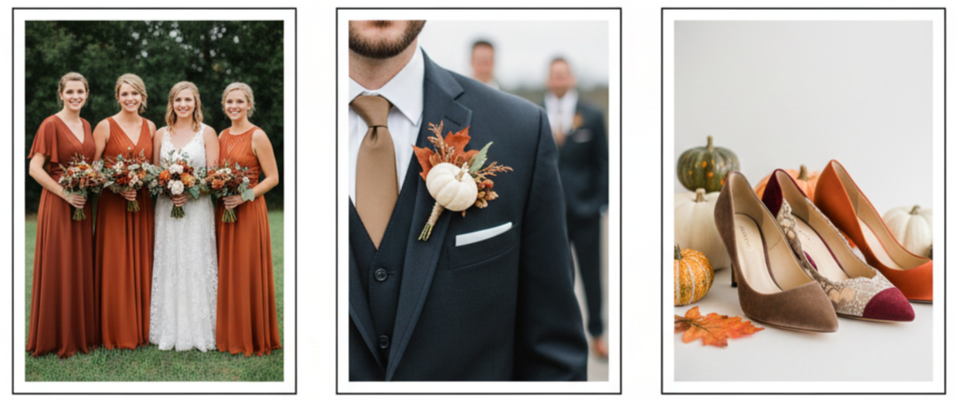
- Bridesmaid colors: Burnt orange and cinnamon shades fit the theme.
- Pumpkin boutonnieres: Accent the groomsmen with fall-themed accessories.
- Hair accessories: Use pumpkin-colored pins or clips for a subtle nod.
- Fall shoes: Pick velvet or lace shoes in taupe, burgundy, or burnt orange.
Pumpkin Dishes and Drinks That Guests Will Love
Let’s talk food and drinks because pumpkins can really shine here. For cocktails, go with something seasonal like a pumpkin spice White Russian or a bourbon mule with pumpkin flavoring. Serve them in mason jars or copper mugs for that cozy touch. For food, offer mini pumpkin tarts, pumpkin soup shooters, or even pumpkin ravioli as apps. Your cake can also have pumpkin spice layers or fillings, topped off with cream cheese frosting or maple drizzle. Dessert tables loaded with mini pumpkin pies, cheesecake bites, and pumpkin bread pudding will be a total hit. Planning late-night snacks? Pumpkin donuts or warm s’mores are a perfect way to wrap things up.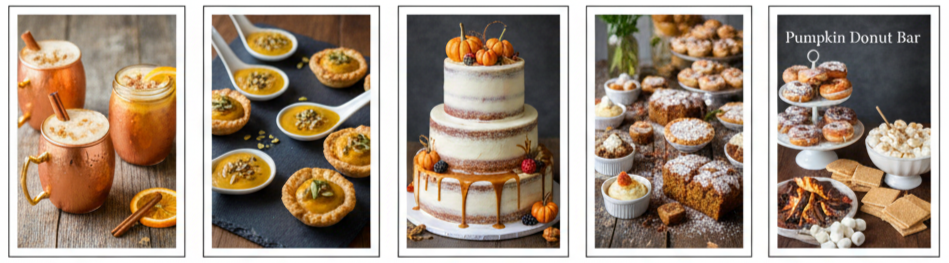
- Cocktails: Serve pumpkin spice mules, ciders, or White Russians.
- Appetizers: Include pumpkin soup, tarts, or ravioli.
- Cake options: Add pumpkin spice layers or cream cheese fillings.
- Desserts: Offer pumpkin pies, cheesecake bites, and pudding.
- Late-night snacks: Set up a pumpkin donut bar or s’mores station.
Pumpkin Wedding Favors That Are Actually Useful
Favors leave a lasting impression, and pumpkin-themed ones are adorable. Pumpkin spice candles, small jars of pumpkin butter, or seed packets with your wedding date are thoughtful choices. For a touch of luxury, try pumpkin-shaped bath bombs or soaps with fall scents. Mini pumpkins also work well as place cards and take-home décor.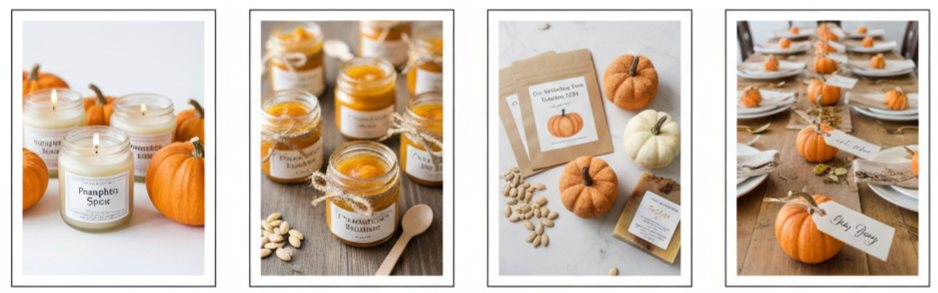
- Candles: Small pumpkin-scented candles work for every guest.
- Pumpkin butter: Give away mini jars as tasty take-home treats.
- Seed packets: Label them with your wedding date and a personal note.
- Bath gifts: Use pumpkin-shaped bath bombs or fall-scented soaps.
- Mini pumpkins: Use them for place cards that guests can bring home.
Photo Moments Made Better with Pumpkins
Your wedding photos get a seasonal boost with pumpkin props or backdrops. Take pre-wedding shots at a pumpkin patch, carve your initials or date for table or photo booth displays, and let guests join in with a pumpkin carving or painting station. Add hay bales, apple crates, and pumpkin stacks for group photos, or have the bridal party pose with painted pumpkins spelling “LOVE” or your wedding hashtag.
- Pumpkin patch shoots: Schedule an engagement or pre-wedding shoot in a local patch.
- Carved pumpkins: Add your initials or wedding date and display them.
- Carving station: Let guests design their own pumpkins during the reception.
- Fall backdrops: Use hay bales and crates to create seasonal photo areas.
- Bridal party props: Have the group pose with themed or painted pumpkins.
Conclusion
There’s something extra special about a fall wedding, and pumpkins are a big part of what makes it feel cozy and unique. Whether you go for elegant neutrals or rustic textures, pumpkins blend beautifully with your vision. They work just as well on your dessert table as they do in your bouquet or photo backdrop. The key is to find creative ways to make them part of your celebration without going overboard. With a little planning, you can use pumpkins to tie your entire wedding together—from the ceremony to the cake cutting.
Key Takeaway: Pumpkins bring the fall season to life at weddings, adding warmth, charm, and personality to everything from your décor and menu to fashion and photography.
FAQs
How far in advance should I get pumpkins for a fall wedding?
You’ll want to get them about 1 to 2 weeks before the big day. Keep them cool and dry to make sure they stay fresh.
Can I mix real and fake pumpkins in my décor?
Absolutely. Faux pumpkins are perfect for areas where you need lightweight or reusable options. You can mix them in seamlessly with real ones.
What types of pumpkins work best for decoration?
Mini pumpkins and medium-sized ones are great for tables, place cards, and aisle accents. White, green, and blue varieties also give a modern or elegant touch.
How do I prevent pumpkins from rotting too soon?
Keep them out of the sun and off moist surfaces. For carved pumpkins, wait until just a few days before your wedding to cut them.
Is it practical to use pumpkins for a destination wedding?
Totally. Faux pumpkins are easier to travel with and still look great. You can ship them ahead or pack them carefully if you’re flying.
Fall Wedding Ideas 2
| Palette | Colors Included | Best Used For |
| Burgundy & Blush | Deep red, soft pink | Bouquets, bridesmaid dresses, stationery |
| Rust & Terracotta | Burnt orange, clay brown | Table décor, floral accents, linens |
| Olive Green & Mustard | Sage green, golden yellow | Groom attire, foliage, signage |
| Navy & Copper | Dark blue, warm metallic | Evening wear, flatware, candle holders |
| Plum & Gold | Rich purple, metallic gold | Invitations, table numbers, accessories |
Bold And Elegant Fall Wedding Color Palettes
Fall weddings look stunning because the season already does half the design work for us. The trick is choosing colors that match the mood you want, then repeating those shades across flowers, outfits, paper goods, and tables so everything feels intentional. We also keep balance in mind. When we use deeper tones, we pair them with softer neutrals or warm metallics so the look stays rich, not heavy.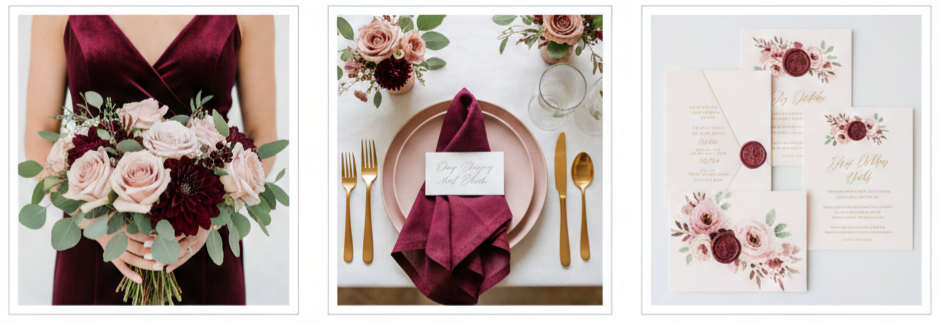
Deep Burgundy And Blush
We use this combo when we want romance with a little drama. Burgundy shows up beautifully in bridesmaid dresses, napkins, and floral accents, while blush keeps the palette soft in bouquets, signage, or invitation details.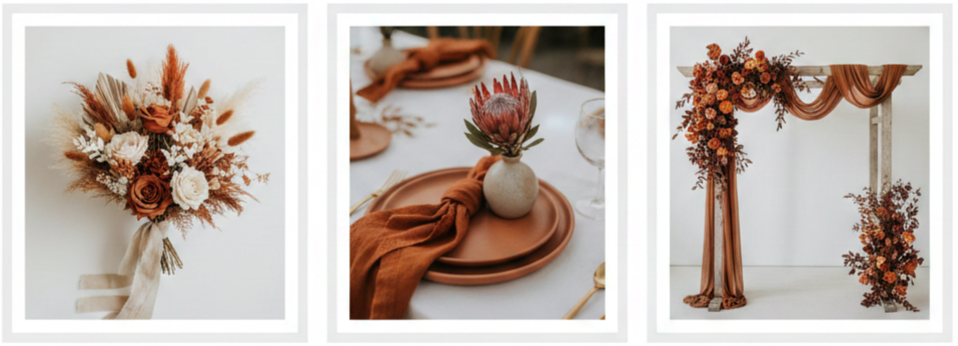
Rust And Terracotta
We lean on these earthy shades for a warm, grounded look that feels natural in barns, gardens, and outdoor settings with changing leaves. Terracotta pairs especially well with linen textures, clay-toned ceramics, and dried florals.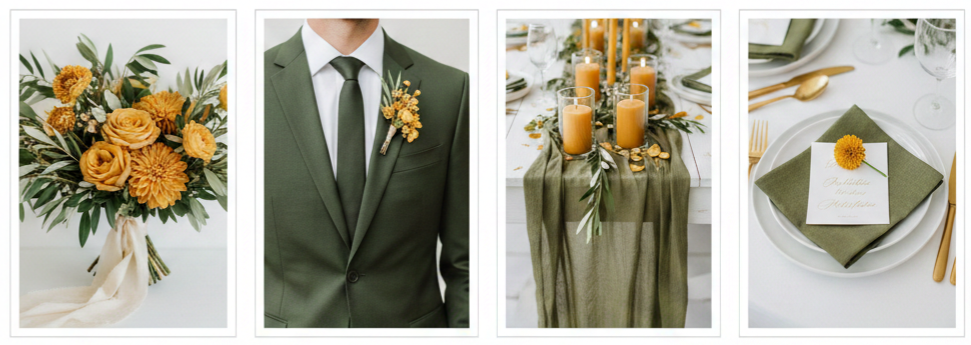
Olive Green And Mustard
We use this pairing for a fall look that feels fresh instead of expected. Olive works as a base in greenery, suits, or table runners, while mustard adds that pop through bouquets, candles, or accent blooms.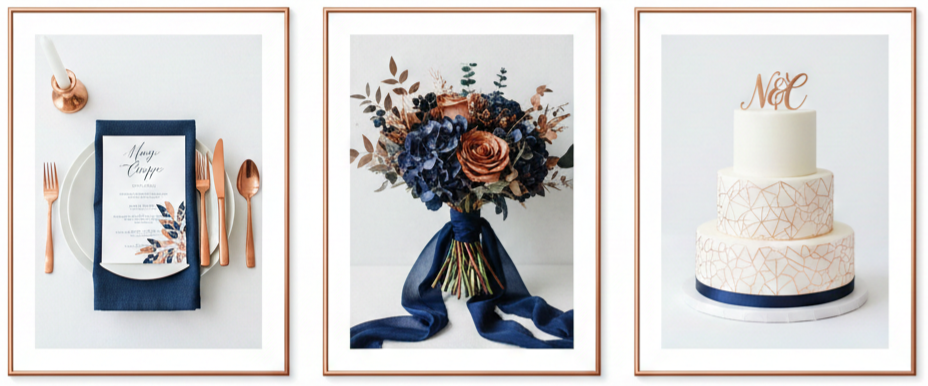
Navy And Copper
We choose this option when we want a polished, modern vibe. Navy anchors the palette in attire and linens, and copper adds warmth through flatware, candle holders, or metallic details in the stationery.
Cozy Wedding Venues That Embrace The Season
Fall weddings feel best in places that already have warmth, texture, and character. We look for venues that make guests want to settle in, take photos, and stay awhile. Since temperatures can shift quickly, we also plan the layout with comfort in mind, especially when the ceremony or cocktail hour takes place outdoors.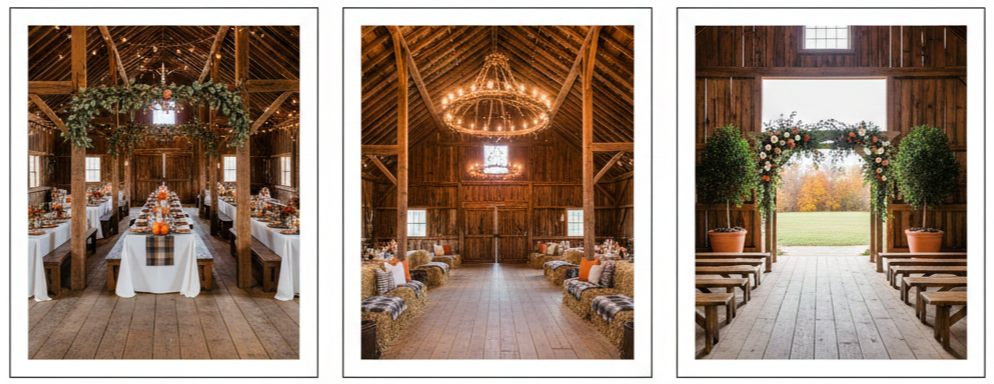
Rustic Barns
We love barns for the built-in texture. Exposed beams, wood floors, and open layouts make decorating easier because the space already feels seasonal. We add lighting, layered textiles, and greenery to keep it cozy instead of plain.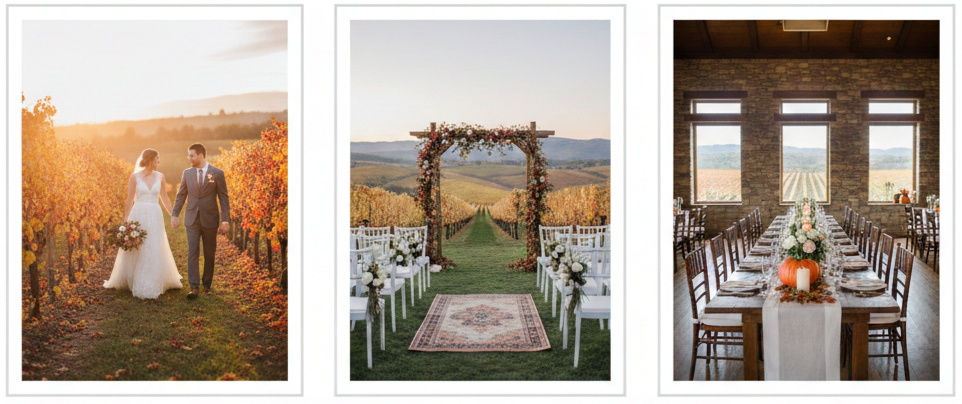
Vineyards and Wineries
These venues bring scenery, structure, and a naturally romantic feel. The rows of vines and fall colors create a perfect photo background, and the reception spaces tend to feel polished without needing heavy décor.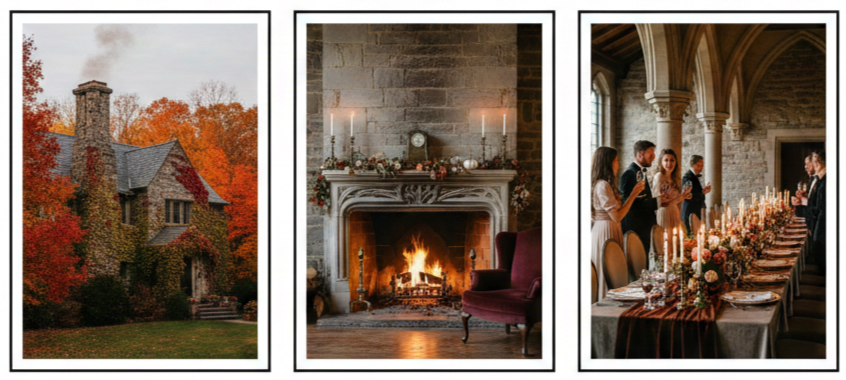
Historic Estates And Lodges
When we want a classic fall atmosphere, we go for venues with stone fireplaces, vintage details, and dramatic architecture. These spaces fit candlelight, velvet tones, and formal attire beautifully.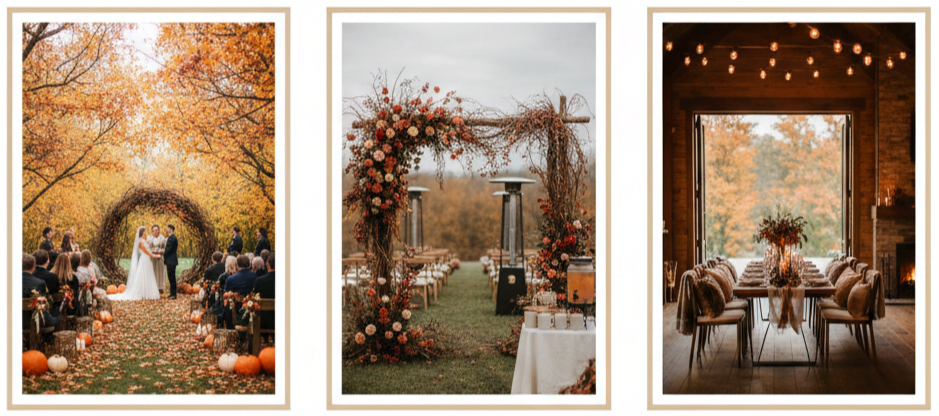
Outdoor Ceremonies With Fall Foliage
Outdoor weddings feel magical in autumn, especially with leaf-lined aisles and golden light. We keep the guest experience smooth by planning for heaters, warm drinks, and a quick transition into an indoor space if temperatures drop.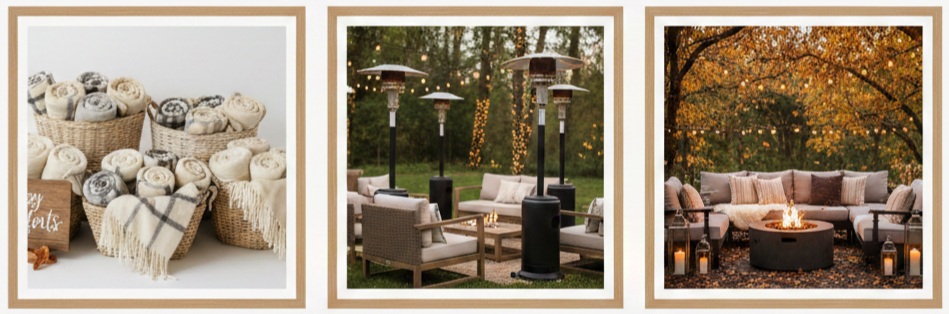
Comfort Planning
We set up blanket baskets, outdoor heaters, and warm lounge areas so guests stay comfortable without feeling like they need to “tough it out.”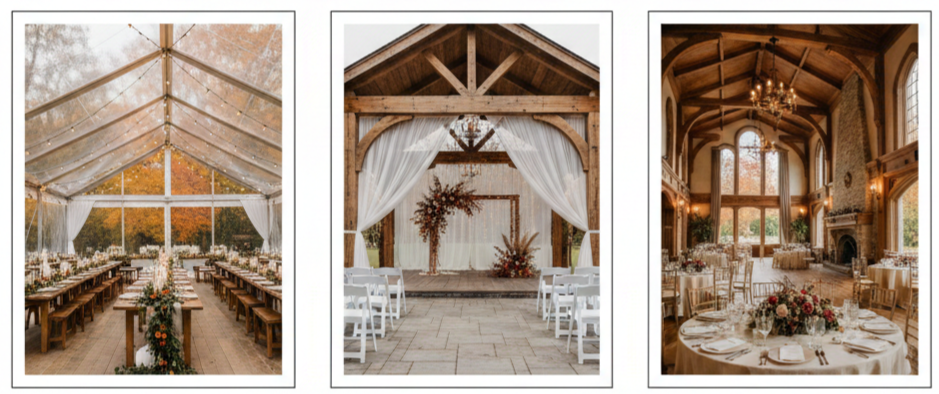
Weather Backup
We choose a covered option, tented space, or indoor room that matches the look of the main plan so the day still feels cohesive.
Fall-Inspired Décor Elements That Set The Tone
Fall décor works best when it feels seasonal without turning into a themed display. We aim for natural textures, warm lighting, and details that look intentional in photos. Instead of using every fall symbol at once, we choose a few signature elements and repeat them in a clean, stylish way across the ceremony and reception.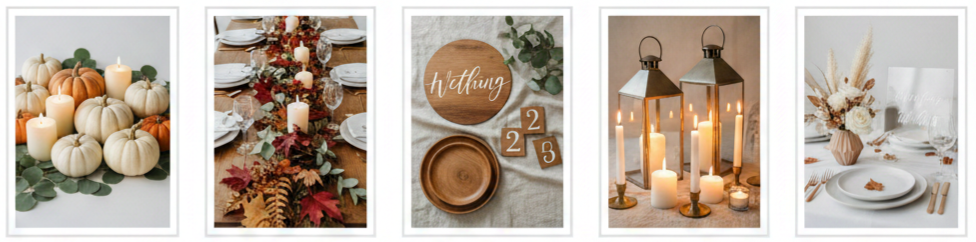
- Pumpkins And Gourds: We use them as centerpieces, aisle markers, or bar décor. Neutral pumpkins, white gourds, and metallic-painted accents look more elevated than bright orange, especially when paired with candles and greenery.
- Foliage Garlands: We run garlands down tables, wrap them around arches, or use them to frame welcome signs. Maple leaves, eucalyptus, dried ferns, and seasonal branches add depth and movement to the design.
- Wood Accents: We add wood through signage, chargers, table numbers, or display stands. The texture instantly warms up a space and fits rustic, modern, and classic styles depending on the finish.
- Lanterns And Candles: We use candlelight to bring in that cozy fall glow. Lantern clusters, taper candles, and votives make the reception feel warm and inviting, especially once daylight fades.
- Modern Seasonal Touches: We keep the fall vibe while staying modern by using acrylic signage, minimalist floral arrangements, and clean tablescapes with a few bold seasonal pieces.
Seasonal Food And Beverage Ideas Guests Will Love
A fall wedding menu is one of the easiest ways to make guests feel taken care of. We focus on comfort, flavor, and variety, with options that work for different preferences. The best fall menus feel warm and celebratory, not heavy, so we balance richer items with lighter sides and fresh textures.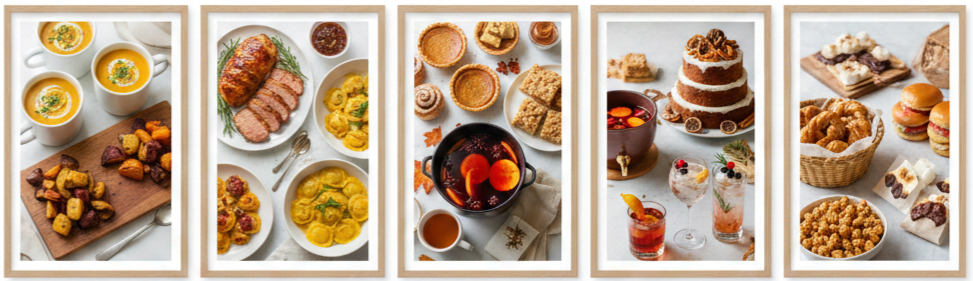
- Starters: We serve cozy openers like butternut squash soup in mini mugs, roasted vegetable bites, or fall salads with roasted pears, goat cheese, and candied pecans.
- Main Courses: We choose crowd-friendly entrées that match the season, like maple-glazed chicken, herb-forward pork dishes with apple-based sauces, pumpkin ravioli, or salmon with warm grain sides.
- Desserts: We keep desserts playful and seasonal with mini pies, apple crumble bars, cinnamon-based treats, and spice-forward cakes that feel perfect for fall.
- Signature Drinks: We build drink menus around warm and seasonal flavors, like hot cider stations, mulled wine, bourbon cocktails, and autumn-themed mocktails for guests who want a non-alcohol option.
- Late-Night Snacks: We add a final touch with s’mores bars, warm pretzels, caramel popcorn, or handheld comfort snacks that guests can grab after dancing.
Autumn-Perfect Wedding Attire For The Entire Party
Fall weddings give us the chance to lean into texture and layering, which makes everything look more interesting in photos. We keep style and comfort working together, especially for outdoor ceremonies where temperatures can shift. Fabrics like velvet, wool, and heavier satin fit the season naturally, and jewel tones photograph beautifully against fall scenery.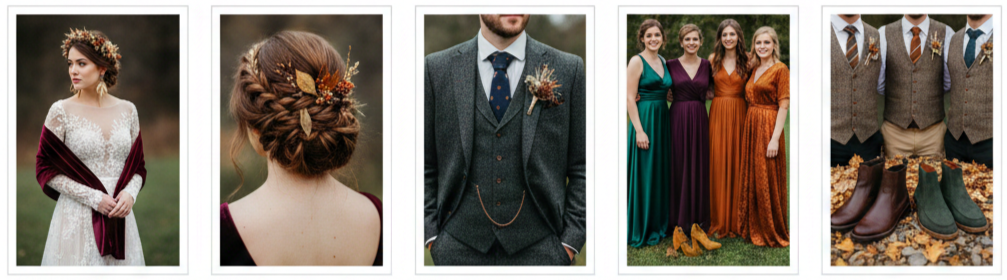
- Bridal Looks: We choose long-sleeved gowns, lace sleeves, or illusion necklines for a fall-friendly silhouette. We add warmth and style with velvet wraps, capes, or structured shawls that still feel bridal.
- Hair And Accessories: We use dried flower crowns, pressed-leaf hairpieces, or gold-toned accessories to match the season without overpowering the look.
- Groom Style: We go for tweed, wool, or heavier suiting in charcoal, forest green, or deep navy. Layered vests, textured ties, and earthy boutonnieres bring everything together.
- Bridesmaid Palette: We dress bridesmaids in jewel tones like emerald, burgundy, plum, and copper, either in matching shades or a coordinated mix that looks intentional.
- Groomsmen Details: We coordinate groomsmen with earth-toned ties, layered vests, and seasonal boutonnieres that match the bouquet without copying it exactly.
- Footwear Planning: We choose shoes that work on grass, gravel, or leaf-covered ground. Outdoor venues look gorgeous in fall, and the right footwear keeps everyone comfortable.
Creative Entertainment Ideas For A Memorable Fall Wedding
Fall weddings already feel special because of the setting, and entertainment keeps that energy going all night. We mix interactive ideas with relaxed options so guests can choose what fits their vibe. The goal is to create moments people remember, not just fill time between dinner and dancing.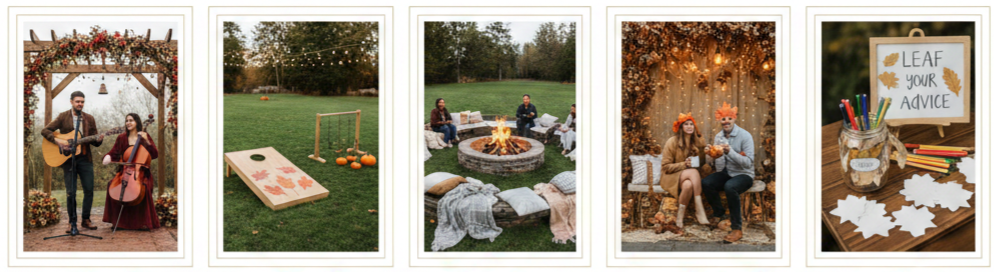
- Live Acoustic Music: We use acoustic sets or small bands to keep the mood warm and inviting, especially during the ceremony or cocktail hour
- Fall-Friendly Lawn Games: We set up simple games like custom cornhole or seasonal ring toss so guests have something fun to do while mingling.
- Bonfire Lounge Areas: We create a cozy hangout spot with seating, blankets, and a fire pit where guests can relax, chat, and take photos.
- Photo Booth With Seasonal Props: We build a fall backdrop with warm lighting, natural textures, and simple props that fit the aesthetic without looking cheesy.
- Interactive Guestbook Station: We set up a “leaf your advice” table where guests write notes on paper leaves and drop them into a keepsake box or jar.
Wedding Favors That Celebrate The Season
Fall favors work best when they feel useful, thoughtful, and tied to the season. We skip anything that will end up forgotten on a table and focus on items guests actually want to take home. Small, well-presented favors also double as décor, especially when they match the wedding color palette.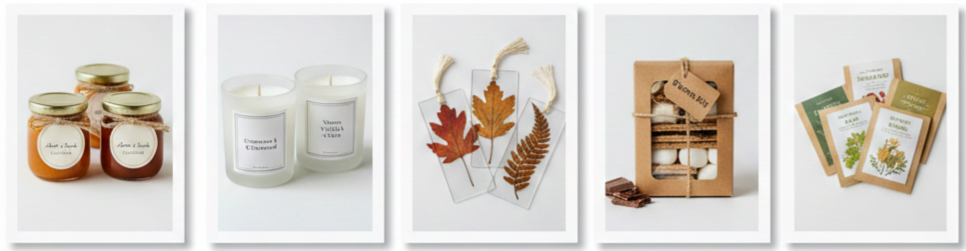
- Mini Jars Of Apple Butter Or Pumpkin Jam: We choose locally inspired flavors and add personalized labels so they feel special without being complicated.
- Custom Scented Candles: We pick scents like cinnamon, cedarwood, clove, or warm vanilla and package them in a clean, simple style that matches the wedding design.
- Pressed Leaf Bookmarks: We love this for couples who want something handmade and unique. Bookmarks feel personal and store well, so guests actually keep them.
- S’mores Kits: We package graham crackers, chocolate, and marshmallows in kraft boxes tied with twine for a fun favor that matches fall perfectly.
- Seed Packets: We choose herb seeds or fall-friendly blooms so guests can plant something after the wedding and remember the day in a simple way.
Crafting The Perfect Fall Wedding Timeline
Fall weddings run on a different clock because sunlight fades earlier, and the evening chill can arrive quickly. We design the timeline around the best light for photos, the most comfortable ceremony time, and a smooth transition into the reception. A solid plan keeps the day calm, even when weather shifts.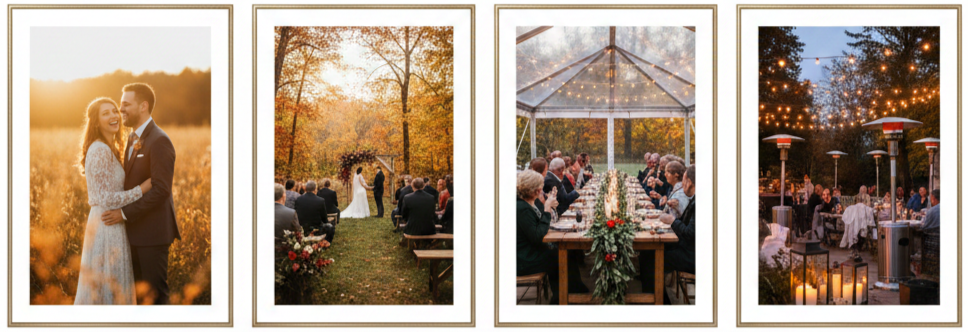
- Golden Hour Photos: We schedule portraits to catch the soft, warm fall light, usually in the afternoon. That glow makes foliage look richer and skin tones look flattering.
- Ceremony Timing: We aim for mid-afternoon ceremonies so guests enjoy daylight, warmth, and a comfortable pace before evening temperatures drop.
- Weather Coverage: We include a covered option that still looks beautiful in photos, such as a clear-top tent, covered patio, or an indoor ceremony space that matches the overall style.
- Warmth And Lighting: We add heaters, candlelight, and string lights early so the space feels cozy the moment the sun goes down.
Step-By-Step Timeline Plan
- Set The Ceremony Start Time: We choose a time that leaves enough daylight for photos and guest movement.
- Lock In The Photo Schedule: We plan couple portraits and wedding party photos around peak natural light.
- Build A Comfortable Cocktail Hour: We include warm drink options, heaters, and a smooth flow into the reception.
- Plan The Evening Atmosphere: We use lighting and lounge spaces so the reception feels warm and inviting as temperatures cool.
- Confirm The Backup Plan: We share the rain or wind plan with vendors so transitions stay quick and organized.
Conclusion
Fall weddings bring together cozy energy, rich colors, and a natural backdrop that feels romantic without needing a heavy design. We shape the day around warmth, comfort, and seasonal details that look beautiful in photos and feel good for guests from start to finish. From the color palette to the menu to the timeline, the best fall weddings feel intentional, personal, and easy to enjoy.
Key Takeaway: Fall wedding planning works best when we build the design around the season’s natural strengths, then support it with comfort-first choices like smart timing, warm lighting, and guest-friendly details.
FAQs
How do we keep guests comfortable at an outdoor fall wedding without changing the vibe?
We place blanket baskets near seating, add outdoor heaters around gathering areas, and create lounge spaces that feel intentional. We also offer warm drinks during cocktail hour so guests stay comfortable while still enjoying the setting.
What are some unique fall wedding details that feel elevated instead of themed?
We use neutral or metallic pumpkins, textured linens, candle clusters, and seasonal greenery instead of bright novelty décor. We also keep signage clean and modern while adding fall texture through florals and lighting.
What is a smart way to handle early sunsets for fall wedding photos?
We schedule portraits earlier in the day and plan golden hour intentionally. We also add an evening photo moment with string lights or lanterns so the couple still gets a romantic nighttime shot.
How do we make a fall menu feel seasonal without feeling too heavy?
We balance comfort dishes with lighter sides and fresh textures. We include one or two warm seasonal highlights, then pair them with crisp salads, roasted vegetables, and clean, flavorful proteins.
What are some fall wedding favor ideas guests will actually take home?
We choose practical favors like small candles, mini jam jars, or s’mores kits. We also package them neatly so they feel gift-like and match the wedding design.
Fall Wedding Decorations
| Area | Must-Have Decor |
| Color Palette | 3 Core Colors, 1 Accent Metallic |
| Ceremony | Floral Arch, Aisle Markers, Welcome Sign |
| Reception Theme | Consistent Materials, Matching Signage Style |
| Tables | Centerpieces, Candles, Place Cards, Linens |
| Florals | Seasonal Blooms, Greenery, Dried Accents |
| Lighting | String Lights, Lanterns, Table Candles |
| Personal Touches | Pumpkin Details, Drink Station, Escort Display |
| Comfort | Blankets, Heaters, Clear Walkway Lighting |
| DIY | Painted Pumpkins, Leaf Garland, Simple Signs |
Fall Color Palettes That Set the Mood
Fall wedding decorations usually start with color, since the palette influences your flowers, linens, lighting, and even small details like signage. Autumn gives us warm, grounded shades that feel cozy without trying too hard, plus modern pairings that look clean in photos.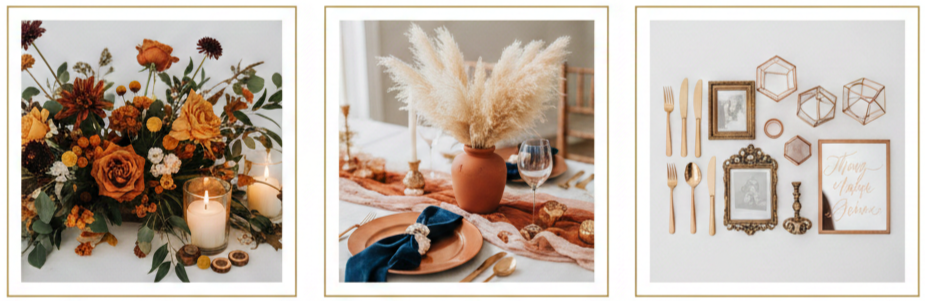
- Classic Autumn Tones: Burnt orange, burgundy, mustard yellow, forest green, and deep brown bring instant fall energy and pair naturally with wood, greenery, and candlelight.
- Modern Fall Pairings: Rust and blush, navy with copper, or terracotta with cream feel updated while still matching the season’s mood.
- Metallic Accents: Gold, rose gold, and antique bronze add a polished finish through flatware, candle holders, frames, and mirrored signage.
Keep the palette consistent across the day, then use one or two accent shades to add contrast. A simple approach makes the entire design feel intentional from the ceremony space to the reception tables.
Fall-Inspired Ceremony Decor
The ceremony area sets the tone the moment guests arrive, so fall wedding decorations work best here when we keep the look warm, layered, and easy to read from a distance. Focus on one strong focal point, then support it with aisle details that guide the eye.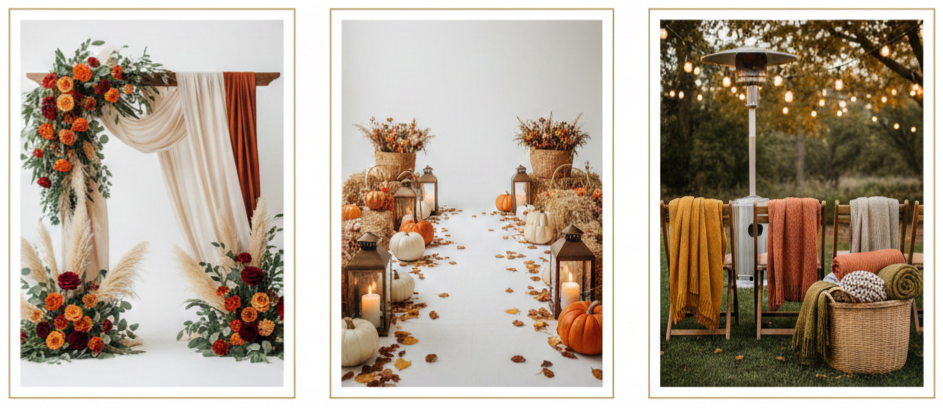
- Seasonal Arches: Wooden arches dressed with pampas grass, eucalyptus, marigolds, and rich-toned roses look full and seasonal without feeling heavy. Draped fabric in cream, tan, or rust adds softness and movement.
- Aisle Styling: Pumpkins, lanterns, and small clusters of hay bales or baskets of flowers make the aisle feel curated. Dried leaves or petals can also define the walkway in a subtle way.
- Outdoor Comfort Touches: Cooler temps and earlier sunsets matter in fall, so blankets, shawls, heaters, and extra lighting keep guests comfortable and help the ceremony feel relaxed.
Fall venues like vineyards, barns, or wooded outdoor spaces already bring texture and color, so ceremony decor looks best when it complements what’s there instead of competing with it.
Reception Themes That Embrace the Season
A reception should feel like the ceremony’s natural “next chapter,” not a sudden switch. Fall wedding decorations shine when the theme carries through the space with a consistent mix of color, texture, and lighting.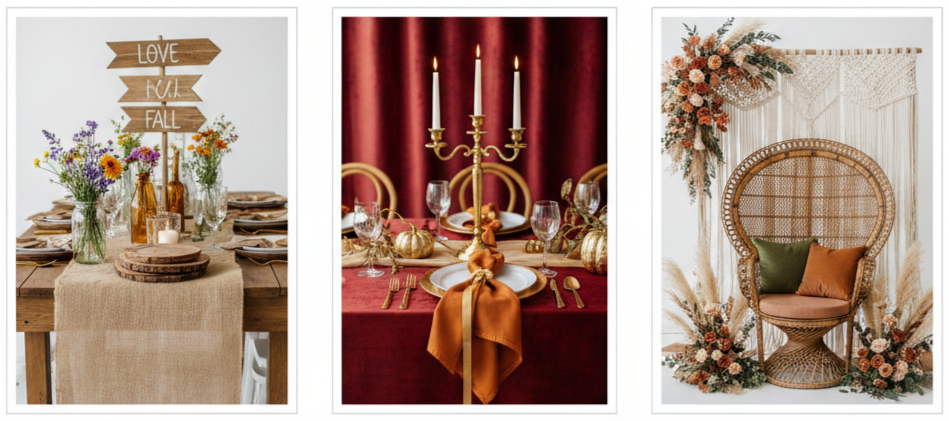
- Rustic Charm: Farm tables, burlap runners, wooden signage, mason jars, and vintage glass bring a warm, grounded feel that suits barns and outdoor receptions.
- Harvest Elegance: Velvet linens, deep napkins, candlelit candelabras, and subtle gold accents create an upscale look without losing the season’s warmth.
- Boho Fall: Macramé backdrops, rattan furniture, earthy tones like clay and olive, and airy floral styling give fall a relaxed, modern edge.
Pick a theme that matches the venue and your formal or semi-formal vibe, then repeat the same “design language” in a few places: the sweetheart table, guest tables, bar area, and entrance.
Table Settings and Centerpieces with Fall Flair
Reception tables are where guests spend the most time, so this is one of the best places to invest detail. The goal is a table that feels seasonal, looks great from above in photos, and still leaves room for plates, drinks, and conversation.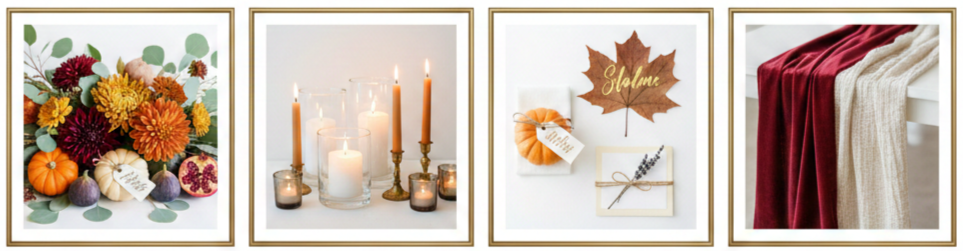
- Natural Centerpieces: Gourds, eucalyptus branches, and fall blooms like dahlias and mums create instant autumn style. Adding seasonal fruit like pomegranates or figs can bring deeper color and a more textured look.
- Candlelight Layers: Mixing pillar candles, tapers, and tea lights adds depth and warmth, especially in amber, smoked, or clear glass holders
- Place Card Ideas: Mini pumpkins with name tags, pressed leaves with gold lettering, or small folded cards tied with twine feel personal and seasonal.
- Linen and Texture: Velvet, linen, or soft woven runners in fall shades make the table feel richer without needing extra clutter.
A simple way to keep tables cohesive is to repeat two elements across every table (like candles and greenery), then change one detail (like pumpkin color, fruit type, or vase shape) for visual variety.
Fall Floral Arrangements That Stand Out
Fall flowers come with built-in texture, which makes them perfect for statement arrangements. We get the best results when we blend fresh blooms with seasonal filler, then use dried accents to add shape and depth.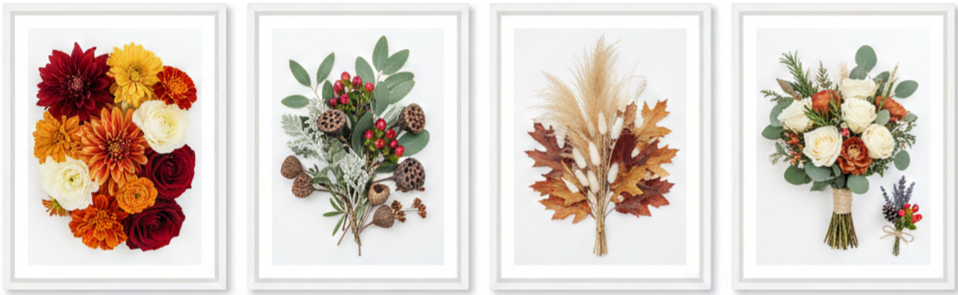
- Seasonal Flower Picks: Dahlias, chrysanthemums, marigolds, ranunculus, and roses in rich or muted tones fit fall beautifully.
- Texture Add-Ons: Berries, eucalyptus, dusty miller, and seed pods add dimension so arrangements don’t look flat.
- Dried Elements: Pampas grass, bunny tails, and preserved leaves extend the palette and create a modern, airy silhouette.
- Bouquet and Boutonniere Details: Asymmetrical bouquets with herbs like sage or rosemary feel fresh and seasonal. Boutonnieres can stay simple with small dried lavender bundles, mini pinecones, or berry accents.
Using the same floral “ingredients” in multiple places helps the whole wedding feel connected, even when arrangements vary in size.
Fall-Themed Touches That Make It Personal
Small seasonal touches are where fall wedding decorations feel most memorable, because they show personality and make guests feel like the experience was designed with them in mind. These details also photograph well and fill in spaces where large decor isn’t practical.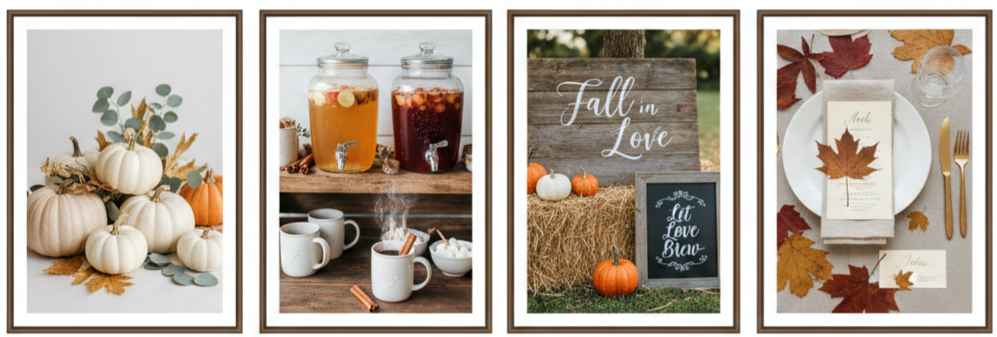
- Pumpkin Styling: White and heirloom pumpkins look clean and elevated for centerpieces, aisle markers, escort tables, and photo corners. Painted pumpkins in your palette can also look modern and cohesive.
- Warm Drink Stations: Cider bars and cocoa stations add comfort and become natural gathering points. Toppings like cinnamon sticks, whipped cream, and marshmallows make it feel thoughtful and fun.
- Seasonal Signage: Wooden boards, framed signs, and simple calligraphy messages like “Fall in Love” or “Let Love Brew” fit the season without feeling overdone.
- Leaf Details: Pressed leaves can show up on guest tables, escort cards, menus, or even tucked into invitation suites for a subtle seasonal nod.
Personal details land best when they support the overall theme instead of creating a second theme. Keep the accents consistent with your color palette and overall style.
Setting the Mood with Fall Lighting
Lighting can turn a basic venue into something magical, especially in fall when the sun drops earlier. Warm lighting makes everything look softer, brings out autumn colors, and keeps the reception feeling cozy all night.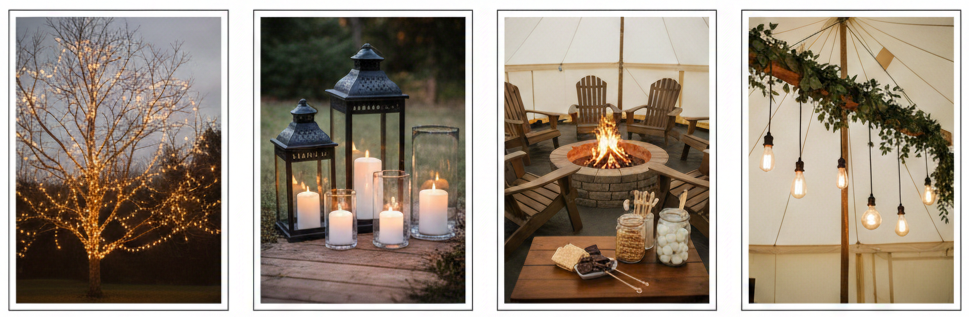
- String Lights: Draping warm white string lights across trees, tent frames, ceilings, or beams creates a soft glow that looks great in photos.
- Lanterns and Candles: Lantern clusters and hurricane vases guide pathways and add a romantic feel to tables and corners. LED candles work well when venues restrict open flames.
- Fire Features: Fire pits create a cozy focal point and give guests a comfortable space to gather. Adding a s’mores setup makes the moment feel intentional.
- Statement Overhead Lighting: Edison bulbs or chandeliers work beautifully in barns and tents, especially when paired with greenery or simple draping.
The key is warm, layered light rather than bright overhead lighting. Layering creates depth, mood, and better photos throughout the evening.
Easy DIY Fall Wedding Decor Ideas
DIY decor works especially well in fall because the season provides so many natural materials that already look styled. We get the best results when DIY projects stay simple, repeatable, and aligned with the wedding’s overall look.
- Painted Pumpkins: Metallic spray paint or matte chalk paint can match your palette and create modern table decor. Stencils make it easy to add initials or table numbers.
- Leaf Garlands: Preserved leaf garlands can dress up dessert tables, chairs, railings, and entry points without needing complicated tools.
- Reclaimed Wood Signs: Directional signs, welcome boards, and seating charts look great on stained wood with clean lettering.
- Simple Centerpieces: Mason jars or wine bottles filled with seasonal stems or fairy lights are budget-friendly and look polished when repeated consistently.
- Invitation Details: Pressed leaves or fall-themed motifs inside envelopes add a seasonal touch without changing the whole stationery set.
DIY looks most cohesive when you repeat one or two designs across the venue rather than making every decor piece a different craft project.
Tying It All Together for a Cohesive Look
The most visually strong fall wedding decorations feel connected across the whole day. Cohesion comes from repeating colors, textures, and materials in a way that feels natural, then leaving enough space so each detail has room to breathe.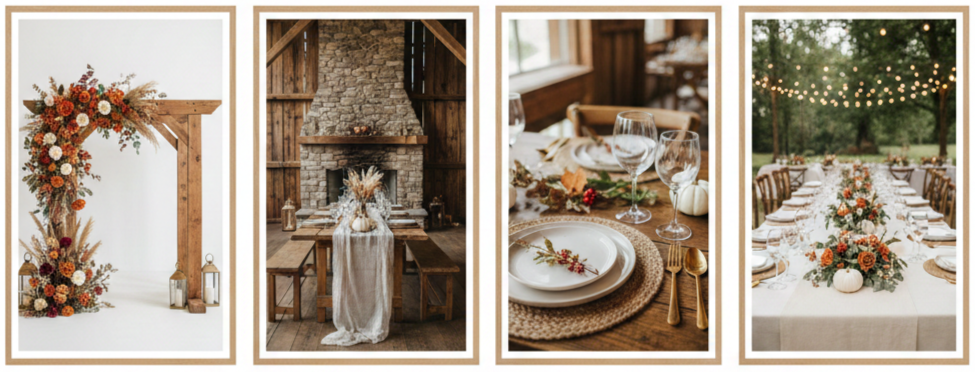
- Repeat Your Core Elements: Use the same wood tone, metallic finish, and floral ingredients in multiple locations, like the ceremony arch, sweetheart table, and guest tables.
- Work With the Venue: Barn beams, stone fireplaces, vineyards, and gardens already bring character, so decor should highlight those features instead of covering them up.
- Balance Rustic and Refined: Pair earthy textures with a few polished details, like gold flatware or clean glassware, so the look feels elevated.
- Avoid Overcrowding: Open space makes decor look more intentional, and it keeps tables comfortable for guests.
Conclusion
Fall wedding decorations feel special when we lean into the season’s natural warmth and keep the design consistent from start to finish. A strong palette, textured florals, cozy lighting, and a few personal seasonal touches can make the day feel inviting without feeling overly themed. When the ceremony and reception share the same style cues, the entire celebration looks polished, photographs beautifully, and feels easy for guests to enjoy.
Key Takeaway: A cohesive fall wedding design comes from repeating a clear color palette, layering warm lighting, and using seasonal textures in a way that feels intentional and uncluttered.
FAQs
What are some creative guest favors for a fall wedding?
Fall favors feel most memorable when they’re useful or edible. Mini jars of apple butter, small bottles of maple syrup, or caramel popcorn work well because guests can enjoy them later. Cozy options like simple flannel scarves or personalized mugs also match the season and feel practical.
How do we decorate a tent for a fall wedding?
A tent looks best when it feels warm and layered. Use string lights or Edison bulbs overhead, add fabric draping in fall tones, and place floral arrangements with dried accents at key points like the entrance and bar. Rugs and a lounge corner can also make the space feel comfortable and finished.
Can we mix fall themes with other aesthetics like vintage or modern?
Yes, and it usually looks better when done intentionally. Vintage pieces like antique frames or mismatched glassware pair nicely with autumn colors, while modern touches like clean-lined signage and sleek table settings can balance rustic textures. Keep the palette consistent so the mix feels planned.
What kind of cake decorations work best for a fall theme?
Fall cake styling looks great with natural textures and seasonal accents. Fresh or dried flowers, figs, cinnamon sticks, and subtle greenery can match your florals without overcomplicating the look. A semi-naked or textured buttercream finish also pairs well with autumn themes.
How do we keep outdoor fall wedding guests comfortable?
Comfort is mostly about warmth and planning. Offer blankets at the ceremony, use heaters or fire pits when allowed, and make warm drinks available during cocktail hour and later in the evening. Lighting also matters, since earlier sunsets can make outdoor spaces feel chilly unless they’re well lit.
Fall Wedding Colors 2015
| Color Palette | Best For | Wedding Style | Venue Type |
| Marsala & Blush | Romantic tones | Vintage, Elegant | Ballroom, Estate |
| Navy & Gold | Bold elegance | Formal, Classic | Hotel, Cathedral |
| Plum & Sage | Earthy contrast | Rustic, Vineyard | Barn, Winery |
| Burnt Orange & Cranberry | Seasonal warmth | Cozy, Festive | Outdoor, Lodge |
| Dusty Blue & Copper | Modern charm | Minimal, Chic | Gallery, Loft |
The Charm of Autumn Weddings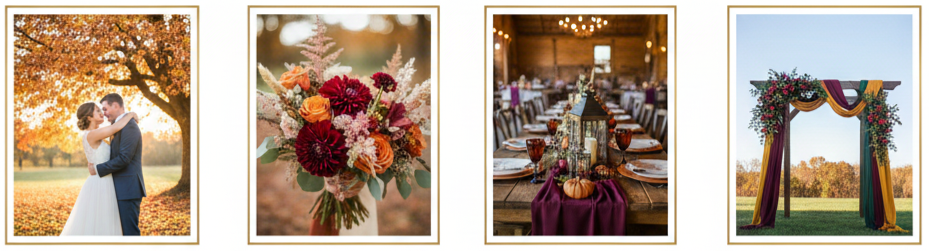
Fall weddings have a magic of their own. There’s something about the crisp air, changing leaves, and golden light that instantly sets a cozy, romantic vibe. That’s a big reason so many couples in 2015 picked autumn for their big day. With such a naturally beautiful backdrop, fall makes it easy to build a color palette that feels warm, intentional, and photo-ready without trying too hard.
Venues also play nicely with the season. Barns, vineyards, mountain lodges, estates, and indoor ballrooms all look better with deeper tones, soft neutrals, and a few metallic accents. We also get the practical perks of fall, like cooler temperatures and more comfortable outdoor ceremonies. When we combine those details with the right color palette, the entire wedding feels pulled together from the first invite to the final dance.
Top Fall Wedding Color Palettes of 2015
Fall 2015 color trends leaned into rich shades, balanced contrasts, and cozy warmth. These palettes worked because they matched the season’s natural tones and still felt stylish in formal venues.
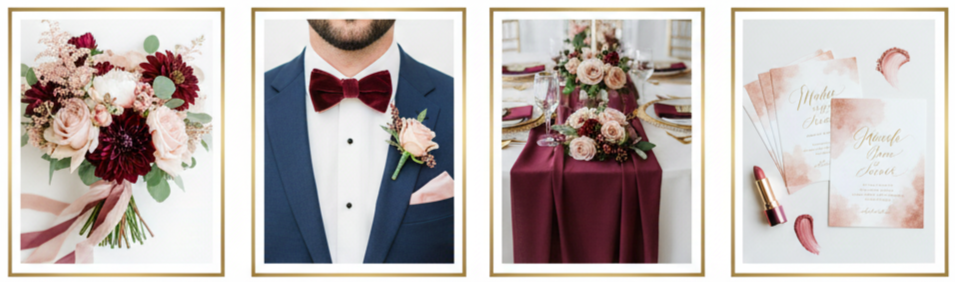
Marsala And Blush
Marsala was the standout shade of 2015, and it became a fall wedding favorite for a reason. It’s deep, romantic, and bold without feeling too loud. Blush softened the look and made the whole palette feel balanced. We saw marsala in bouquets, ties, table linens, and lipstick shades, while blush showed up in bridesmaid dresses, florals, and stationery accents. Together, they created a warm, romantic look that worked for vintage themes, classic venues, and modern styling.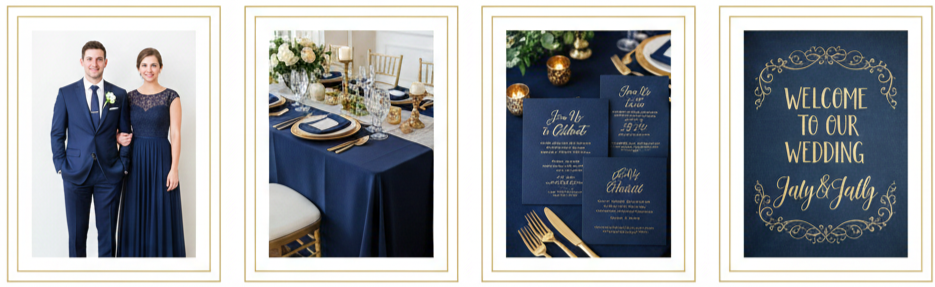
Navy And Gold
Navy brought structure and drama, while gold added warmth and polish. This pairing felt timeless in 2015, especially for evening weddings. Navy suits, dark bridesmaid dresses, and deep blue linens made the gold details pop, like candle holders, flatware, signage, and invitation foil. It fit formal ballrooms and modern venues equally well, which is why so many couples kept returning to it.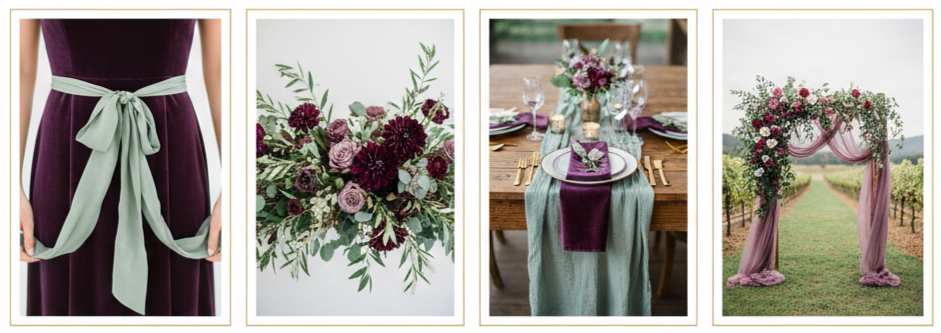
Plum And Sage
Plum added depth and mood, while sage kept everything grounded and natural. This combo worked beautifully for outdoor weddings, vineyard settings, and rustic themes. Plum showed up in florals, velvet ribbons, and bridesmaid attire, while sage appeared in greenery, table runners, and softer accent décor. The contrast felt earthy and romantic at the same time, which made it a strong fall choice in 2015.
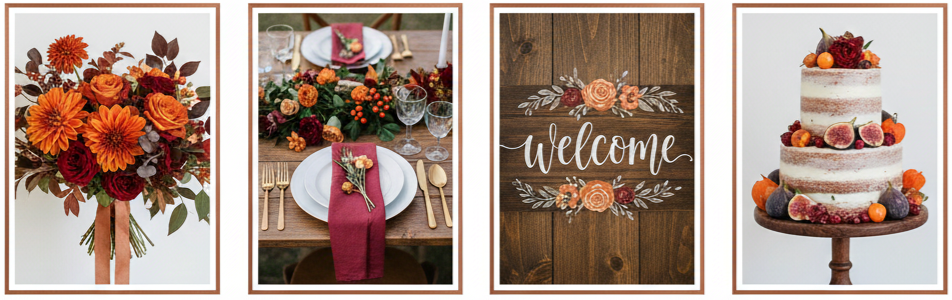
Burnt Orange And Cranberry
This palette captured fall in the most direct way. Burnt orange reflected the changing leaves, while cranberry added richness and a slightly festive feel. Couples used these colors in bold bouquets, seasonal centerpieces, napkins, signage, and even desserts. The overall vibe felt warm, inviting, and perfect for late fall celebrations where candlelight and warm wood tones played a big role.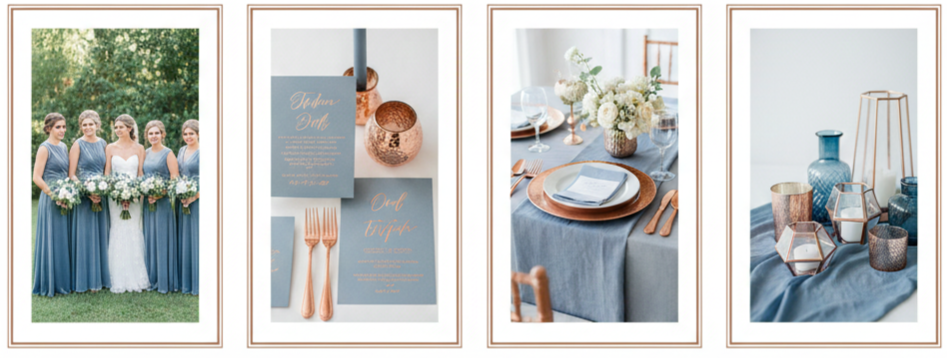
Dusty Blue And Copper
Dusty blue was a cooler twist on a fall palette, and copper warmed it up in a way that felt modern and unexpected. We saw dusty blue in dresses, invitations, and linens, while copper showed up in charger plates, candle holders, vases, and small décor details. This mix looked especially good with textured elements like hammered metal, velvet, and soft florals.
Choosing The Right Palette For Your Wedding Style
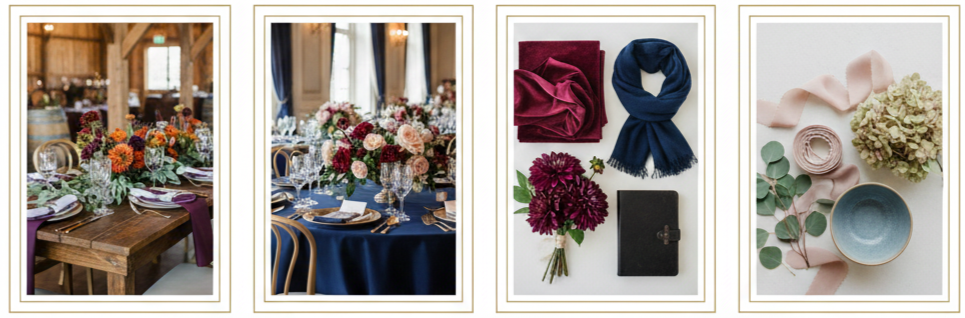
Choosing wedding colors is easier when we connect them to the vibe you want and the space you’re using. A rustic barn or vineyard naturally matches earthy tones like plum and sage or burnt orange and cranberry. A ballroom or estate wedding tends to look best with polished combos like navy and gold or marsala and blush.
We also want the colors to feel like you. A simple way to narrow it down is to think about the shades you already love in clothing, home décor, or even your favorite flowers. If you gravitate toward deeper tones, marsala, navy, or plum might feel right. If you love softer moods, blush, sage, and dusty blue can bring calm balance to a richer fall setting.
How To Incorporate Fall Wedding Colors
Once the palette is chosen, the goal is to carry it through the day in a way that feels consistent, not overwhelming. We can use the main colors in a few large moments and repeat them in smaller details so everything looks intentional.
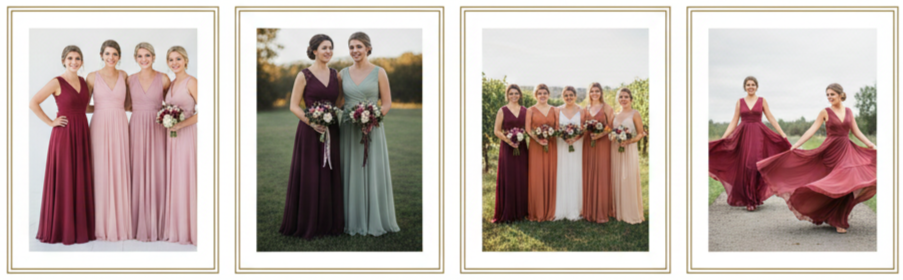
Bridesmaid Dresses
Bridesmaids were one of the easiest ways couples showed off their color palette in 2015. Some weddings went with one consistent shade, while others mixed tones for a layered look. Marsala and blush worked well for alternating dresses, and plum with sage accents created a softer contrast. The mix-and-match approach also helped photos feel more dynamic without adding visual clutter.
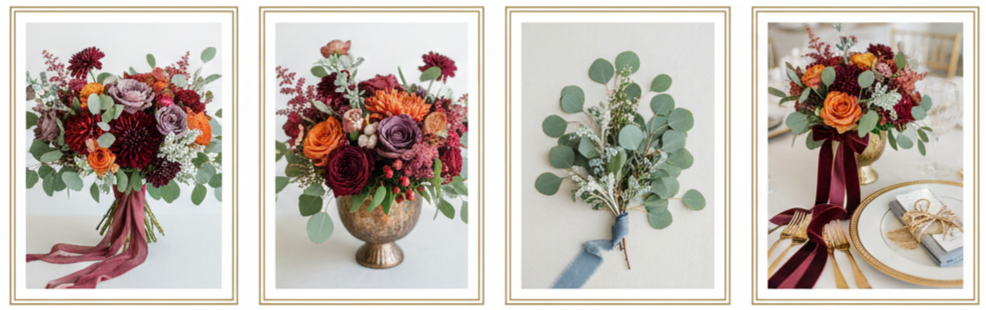
Floral Design
Florals brought fall palettes to life in 2015 because seasonal blooms naturally come in deeper tones. Dahlias, mums, garden roses, and ranunculus offered rich shades that matched marsala, cranberry, plum, and burnt orange easily. Greenery like eucalyptus and dusty miller paired well with sage and dusty blue tones. Couples also used ribbon, textured wrapping, and metallic vases to connect the bouquet and table florals to the full palette
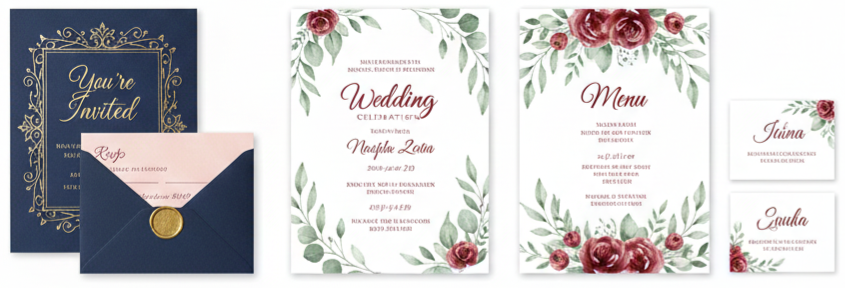
Stationery And Invitations
Invitations set expectations early, so couples in 2015 often used their palette here first. Navy paper with gold foil, blush accents paired with marsala typography, and watercolor designs featuring sage tones were all popular approaches. The best part was continuity. Couples carried the same colors into programs, menus, place cards, and signage, so guests saw the theme repeated naturally throughout the day.
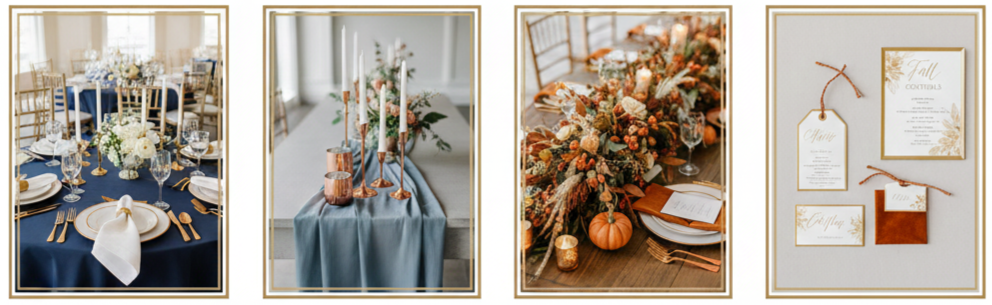
Reception Decor
Reception décor is where the palette becomes the atmosphere. Table linens, napkins, centerpieces, candles, and chargers all play a role. Navy linens with gold accents felt formal and clean. Dusty blue runners with copper candle holders felt modern and soft. Burnt orange details against wood tables made everything feel warm and seasonal. Couples also used small touches like escort cards, favor tags, and bar signage to keep the palette present without needing more big elements.
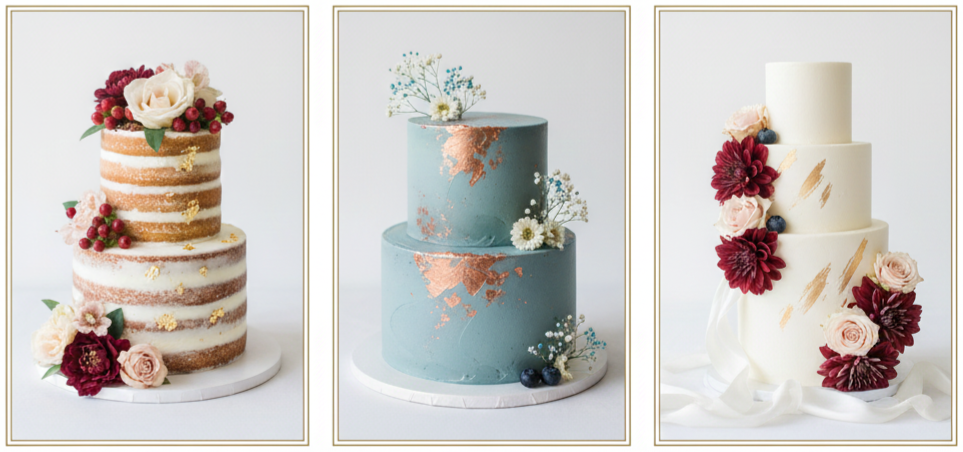
Wedding Cake Design
Cakes in 2015 were a major design moment. Naked and semi-naked cakes stayed popular, and couples used fresh florals, berries, and metallic leafing to pull in the wedding colors. Dusty blue icing with copper accents looked modern, while blush frosting with marsala flowers looked romantic. Even simple white cakes felt tied to the palette when decorated with flowers, ribbons, or metallic elements in the chosen colors.
Tips For Keeping Your Palette Cohesive
A fall palette can look stunning, and it can also get busy fast if we try to use too many shades at once. The best 2015 weddings kept things cohesive with structure and balance.
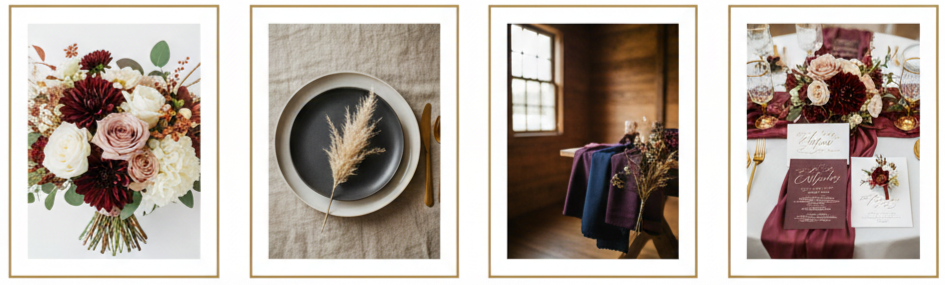
- Palette Size: Stick to two main shades and one or two accents. When we keep the palette tighter, every detail feels cleaner and more intentional.
- Neutral Support: Use neutrals like ivory, taupe, beige, or charcoal to create breathing room. Neutrals help deeper tones look richer instead of heavy.
- Lighting Check: Deep colors like navy, plum, and marsala can shift under indoor lighting. Testing fabric swatches and florals in the venue lighting helps prevent surprises.
- Consistent Repeats: Repeat your main colors in a few key places across the day, like stationery, ceremony décor, reception tables, and floral accents. Small repetition makes the whole event feel connected.
Matching Your Palette To The Theme
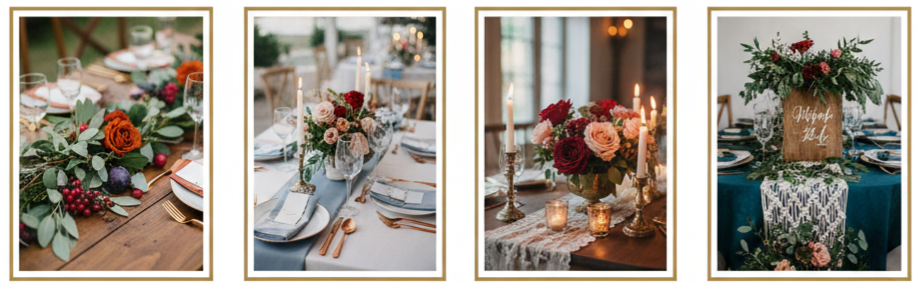
A theme becomes easier to execute when the colors naturally support it. Fall 2015 palettes worked well because each one could be tied to a clear vibe.
Rustic weddings leaned toward burnt orange, cranberry, sage, and plum because those tones matched wood textures, greenery, and outdoor settings. Modern weddings looked strong with dusty blue and copper or navy and gold, especially when paired with clean lines and minimal décor. Vintage romance leaned into marsala and blush with candlelight, lace textures, and softer florals. Boho styling paired jewel tones with layered greenery and textured details like macramé, wood signage, and free-form arrangements.
Why These Fall Wedding Colors Still Inspire
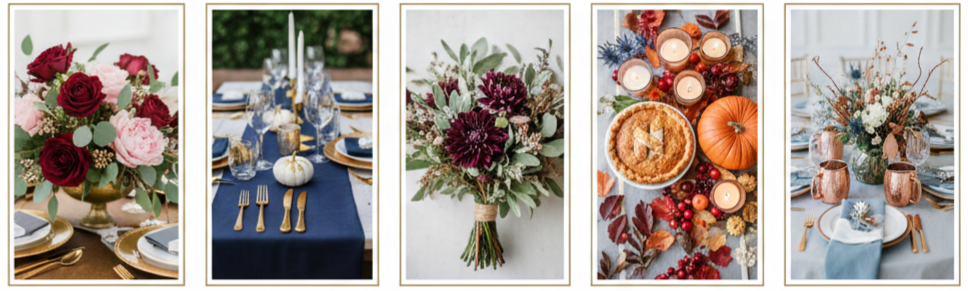
Even now, the fall wedding colors from 2015 still feel relevant because they weren’t trendy in a throwaway way. They were grounded in the season and built around tones that naturally work together. Marsala and blush still reads romantic. Navy and gold still looks elegant. Plum and sage still feels earthy. Burnt orange and cranberry still delivers that full autumn mood. Dusty blue and copper still feels modern while fitting fall textures.
These palettes also photograph beautifully. Deep tones create contrast, softer tones keep things light, and metallic accents catch light in a way that makes tablescapes and details look polished. When we choose colors that fit the environment and repeat them with intention, we get a wedding that feels timeless instead of dated.
Conclusion
Fall wedding colors in 2015 brought warmth, elegance, and bold personality into every part of the celebration. Couples used rich tones like marsala, plum, navy, and cranberry, then balanced them with blush, sage, dusty blue, and metallic accents. The best part is how flexible these palettes were. They fit rustic barns, vineyard views, and formal ballrooms while still feeling personal and memorable.
Key Takeaway: Fall wedding colors from 2015 stayed popular because they balanced cozy seasonal warmth with polished, photo-friendly contrast, making it easy to build a wedding look that feels timeless and intentional.
FAQs
What’s the best way to test a fall color palette before the big day?
We get the clearest answer by creating a mini set of real-world samples. Collect fabric swatches, ribbon options, and a few floral stems that match your palette. Place them together in the venue lighting and in natural daylight, then compare how the colors look in photos. This helps confirm the tones won’t shift unexpectedly, especially with deep shades like navy, plum, or marsala.
Can we use past fall color trends for a wedding happening now?
Yes, and it usually works in your favor. These palettes stayed popular because they’re built on timeless seasonal tones rather than short-lived trends. We can refresh the look with updated textures, like velvet, matte stationery, or modern metallic accents, while still using the same 2015-inspired color combinations.
Should our flowers match our wedding colors exactly?
Not always. Flowers look best when they complement the palette rather than trying to match it perfectly. We can treat florals as a blend of main colors, supporting tones, and greenery. For example, a marsala palette can still include neutral flowers, soft blush blooms, and natural greenery to keep the arrangement balanced and realistic.
Is it okay to mix metallics in a fall wedding design?
Yes, as long as we keep it intentional. Mixing copper and gold can add depth, especially in fall when warm metals fit the season. The simplest approach is choosing one metallic as the primary accent, then using the second metallic only in smaller details like candle holders, signage trim, or small décor pieces.
How can we include fall colors in the bridal look without changing the dress?
We can bring the palette into accessories and beauty details. Shoes, hair pieces, bouquet ribbon, and jewelry can reflect the wedding colors in subtle ways. Makeup is another option, like a marsala lip or copper-toned eyeshadow. These touches connect the bridal look to the palette while keeping the overall style classic.